

Parenting as a team

billcorbett_2When a parent comes to me for help with their kids and tells me about their challenges, my first step is to ask questions about this family’s situation. The information they share with me usually sheds some light on circumstances that may be contributing toward, or causing at least some of the challenges this parent is currently experiencing.

Some of those circumstances include the current condition of the relationship of the parents of the children; fighting, arguing, separation, divorce, etc. These situations factor in because children are affected directly by the adult emotional chaos that may be happening in the home or around the kids. Here are some suggestions for parenting more as a team, regardless of any issues that have come between the adults.

Agree on parenting issues

Agree together on how various situations will be handled with the children, and implement them with conviction. You won’t have answers to all situations but you can begin discussing with each other how you will both handle common ones to start. When new situations arise unexpectedly, discuss them in private away from the kids and then announce them jointly.

Discuss your values and beliefs

If you’re just getting ready to start a family, it’s never too early to discuss parenting issues. Make time to discuss your values and beliefs in parenting and children rearing with your significant other, and share your experiences on how you were parented as a child. Take a parenting class to learn together and seek recommendations on good parenting books from family and friends.

Be respectful of other caregivers

Always speak respectfully of other caregivers who share with you, the responsibility for caring for your children. This includes your spouse, the other parent, grandparents and other relatives. Doing so models integrity for the kids to learn from. Even though the other caregiver may have done something to hurt you or others, as long as they are sharing in the caregiving, your child(ren) may still see them as a hero and an adult to look up to.

Handle disagreements respectfully

It’s not always possible to hide arguments from the kids and some experts suggest that you don’t. It’s definitely OK for your kids to know that you both don’t always agree, but refrain from mistreating the other adult verbally or physically. It’s important to know that your children will learn how to develop their own relationships with others, based on the model you present. If the argument begins to escalate, take it to another room for privacy. It’s also important that your children see the “makeup” after the argument subsides.

Create a support network

And what if you’re a single parent? Create a support network made up of adults you trust with your children who can help give you the breaks you need to “recharge your batteries.” For single moms, engage trustworthy male relatives to spend time with your son(s) and for single dads, engage female relatives you trust to spend time with your daughters. And it’s great when your boyfriend and/or girlfriend bonds with your children, but they should not administer discipline. That’s reserved for you, the parent.


Bill Corbett has a degree in clinical psychology and is the author of the award winning book “Love, Limits, & Lessons: A Parent’s Guide to Raising Cooperative Kids,” in English and in Spanish.  He is happily married with three grown children, two grandchildren, and three step children.  You can visit his Web site www.CooperativeKids.com for further information and parenting advice.


Attention Dads: Aug. 2nd is Daughters Day!

Hey Dads! What do YOU have planned for your daughter(s) this weekend? Many national calendars here in the U.S. have August 2nd as Daughter’s Day. It derives from old Chinese folklore in which Zhi Nu, the daughter of the Queen of Heaven, was allowed to return to earth on this day once a year to see her husband.

Even if you don’t celebrate this obscure holiday, here are four tips for dads, stepdads, granddads, and foster/adoptive dads in raising little girls.

TAKE HER ON A DATE

At least once a month (if not more often) take her on a date so she gets to spend quality one-on-one time with you. Make a big deal of it by placing it on the calendar and letting her pick out what she will wear on that special day. Make a list of all the possible places the two of you could go and let her pick. If you already know what she would like and she likes surprises, don’t reveal where you’re going until you get there. (If you have more than one child, plan dates with each of them).

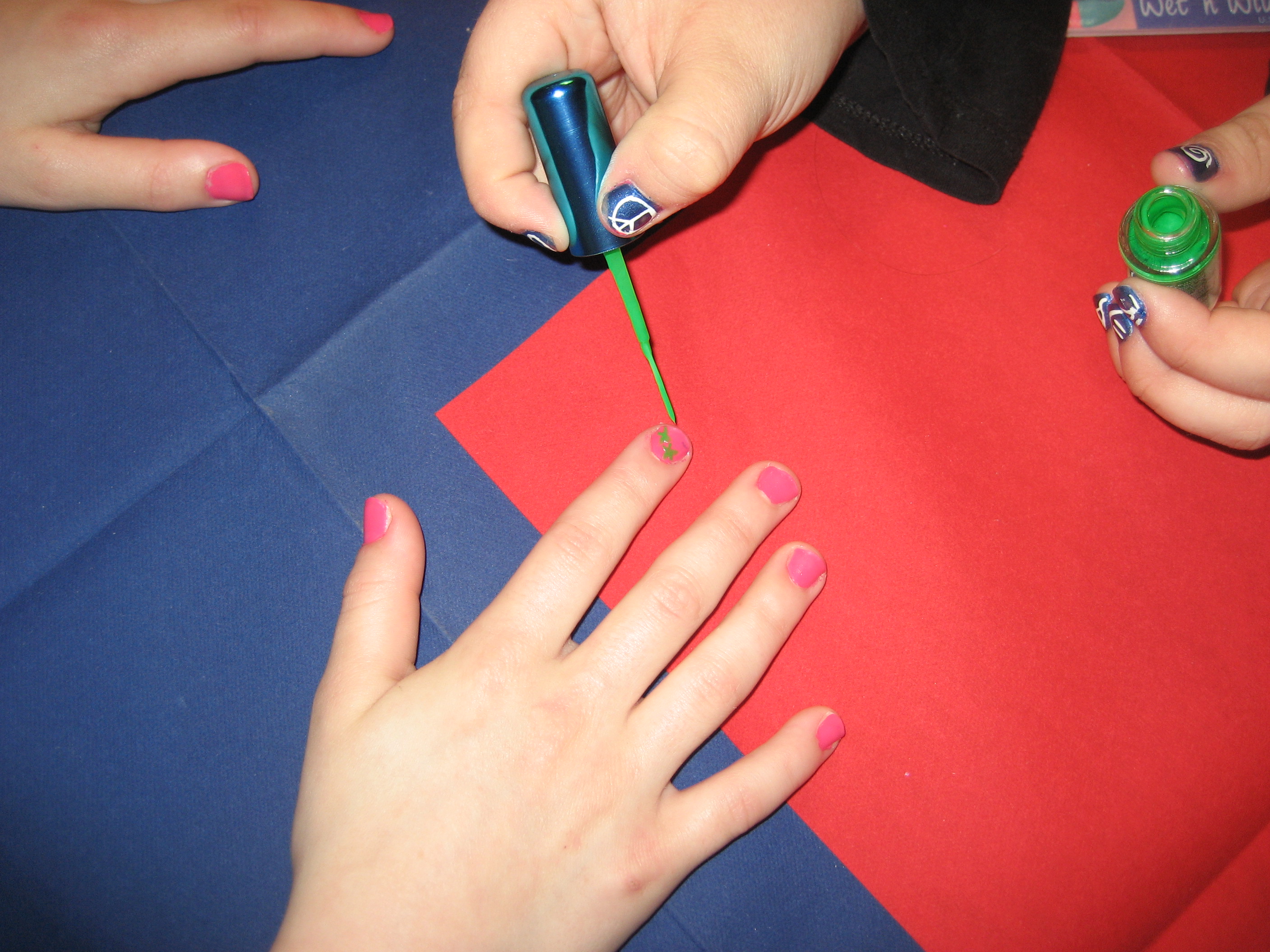
GET YOUR NAILS DONE

Take her out for a manicure or pedicure and YOU get one too! If you don’t want to spend the money and she’s old enough to be doing her own nails, ask her to do yours. One of the greatest moments I’ll always cherish with one of my daughters was the day she was painting her toenails in her room… ON HER BED! When I walked by her room and saw her with the IMG_5843 - Copynail polish on her bed, my first reaction was to scold her. But instead, I asked for permission to enter her room and sat with her on her bed. I then asked her if she would do my toenails too. It was the best time we ever spent together.

PLAY ROUGH WITH HER

Sometimes, we dads are afraid to get physical with our daughters because we think they’re fragile. But you won’t break her. Even though little boys tend to be more physical, little girls need it too. Play hide and seek and chase her. My favorite was always giving my daughters rides on my back, imitating an elephant as she rode on top. Before her teen years, my step daughter use to love to catch me off guard and jump on my back for a ride and not let go. Today she is so busy with her life and I miss those precious moments.

SHOW HER WHAT IT’S LIKE TO BE TREATED WITH RESPECT

Your little girl will learn how to expect others to treat her by the way she sees you treat her mother. Even if you think she’s not paying attention, be sure and treat her mother as you would want young men to treat her. If you and her mother are separated or divorced, it can present a challenge. Your daughter doesn’t understand your position in the relationship, so at the very least, treat her mother with kindness and respect.


Bill Corbett has a degree in clinical psychology and is the author of the award winning book “Love, Limits, & Lessons: A Parent’s Guide to Raising Cooperative Kids,” in English and in Spanish.  He is happily married with three grown children, two grandchildren, and three step children.  You can visit his Web site www.CooperativeKids.com for further information and parenting advice.

What to do about kids cussing

Why do kids and teens cuss and what can we do about it effectively?  Here are a couple of reasons and some suggestions on what you can do about it.  These suggestions may not be appropriate for all children, all families or all situations. They are simply suggestions that you might be able to use, depending on your situation with your kids.

boy swearing

The image is courtesy of FreeDigitalPhotos.com and David Castillo Dominici
 

Is it a learned behavior?

It may be a learned behavior. Children learn by watching, listening and experimenting. If they are exposed to inappropriate language, it is sometimes normal for them to try it out themselves as experimentation. If they get a big reaction from others around them, it could motivate them to repeat it. Oftentimes, young children aren’t really sure what the words mean, they just like the reaction it brings on.

For starters, be sure that your children are not being exposed to inappropriate movies, music or video games. Also be sure that your children are not witnessing abusive interactions between those involved in unhealthy relationships. This experience for them can teach them that bad behavior and bad language are both acceptable.

Is it related to an unmet need?

It may be a sign of an unmet need. In addition to basic survival needs such as food, water, sleep, and medical care, children have a series of higher level needs such as love, attention, power and safety. If these needs aren’t being met, a child could adopt inappropriate behaviors as attempts to get these needs met. In other words, a child who is not getting an adequate amount of love and attention by use cussing to get any attention they can.

Is it a means of communication?

If your child is intentionally using bad language, ask yourself, “What could my child be trying to tell me by using those words?” Could she be doing it because she is angry about a change in the family? Has there been a divorce or a death involving any of her caregivers? Does she get plenty of opportunities that help satisfy her need to feel important and valuable to you?

Is it a means of getting your attention?

Ask yourself, “How is my relationship with my child? Have I been too busy for him, or have I been distracted, distant or angry? Have I been yelling and punishing too much?” If any of these conditions currently exist, the child’s use of cuss words maybe garnering him inappropriate attention from you by getting you to react. Negative attention is better than no attention at all.

What can you do?

If your child has picked up bad language from a playmate, limit play time with that other child or increase supervision when they are together. If your child has learned it somewhere else, limit his or her exposure to that source. And if it’s a sign that your relationship with your child is lacking, spend more undistracted and quality time with your child. More often than not, a child’s challenging behavior is actually communication.

Whether you’ve found the source or not, create moments of closeness with your child to talk about the cussing. State your position that the words they are using are not acceptable to you and are not allowed in the family. Without too much ‘drilling,’ ask them why they use those words. Work cooperatively with them to come up with other words they can use instead.

Finally, be calm, patience and loving.  Be sure that you are setting a good example. Click to view a video to see one powerful way of stopping cussing.


Bill Corbett has a degree in clinical psychology and is the author of the award winning book “Love, Limits, & Lessons: A Parent’s Guide to Raising Cooperative Kids,” in English and in Spanish.  He is happily married with three grown children, two grandchildren, and three step children.  You can visit his Web site www.CooperativeKids.com for further information and parenting advice.

How to teach kids to care

I hear parents complain that their kids don’t appreciate what they have. So much is available to our kids today that it’s hard for them to imagine being without. Then when they push their parents for more, it triggers a feeling of resentment for the parents as they think about all they’ve done and provided for their kids so far.

My own kids occasionally threw in the, “All my friends have an (insert anyone of these here: iPhone, TV, Xbox, Six Flags pass, etc.), why can’t I have one?” It’s common for them to think that every other child has what they want, even though it may not be true. Remain calm when they make these claims and stand firm in your position to not cave at their demands.

Get them involved in helping others

Instead of reminding your children of all that you’ve bought or done for them, let their cries for more stuff be your reminder to get them involved in something that gives to others. From food banks, to pet adoption groups, to the Salvation Army and churches, all communities have opportunities for individuals, families and even children to volunteer in service to others.

Be involved yourself

There is no better way to teach your children the act of giving then to do it right alongside them. Avoid dropping your kids off with an organization for them to volunteer, unless it’s an organization that is specific to youth participation. You are the primary and most important teacher for your children so roll your sleeves up and get in there with them to participate.

Inspiring story of a 16-year old boy

I read a news story recently, featuring a 16-year-old boy in Rhode Island who started a project of providing brand new donated shoes to homeless children. In the four years it’s been running, he’s provided 16,000 pairs across 32 states. The article in People magazine included testimony from recipients of this giving organization’s gifts to families.

And where did this admirable young man get the notion to start such a wonderful organization? His parents took him to a homeless shelter when he was five years old. When he realized that his light-up sneakers did not compare to the shoes worn by the homeless children, which were falling apart, that experience remained with him and influenced his actions as he approached the teen years.

“Talking” about helping others isn’t enough

As the story supports, telling your children about those who are less fortunate than they are, may not be enough to matter. When I was a child, I remember my elders warning me about all the children that were starving in foreign countries, in hopes of getting me to eat my dinner. Providing an experience for your children in seeing and hearing from those less fortunate can make all the difference.

Delayed gratification

One final thought on this matter of teaching children and teens to care. Suppose there are some things that you do want to provide for them. Instead of running out and making an instant purchase, consider a dollar-for-dollar matching initiative if they have the means to earn money. Or at the very least, put limitations on when and how long they can use the item. Delayed gratification is something more children need to experience to appreciate what they do and do not have.


Bill Corbett has a degree in clinical psychology and is the author of the award winning book “Love, Limits, & Lessons: A Parent’s Guide to Raising Cooperative Kids,” in English and in Spanish.  He is happily married with three grown children, two grandchildren, and three step children.  You can visit his Web site www.CooperativeKids.com for further information and parenting advice.

Tapping into a child’s passion to further their learning

There is no doubt that a child learns best when learning takes place in an area of interest.  As educators, we must keep this in mind when lesson planning.  This task can be daunting, especially when given a large group of students with various interests.   However, when given the opportunity to learn and grow through a deep routed interest, wonderful things can happen.  This is the story of my son Riley and how he continues to learn through his interest areas.

RileyPhoto

Preschool: bringing the learning to the child

As a preschooler, my son Riley had no interest in going over to the art center to make projects or sit with a teacher to learn how to write letters.  Instead he preferred the block and science center.  Usually gravitating toward hands on activities with cause and effect, opportunities to hypothesize and predict outcome; Riley needed learning to take place in a center he liked to be in.  Fortunately for Riley, his preschool teachers embraced his interest areas and brought the learning of letter formation, early phonics, pre-math skills and writing to the centers that he loved.  They were wonderfully creative and nurturing to Riley’s needs and interests.

Entering elementary school

As Riley entered Elementary school however, we found that he struggled somewhat.  He was able to retain information, learn concepts in math and reading, however, struggled with reading fluency and phonics and decoding skills in text.  Kindergarten through 2nd grade was challenging and somewhat frustrating as a parent.  Although his teachers felt confident that he was “keeping up”, I as a parent was not satisfied.  By third grade my worries increased when his reading fluency was decreasing and his other areas of study were suffering.  My husband and I requested for Riley to be tested.  I sympathized with Riley’s teachers because everyone was working so hard.  In a class with 25 students, it is no doubt hard to tap into each child’s interest.  I knew in my heart though, that something was not right.

After testing, we discovered that Riley has trouble with his verbal memory.  This, unfortunately, makes learning very hard in a typical classroom environment.  Just like preschool, Riley doesn’t fit into the conventional style of learning.  He learns best through hands on activities, and through retelling verses writing.  Upon discovering these findings, we were able to create better ways in which Riley can learn, be tested, and express himself.  By fourth grade, Riley’s academic skill, in all areas, along with his confidence, has increased drastically.

Tapping into child’s area of interest

We have found that taking a topic of study that Riley LOVES and incorporating academic areas into it, is the way to go.  An example of this is Riley’s love for weather.  He is obsessed with tornados, hurricanes, tsunamis, the daily forecast…he loves it all.  His fourth grade teacher and my husband and I provided Riley with as many tools for learning more about the weather that we could think of.  We exposed him to lots of books to read, including the Farmer’s Almanac, tornado tubes, a digital weather predictor, and radar apps for his iPad.  Providing materials and tools for Riley within his interest area gave him experiences and practice with reading, writing, and math within a mode of study that he is invested and interested in.  As the year progressed, he because quite the little weather expert.

RileyWeather

Riley’s Weather Video on Local News

After following a rain storm and videotaping his first ever weather report, I sent a clip to our local news station.  To our surprise they aired his video and Riley became an official weather forecaster.  Our local apple orchard saw the video and asked him to become a regular “reporter” for their orchard, reporting on crop growth, and educating folks on how apples and peaches are grown.  Not bad for someone who struggles with verbal memory!

“Orchard Fun with Riley” video

As a parent, I am so proud of Riley for working so hard to do well in school.  As an educator, Riley is my inspiration to continue to look at students as individuals and to nurture their interests and passions.  It is those types of teachers who make a difference in a child’s life and those students who are able be successful in life.

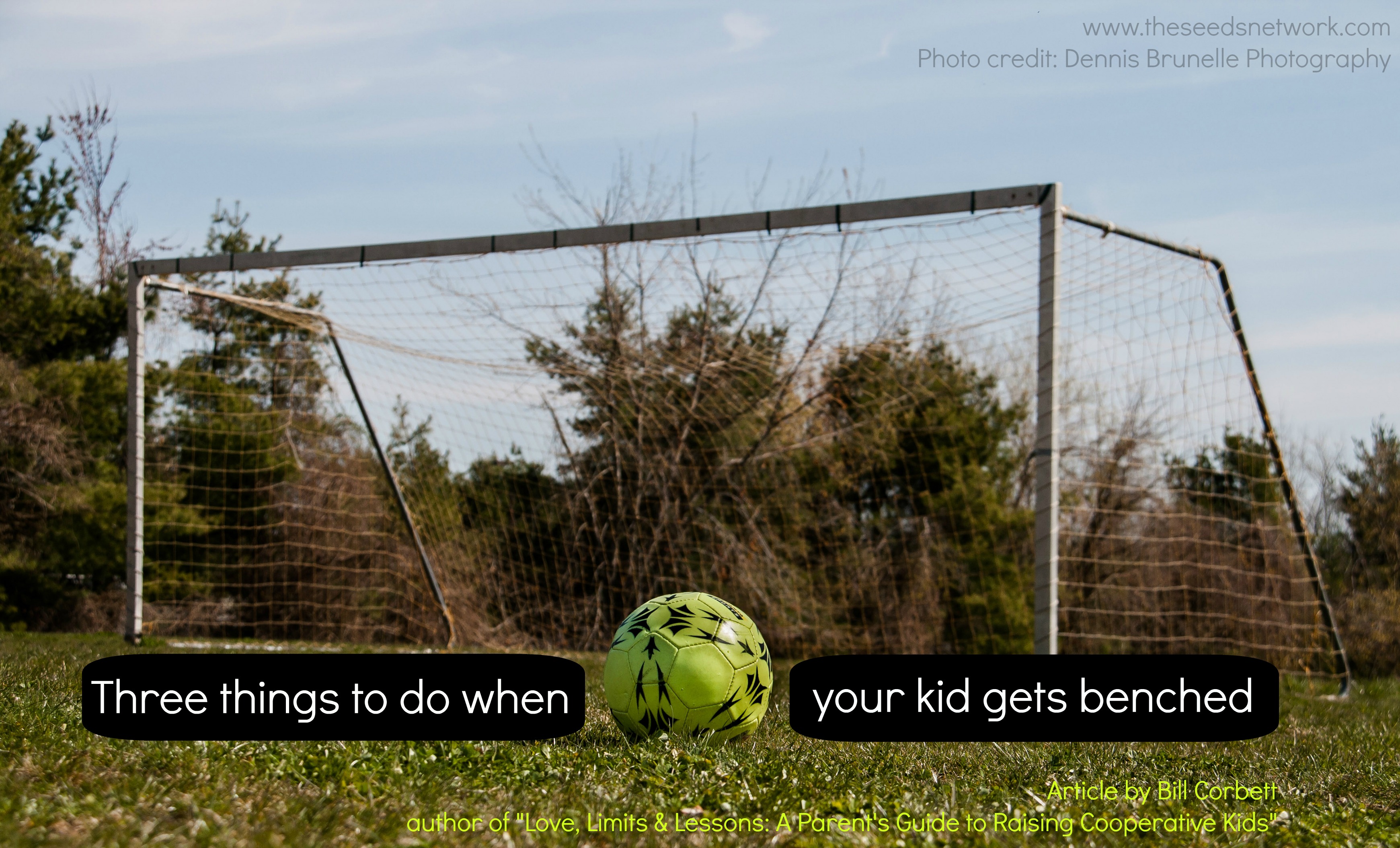
Three things to do when your kid gets benched

benched

I remember the day my son lost first chair on the school marching band.  He came home and declared that he hated the trumpet and he never wanted to play it again.  When I asked him what happened, he did not want to talk about it.  My initial parental impulse was to go down to the school, find out what happened, and defend my son in whatever the incident was.

But, I knew that racing in to potentially rescue my son was not the right thing to do.  If I wanted to raise a resilient young man, I had to do two things; trust in the “law of allowing” by giving him room to deal with the situation on his own, and to stand back just far enough to be available to coach him through the issue, if he needed me.  He obviously didn’t want to talk about what happened so I had to wait until he was ready to share.

Some parents don’t wait it out.  They allow the protective momma or papa bear in them to quickly race down to the school or confront the coach to protect their child.  We’ve seen all the cell phone video footage of the dads who end up physically attacking the coach or worse, another child.  Yes, we must protect our child from danger and harm, but responsible parents must assess each situation to determine how much they should really get involved.

Getting benched from a team is a very valuable life lesson for a child or teen.  It could offer a wake-up call that will keep the ego in check and also remind our children that rules, boundaries and procedures are in place to be followed.  I’m sure that some coaches put children on the sidelines unfairly, but I would be willing to bet that most do it responsibly and for good reason.  Here are three things to keep in mind if your child is ever benched while a part of a team.

Avoid complaining to the coach

Avoid complaining to the coach to rescue your child, even if the coach wasn’t fair.  Life itself isn’t always fair so sheltering your children from real-world situations robs them of the opportunity to learn and grow.  Bad mouthing the coach, dance instructor or team manager behind their back also teaches children that back biting is acceptable.  If you want your child to become a young person of integrity, the training begins with modeling appropriate behavior for them to witness first hand.

Let your child vent

Don’t argue with your child if she begins to unfairly blame her predicament on others.  It may just be an automatic defensiveness to protect her feelings and suppressing them could cause her to move deeper into a false sense of denial.  Let her express her feelings about it without judgment and be ready to listen.  There will be plenty of time later on to help her understand what really happened.  Creating emotional space by encouraging her to talk about it is likely to lead her to draw her own realistic conclusions, when she’s ready.

Stick it out

Finally, make it mandatory that he is to attend every game and practice, regardless of whether he is able to play or not.  Being there to support his teammates is paramount to teaching teamwork, and having him in attendance on the sideline may lead to a quicker resolution of the problem.  This could also move the coach to bring him back on the playing field or court.  Once the wounds heal, then it’s time for deeper parental discussion with your child on what happened and what he or she can do the next time.


Bill Corbett has a degree in clinical psychology and is the author of the award winning book series “Love, Limits, & Lessons: A Parent’s Guide to Raising Cooperative Kids,” in English and in Spanish.  He has three grown children, two grandchildren, three step children, and lives with his family in Enfield, CT.  You can visit his Web site www.CooperativeKids.com for further information and parenting advice.
Why Does My Child Behave Better at School Than at Home?

Based on helping thousands of parents over the years and spending time evaluating children while they interacted with both parents AND teachers, I’ve found that it is common for children to behave the worst while in the care of Mom!  As strange as this may seem, it is true.  The reason is that in general terms, the mother seems to create a safe environment in which a child can be him or herself.

For example, a child craving more attention or power, two common internal needs, may be more likely to act out the desire for these unmet needs in her mother’s presence, rather than anyone else’s.  The more distant in relationship an adult is to a child, the more likely they may be at gaining a child’s cooperation and attention.

If this theory is true, what can mothers everywhere begin doing to address this frustration?  Here are 10 things you’ll want to incorporate quickly that may be similar to what the teachers are doing at school.  If you’re doing some of these now, good job and keep them going.  If you’re not, make the time to implement them soon.

Limit screen time

Remember the phrase, “All good things in moderation.”  Too much screen time can create anxiety in a child if it is not controlled and the parent needs the child’s cooperation.

Conduct family meetings

They don’t have to be long and drawn out, and can even incorporate fun activities.  The best thing about family meetings with younger children is that they are usually short.

Speak calmly, quietly and respectfully

Children will often quiet down to hear the adult speak.  Be sure that you’re demonstrating the kind of communications that you want him to emulate.

Commanding and demanding don’t work

We no longer live in an autocratic world, so avoid using the parenting methods our parents used.  Teach, demonstrate and use cooperation.

Listen quietly when she complains

Shutting a child down who is complaining will only back fire on you.  Practice empathic listening with your child and avoid solving her problems for her.

The response to “I’m bored” should be “Wow!”

Boredom is a problem owned by your child, not you.  When it occurs, listen at first and be expressive to acknowledge the problem, don’t rescue.

Let tantrums happen

When your child throws a fit in response to a limitation or boundary, let it happen.  The fit is his way of venting frustration and also hoping you’ll give in.  Don’t cave!

Punishment is not the answer

The use of timeout, taking things away, hitting, or yelling are NOT OK.  Nor are they productive in managing behavior effectively and with unconditional love.

Talk less

Talking too much to your children will undoubtedly send them into ‘parent deafness.’  If you feel they’re not listening to you, it might be because you’ve trained them to tune you out.

Visual timers and schedules

Setting the microwave timer to get a child to stop or start an activity does not work.  Seek out visual timers and schedules to increase your effectiveness with transitions.

Bill Corbett has a degree in clinical psychology and is the author of the award winning book series “Love, Limits, & Lessons: A Parent’s Guide to Raising Cooperative Kids,” in English and in Spanish.  He has three grown children, two grandchildren, three step children, and lives with his family in Enfield, CT.  You can visit his Web site www.CooperativeKids.com for further information and parenting advice.

The best gift you could ever give your child of any age

mom cart and child

It’s nearly Christmas and I’m shopping at a department store.  A woman in the isle just ahead of me is pushing her shopping cart and begging her daughter to cooperate with her.  The little girl appears to be about four or five years of age and is dragging her feet and whining that she’s too tired to walk.  Her mom looks very tired and continues to plead with the child to keep moving.  Suddenly the little girl collapses on the floor and mom seems to be on the verge of ‘losing it.’  The woman picks up her daughter swiftly and sets her in the carriage.

Once placed in the carriage, the little girl begins kicking her feet and the crying begins.  Soon, she’s demanding to get out of the carriage and her mom is doing everything in her power to hold back her anger. In that moment, I felt so bad for both of them and wished there was something I could do to help.  Both mom and daughter are probably feeling the stress of shopping, the holidays and who knows what else.

I was a parent three times over and know exactly what that situation feels like.  In situations when my children were small, I remember feeling stress from three things:

  • the complexity of our family schedule that the holidays brought on,
  • the fear that I may not have enough money (or credit) to pay for all the gifts I wanted to buy, and
  • the conflict brought on when the magic I was trying to create for my children from my own childhood, didn’t manifest itself to my satisfaction.

My children are all grown now and living productive lives.  One of them gave me my two grandchildren and I love seeing them get very excited about Christmas.  Their mom has done a great job of making it happen.  But if I could go back in time and do anything different, it would be to put more emphasis on being the person that I wanted them to become, rather than trying to make everything so perfect.

Believe it or not, my story that I started this article with actually ended well.  You see, the mother did a wonderful thing in that heated moment; she did not yell, she did not scold the little girl, and she did not ‘lose it.’  The woman reached into the carriage and picked up her sobbing daughter without saying a word.  She held her close to her chest and sat down on a sturdy display shelf.  For a few moments, they just remained there, ignoring any of the people milling past them.  The little girl cried on her mom’s shoulders and the woman remained silent as she gently rocked back and forth.

If you ever find yourself ready to ‘lose it’ with your child because you’re feeling tired or stressed, or because things just aren’t turning out as you had envisioned, stop and take a deep breath before you act or speak.  See your child as just a child and forgive him or her, then forgive yourself.  Acknowledge the stress you may be feeling from the season or other factors, and hold your child a little closer.  Give your child the powerful gift of seeing what unconditional love looks and feels like.


Bill Corbett has a degree in clinical psychology and is the author of the award winning book series “Love, Limits, & Lessons: A Parent’s Guide to Raising Cooperative Kids,” in English and in Spanish.  He has three grown children, two grandchildren, three step children, and lives with his family in Enfield, CT.  You can visit his Web site www.CooperativeKids.com for further information and parenting advice.

Image credit: Purchased by Bill Corbett, and used here with his permission.


The Talent Equation

A post from veteran educator and interview coach Charlie Margolis.

We are told that talent creates its own opportunities. But it seems that intense desire creates not only its own opportunities, but its own talents.”  – Eric Hoffer, (1902-1983) American social philosopher, author

They were the talented kids; the athletes who ran fast and far, seemingly without effort.  He was the kid in art class who could draw realistically; the girl who played the violin solo in the school orchestra; the pretty girls and the popular guys. Those of us who struggled in mediocrity wished we were them.  Watching our favorite artist, actor or athlete we would think, “I could do that, if only I had his/her talent.”  After all, it looks so easy. Well, not so fast. A closer look reveals that raw talent is perhaps the least of those factors that underscore success?

Recently I was listening to a locally produced NPR program. A group of educators were discussing creativity. One of the panelists emphatically stated, “Talent is a myth!”  It’s certainly not the first time I have heard this idea expressed.  I think it is a kind of magical thinking that just doesn’t correspond with reality. Inferring that anyone can achieve the highest level of performance is unrealistic, at best. You don’t make the Olympics, play in Carnegie Hall or get accepted at MIT without the genetic potential. While inherent talent is part of the equation that determines the ultimate level of performance, it is hardly the only factor. Research scientists, who have investigated this subject, estimate that talent accounts for about 25% of a person’s performance.

Let me show you my cousin’s drawing. He’s so talented,” she insisted.  I’ve seen hundreds – perhaps thousands – of pieces of student artwork. The young man’s portrait was well crafted, though not extraordinary. I politely praised the art and made some encouraging comments meant to be passed on to the burgeoning artist.  To the ‘amateur eye,’ realistic drawing is comparable to alchemy. Those of us who have more experience understand that it is more akin to a skill, which can be learned through instruction and practice. Given the same amount of training and practice, will some people be able to draw more expertly than others? Certainly! Then again, being a skilled draftsman does not make a person a great artist.  Art is singular because of its originality and interpretative ability. Van Gogh honed his drawing skill, which was anything but good in the beginning, through hours of compulsive practice. Talent is finite; motivation knows no limits.

I attended a seminar presented by one of the world’s leading motivational speakers. Ten thousand middle managers listened to his message that nothing less than being the very best in their chosen field was acceptable.  I sat there wondering, is that really possible? UCONN women’s basketball coach Geno Auriemma (Who doesn’t know who he is?) says that his team aims for perfection fully realizing they will never attain it. Is talent important? You can’t play for the Lady Huskies women’s basketball team without a great deal of athletic talent. However, all the talent in the world does not preclude the 500 shots per day many of these women take in practice, every day. When talent, motivation and training meet, there can be a high level of performance. Talent may be the least important factor in the equation. In his book, Blink, Malcolm Gladwell advanced the theory that it takes 10 years and 10,000 hours to develop expertise in any field.

Given the choice between talent and motivation, I would opt for high motivation.  I have never known talent – by itself – to make anyone happy.  The mentality that says first is the only place is sadly mistaken. Stage mothers, hockey fathers and helicopter parents who push their children to extreme levels of participation may be serving their own needs more than their child’s. Young people need to learn intrinsic motivation, resilience, and tenacity. Those are the characteristics which deserve praise and respect. Praise can motivate, if that message is oriented toward effort rather than innate ability. Research demonstrates that children who are praised for their intelligence do not try as hard as those who are praised for their effort. Since effort is under a person’s control, it can lead to resilience.  When praise for being smart does not correspond with performance, it can lead to feelings of helplessness. Children who are praised for their persistence are likely to invest more effort. Praise should be specific and sincere. To the brain, a sincere compliment, for something that has been earned through effort, is like receiving cash. So, admire talent, but praise effort. The capacity to appreciate talent may, itself, be a talent. It certainly makes life more pleasant.

Can creativity be learned?

creativityThis the second post in a series from veteran educator and interview coach Charlie Margolis on creativity, higher order thinking and raising creative children. The first post talked about the process of creative thinking, and how creativity is for everyone. Charlie continues the discussion here …

Why Creativity?

When I coach people who are looking for jobs, I advise them to show they have solved problems. Employers want people who can create new solutions to old problems. Business and industry once sought workers who would conform to the profile of efficiency and productivity. Today and for the foreseeable future, they seek original thinkers. These are individuals who are self-motivated, resourceful and think “outside the box.” Therefore, creative thinking is probably the most valued attribute, whether in an artist, inventor, employee or as a part of everyday living. Whether you are devising the next internet phenomena or cooking without a recipe, everyone needs to be creative.

Can Creativity be learned?

I developed and taught a course called, Exploring Your Creativity. Students were given open-end problems, for which there was no single correct answer. Problems were derived from multiple disciplines. For example, we did the Egg Drop problem, which involves dropping an egg from ceiling to floor. The idea is to protect the egg in a way that will keep it from breaking. They were asked to invent a new game and create an original musical instrument. In between, there were experiences in focused daydreaming, research articles to read and discussions about of the creative process. Exercises challenged their usual way of perceiving the world. Something as routine as brushing your teeth, using your opposite hand, will make you mindful of what is usually done by rote.

At first, the students had no idea what to do when given a problem. They had been taught to look at what had already been done to derive answers. For the first time, they had to look at what could be done. It was frustrating. Gradually, they began to “get it.” Instead of resisting, they learned the phases of the creative process, from inception to production. The transformation was nothing short of astounding. By mid term, they relished each new challenge, begging me to tell them what we would be doing next.

Higher Order Thinking

When I was in 8th grade, I built a science far project about the solar system. There were nine planets in my system. Now, I don’t even know how many planets there are. But, I know how to find-out. Since the days of the one-room school house, the key to academic success has been a good working memory. The ability to retain facts, figures and data pretty much determined how well a student would perform. It was even thought that memorization strengthened the brain, the way exercise strengthens a muscle. Do you remember when the study of US History was confined to a single text book and an occasional film strip? Now, a student can learn more about the Civil War in an evening watching the History Channel than I learned from a year of social studies.

The internet is a never ending source of information – and misinformation – and links. The dusty, old textbook has become obsolete as the Model A Ford. More information than anyone can use is as close as an app on the smart phone. Psychologists call this “transactive memory;” that a great deal of what we know is stored outside our heads. Having information, alone, does not give a person the ability to think. Knowing about the Battle of Gettysburg is not the same as being able to extrapolate the causes and effects of the Civil War. So, how has education adapted? Educators are in the process of finding methods and materials that teach higher level thinking. It’s not enough to know what; students need to know “how, why and what if…”At the top of the higher order thinking pyramid is creativity.

Schools and Creativity

Schools are based on an academic model. While many creative people are extremely intelligent in the traditional IQ standard, there is a point beyond which that does not apply; in fact, many highly creative individuals are not what you might call “super smart.” The No Child Left Behind mandate – begun in President Bush’s administration – continues to be hotly debated. Proponents of competency based testing applaud the mandate because it identifies those schools and programs which do not measure-up to the standard.

Meanwhile, opponents assert that “teaching for the test” is ruining education, because only a limited portion of a student’s proficiency is being measured. Unquestionably, standardized tests have become the driving force behind classrooms and curriculums. Music, art and other creative/expressive experiences have been reduced or eliminated, to make time for more academic enhancement. It is imperative that teachers have the time and resources to design and implement curriculums that address creative thinking. Practically, the jobs of the future will not be based on the skills of the past.

Share your thoughts below … and then join us for Charlie’s last post in the series titled Raising creative children”!