Minimizing Mask Anxiety in Children

The air is cooler, the days are shorter, and the leaves are starting to brown. These are the usual signs of back to school season. This year however, our fall looks different. Many schools are implementing a hybrid model, and requiring both children and teachers to wear face masks for the duration of the day.

Some children suffer from phobias of people in costumes, face paint, clowns, or other mask-wearing characters. Living in a world where everyone around them is wearing a face covering can be frightening and anxiety provoking.

Young children require more facial cues in order to recognize people and read emotions. As adults, we can recognize each other despite the use of face masks. Children however, don’t start to develop this recognition skill until age 6. Young kids are also still learning object permanence, and may struggle to understand that masks can come on and off, and that those with masks on their faces still have a nose and mouth.

Here are some of our tips for relieving mask anxiety in your children:

  • Turn masks into a superhero uniform: Show your children that doctors and nurses save lives while wearing masks. Then explain that by wearing masks ourselves, we too can save others by protecting them from germs.
  • Practice at home: Help your children become comfortable with wearing a mask by practicing around the house.
  • Let them choose their mask: Make masks fun for your kids by letting them pick theirs out. If a mask has their favorite characters or colors on them, they may even get excited to put it on and show their friends at school.
  • Prove that people behind masks are not scary: Ease children in by wearing masks yourselves, and showing that even their most trusted adults wear masks. You can also show them photos and videos of others wearing masks while performing normal tasks, or put face coverings on their favorite stuffed animals to make masks part of their daily lives.

As a resource for you to utilize in minimizing your children’s mask anxiety, we put together this short video of friendly people living their lives while wearing masks!

We wish teachers, parents, and children alike a safe, healthy, and enriching school year!

Sources:
kidshealth.org

nytimes.com

touchpointpediatrics.com

What to do about kids cussing

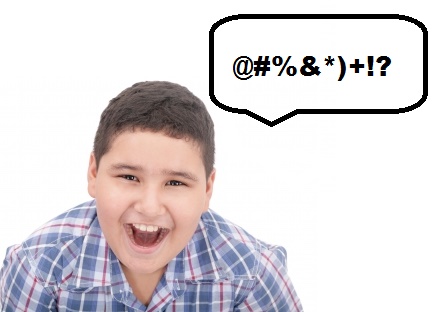
Why do kids and teens cuss and what can we do about it effectively?  Here are a couple of reasons and some suggestions on what you can do about it.  These suggestions may not be appropriate for all children, all families or all situations. They are simply suggestions that you might be able to use, depending on your situation with your kids.

boy swearing

The image is courtesy of FreeDigitalPhotos.com and David Castillo Dominici
 

Is it a learned behavior?

It may be a learned behavior. Children learn by watching, listening and experimenting. If they are exposed to inappropriate language, it is sometimes normal for them to try it out themselves as experimentation. If they get a big reaction from others around them, it could motivate them to repeat it. Oftentimes, young children aren’t really sure what the words mean, they just like the reaction it brings on.

For starters, be sure that your children are not being exposed to inappropriate movies, music or video games. Also be sure that your children are not witnessing abusive interactions between those involved in unhealthy relationships. This experience for them can teach them that bad behavior and bad language are both acceptable.

Is it related to an unmet need?

It may be a sign of an unmet need. In addition to basic survival needs such as food, water, sleep, and medical care, children have a series of higher level needs such as love, attention, power and safety. If these needs aren’t being met, a child could adopt inappropriate behaviors as attempts to get these needs met. In other words, a child who is not getting an adequate amount of love and attention by use cussing to get any attention they can.

Is it a means of communication?

If your child is intentionally using bad language, ask yourself, “What could my child be trying to tell me by using those words?” Could she be doing it because she is angry about a change in the family? Has there been a divorce or a death involving any of her caregivers? Does she get plenty of opportunities that help satisfy her need to feel important and valuable to you?

Is it a means of getting your attention?

Ask yourself, “How is my relationship with my child? Have I been too busy for him, or have I been distracted, distant or angry? Have I been yelling and punishing too much?” If any of these conditions currently exist, the child’s use of cuss words maybe garnering him inappropriate attention from you by getting you to react. Negative attention is better than no attention at all.

What can you do?

If your child has picked up bad language from a playmate, limit play time with that other child or increase supervision when they are together. If your child has learned it somewhere else, limit his or her exposure to that source. And if it’s a sign that your relationship with your child is lacking, spend more undistracted and quality time with your child. More often than not, a child’s challenging behavior is actually communication.

Whether you’ve found the source or not, create moments of closeness with your child to talk about the cussing. State your position that the words they are using are not acceptable to you and are not allowed in the family. Without too much ‘drilling,’ ask them why they use those words. Work cooperatively with them to come up with other words they can use instead.

Finally, be calm, patience and loving.  Be sure that you are setting a good example. Click to view a video to see one powerful way of stopping cussing.


Bill Corbett has a degree in clinical psychology and is the author of the award winning book “Love, Limits, & Lessons: A Parent’s Guide to Raising Cooperative Kids,” in English and in Spanish.  He is happily married with three grown children, two grandchildren, and three step children.  You can visit his Web site www.CooperativeKids.com for further information and parenting advice.

How to teach kids to care

I hear parents complain that their kids don’t appreciate what they have. So much is available to our kids today that it’s hard for them to imagine being without. Then when they push their parents for more, it triggers a feeling of resentment for the parents as they think about all they’ve done and provided for their kids so far.

My own kids occasionally threw in the, “All my friends have an (insert anyone of these here: iPhone, TV, Xbox, Six Flags pass, etc.), why can’t I have one?” It’s common for them to think that every other child has what they want, even though it may not be true. Remain calm when they make these claims and stand firm in your position to not cave at their demands.

Get them involved in helping others

Instead of reminding your children of all that you’ve bought or done for them, let their cries for more stuff be your reminder to get them involved in something that gives to others. From food banks, to pet adoption groups, to the Salvation Army and churches, all communities have opportunities for individuals, families and even children to volunteer in service to others.

Be involved yourself

There is no better way to teach your children the act of giving then to do it right alongside them. Avoid dropping your kids off with an organization for them to volunteer, unless it’s an organization that is specific to youth participation. You are the primary and most important teacher for your children so roll your sleeves up and get in there with them to participate.

Inspiring story of a 16-year old boy

I read a news story recently, featuring a 16-year-old boy in Rhode Island who started a project of providing brand new donated shoes to homeless children. In the four years it’s been running, he’s provided 16,000 pairs across 32 states. The article in People magazine included testimony from recipients of this giving organization’s gifts to families.

And where did this admirable young man get the notion to start such a wonderful organization? His parents took him to a homeless shelter when he was five years old. When he realized that his light-up sneakers did not compare to the shoes worn by the homeless children, which were falling apart, that experience remained with him and influenced his actions as he approached the teen years.

“Talking” about helping others isn’t enough

As the story supports, telling your children about those who are less fortunate than they are, may not be enough to matter. When I was a child, I remember my elders warning me about all the children that were starving in foreign countries, in hopes of getting me to eat my dinner. Providing an experience for your children in seeing and hearing from those less fortunate can make all the difference.

Delayed gratification

One final thought on this matter of teaching children and teens to care. Suppose there are some things that you do want to provide for them. Instead of running out and making an instant purchase, consider a dollar-for-dollar matching initiative if they have the means to earn money. Or at the very least, put limitations on when and how long they can use the item. Delayed gratification is something more children need to experience to appreciate what they do and do not have.


Bill Corbett has a degree in clinical psychology and is the author of the award winning book “Love, Limits, & Lessons: A Parent’s Guide to Raising Cooperative Kids,” in English and in Spanish.  He is happily married with three grown children, two grandchildren, and three step children.  You can visit his Web site www.CooperativeKids.com for further information and parenting advice.

Relaxation jars for children and teachers, too!

DSC01059

Ever see a child shake a snow globe … and notice the soothing affect it has?  There’s something about watching all the white flakes settle to the bottom that can be so relaxing.

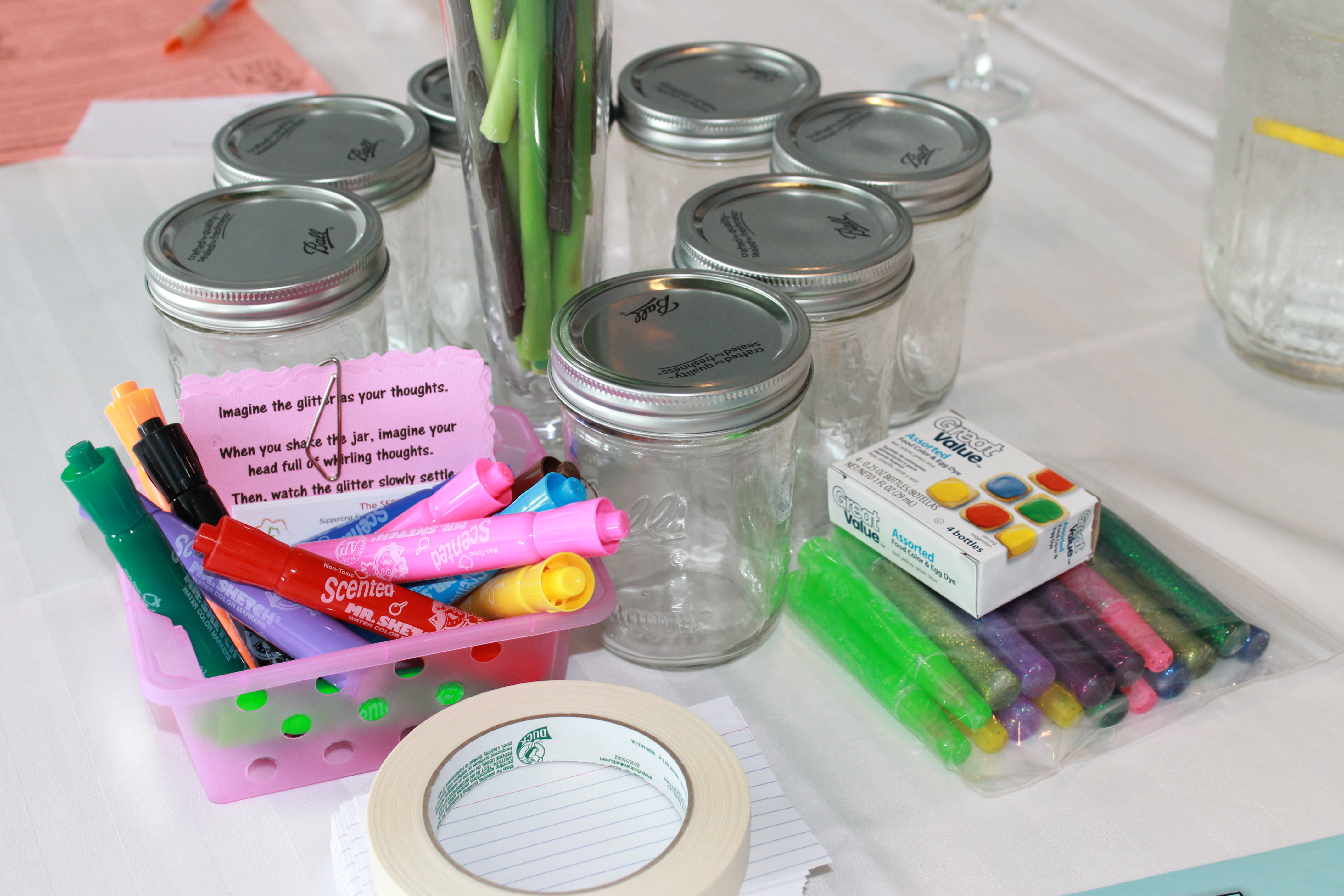
The same idea can be accomplished by making your own relaxation jar, with supplies readily available in almost any preschool … water, glue, food coloring and glitter!  Oh yea .. and you will need a jar!

Tubes of glitter glue, box of food coloring and mason jars as part of a teacher presentation

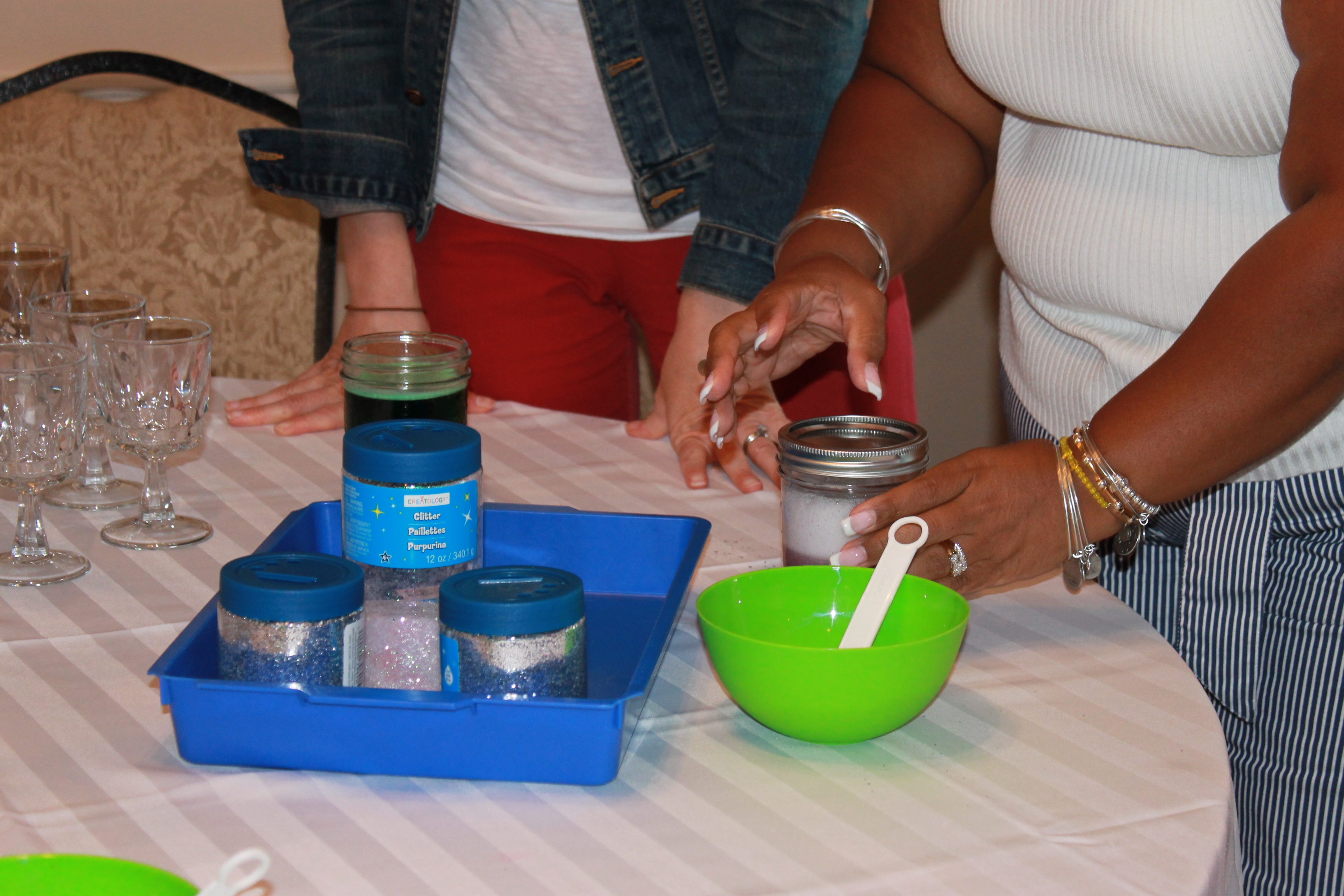
Since this requires using hot water, teacher involvement is necessary.  Take 1 cup of hot water and mix in 1 tube of glitter glue and food coloring of your choice.  Stir until the glue dissolves and blends with the water.  Add more sparkle by adding a few teaspoons of additional glitter.  Then screw on the lid of the mason jar very tightly.

The glue makes the water thick so that the glitter settles slowly.  Depending on the concentration of glue mixed in, will determine how long it takes for the glitter to settle after the jar is shaken.  I’ve also seen this activity done on a smaller scale, using baby food jars.

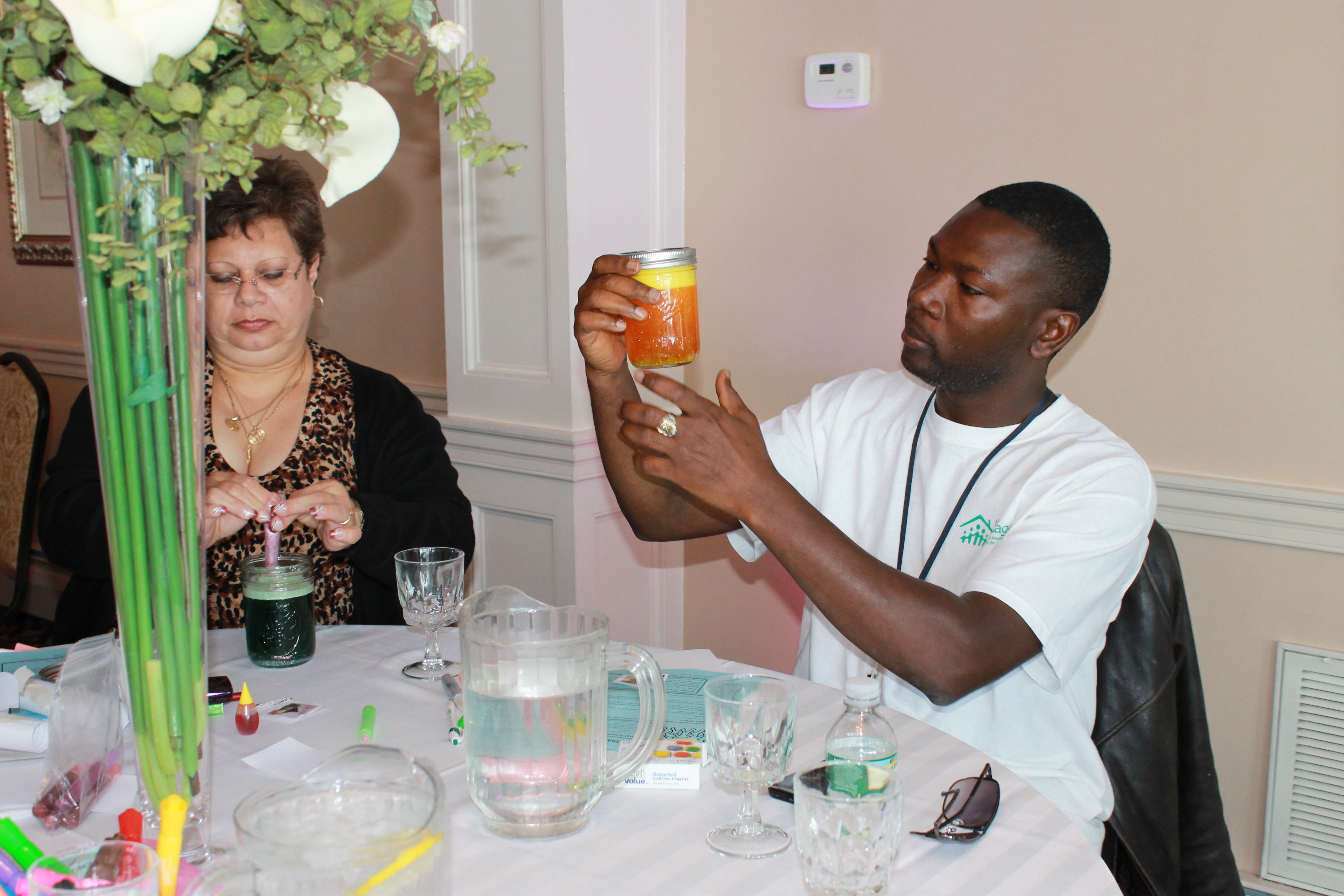
The jars can be used to help a child to relax if they are feeling frustrated, overwhelmed or upset.  As they shake the jar and watch the glitter slowly settle, it can help them to calm down.

But notice … it’s not just children who enjoy the relaxation jars!!  We presented this activity during a team-building and stress relief presentation at a Family Resource Center Coordinator retreat.  Parents and teachers can benefit from the jars as well – similar to the “taking a deep breath and count to ten” strategy if you feel your frustration level rising – give your jar a shake … and watch the glitter fall!

Other places to see relaxation jars (also commonly referred to as “mind jars” or “calm down jars”):
Here We are Together
Still Life with Circles
Lemon Lime Adventures

Why Does My Child Behave Better at School Than at Home?

Based on helping thousands of parents over the years and spending time evaluating children while they interacted with both parents AND teachers, I’ve found that it is common for children to behave the worst while in the care of Mom!  As strange as this may seem, it is true.  The reason is that in general terms, the mother seems to create a safe environment in which a child can be him or herself.

For example, a child craving more attention or power, two common internal needs, may be more likely to act out the desire for these unmet needs in her mother’s presence, rather than anyone else’s.  The more distant in relationship an adult is to a child, the more likely they may be at gaining a child’s cooperation and attention.

If this theory is true, what can mothers everywhere begin doing to address this frustration?  Here are 10 things you’ll want to incorporate quickly that may be similar to what the teachers are doing at school.  If you’re doing some of these now, good job and keep them going.  If you’re not, make the time to implement them soon.

Limit screen time

Remember the phrase, “All good things in moderation.”  Too much screen time can create anxiety in a child if it is not controlled and the parent needs the child’s cooperation.

Conduct family meetings

They don’t have to be long and drawn out, and can even incorporate fun activities.  The best thing about family meetings with younger children is that they are usually short.

Speak calmly, quietly and respectfully

Children will often quiet down to hear the adult speak.  Be sure that you’re demonstrating the kind of communications that you want him to emulate.

Commanding and demanding don’t work

We no longer live in an autocratic world, so avoid using the parenting methods our parents used.  Teach, demonstrate and use cooperation.

Listen quietly when she complains

Shutting a child down who is complaining will only back fire on you.  Practice empathic listening with your child and avoid solving her problems for her.

The response to “I’m bored” should be “Wow!”

Boredom is a problem owned by your child, not you.  When it occurs, listen at first and be expressive to acknowledge the problem, don’t rescue.

Let tantrums happen

When your child throws a fit in response to a limitation or boundary, let it happen.  The fit is his way of venting frustration and also hoping you’ll give in.  Don’t cave!

Punishment is not the answer

The use of timeout, taking things away, hitting, or yelling are NOT OK.  Nor are they productive in managing behavior effectively and with unconditional love.

Talk less

Talking too much to your children will undoubtedly send them into ‘parent deafness.’  If you feel they’re not listening to you, it might be because you’ve trained them to tune you out.

Visual timers and schedules

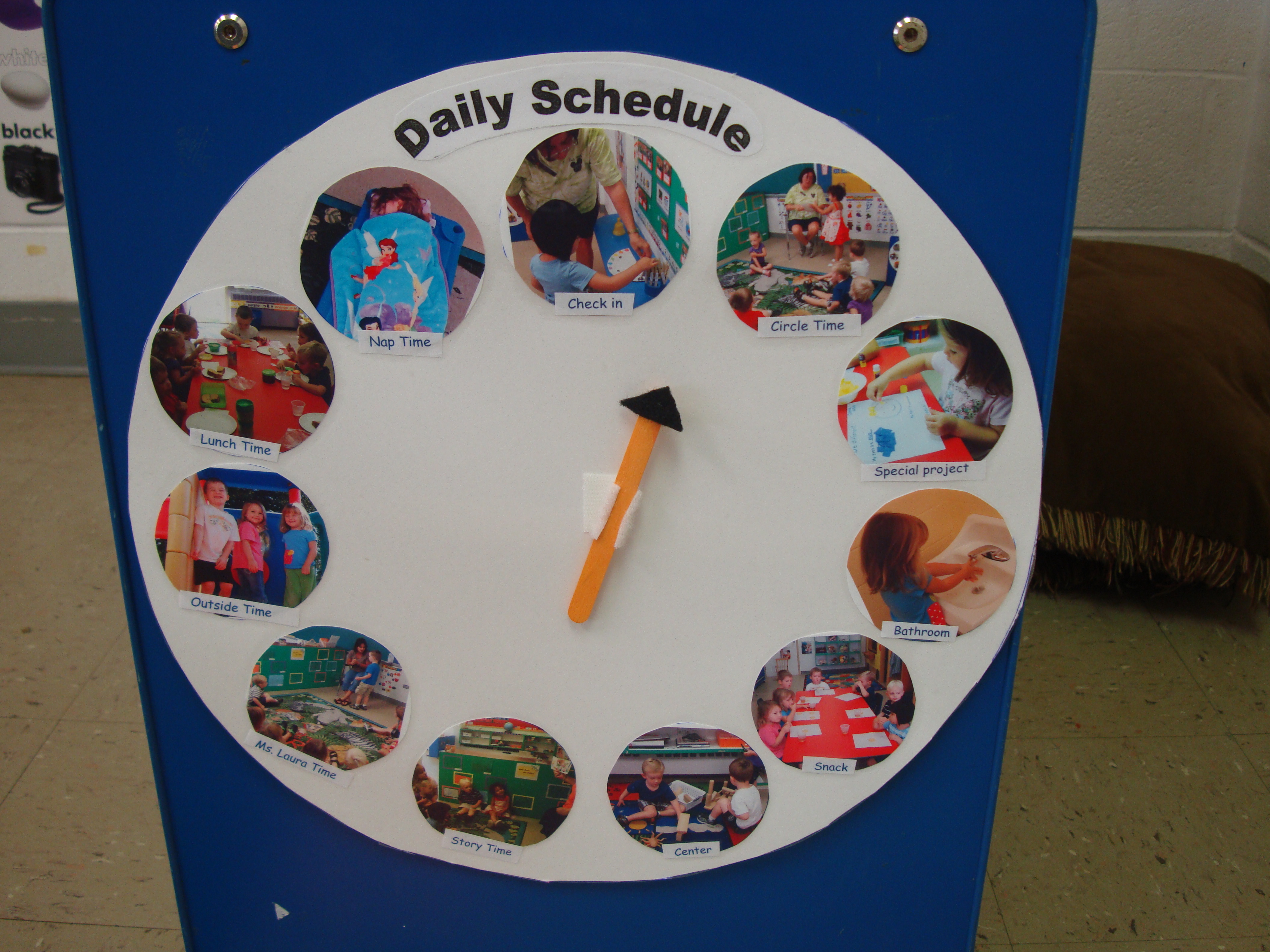
Setting the microwave timer to get a child to stop or start an activity does not work.  Seek out visual timers and schedules to increase your effectiveness with transitions.

Bill Corbett has a degree in clinical psychology and is the author of the award winning book series “Love, Limits, & Lessons: A Parent’s Guide to Raising Cooperative Kids,” in English and in Spanish.  He has three grown children, two grandchildren, three step children, and lives with his family in Enfield, CT.  You can visit his Web site www.CooperativeKids.com for further information and parenting advice.

The best gift you could ever give your child of any age

mom cart and child

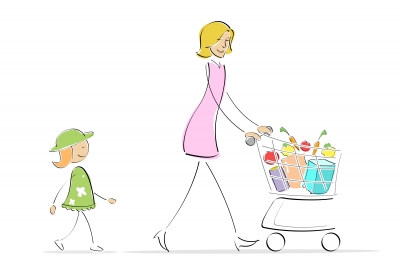
It’s nearly Christmas and I’m shopping at a department store.  A woman in the isle just ahead of me is pushing her shopping cart and begging her daughter to cooperate with her.  The little girl appears to be about four or five years of age and is dragging her feet and whining that she’s too tired to walk.  Her mom looks very tired and continues to plead with the child to keep moving.  Suddenly the little girl collapses on the floor and mom seems to be on the verge of ‘losing it.’  The woman picks up her daughter swiftly and sets her in the carriage.

Once placed in the carriage, the little girl begins kicking her feet and the crying begins.  Soon, she’s demanding to get out of the carriage and her mom is doing everything in her power to hold back her anger. In that moment, I felt so bad for both of them and wished there was something I could do to help.  Both mom and daughter are probably feeling the stress of shopping, the holidays and who knows what else.

I was a parent three times over and know exactly what that situation feels like.  In situations when my children were small, I remember feeling stress from three things:

  • the complexity of our family schedule that the holidays brought on,
  • the fear that I may not have enough money (or credit) to pay for all the gifts I wanted to buy, and
  • the conflict brought on when the magic I was trying to create for my children from my own childhood, didn’t manifest itself to my satisfaction.

My children are all grown now and living productive lives.  One of them gave me my two grandchildren and I love seeing them get very excited about Christmas.  Their mom has done a great job of making it happen.  But if I could go back in time and do anything different, it would be to put more emphasis on being the person that I wanted them to become, rather than trying to make everything so perfect.

Believe it or not, my story that I started this article with actually ended well.  You see, the mother did a wonderful thing in that heated moment; she did not yell, she did not scold the little girl, and she did not ‘lose it.’  The woman reached into the carriage and picked up her sobbing daughter without saying a word.  She held her close to her chest and sat down on a sturdy display shelf.  For a few moments, they just remained there, ignoring any of the people milling past them.  The little girl cried on her mom’s shoulders and the woman remained silent as she gently rocked back and forth.

If you ever find yourself ready to ‘lose it’ with your child because you’re feeling tired or stressed, or because things just aren’t turning out as you had envisioned, stop and take a deep breath before you act or speak.  See your child as just a child and forgive him or her, then forgive yourself.  Acknowledge the stress you may be feeling from the season or other factors, and hold your child a little closer.  Give your child the powerful gift of seeing what unconditional love looks and feels like.


Bill Corbett has a degree in clinical psychology and is the author of the award winning book series “Love, Limits, & Lessons: A Parent’s Guide to Raising Cooperative Kids,” in English and in Spanish.  He has three grown children, two grandchildren, three step children, and lives with his family in Enfield, CT.  You can visit his Web site www.CooperativeKids.com for further information and parenting advice.

Image credit: Purchased by Bill Corbett, and used here with his permission.


Glad Monster, Sad Monster feeling puppets

feelingpuppets

The Story

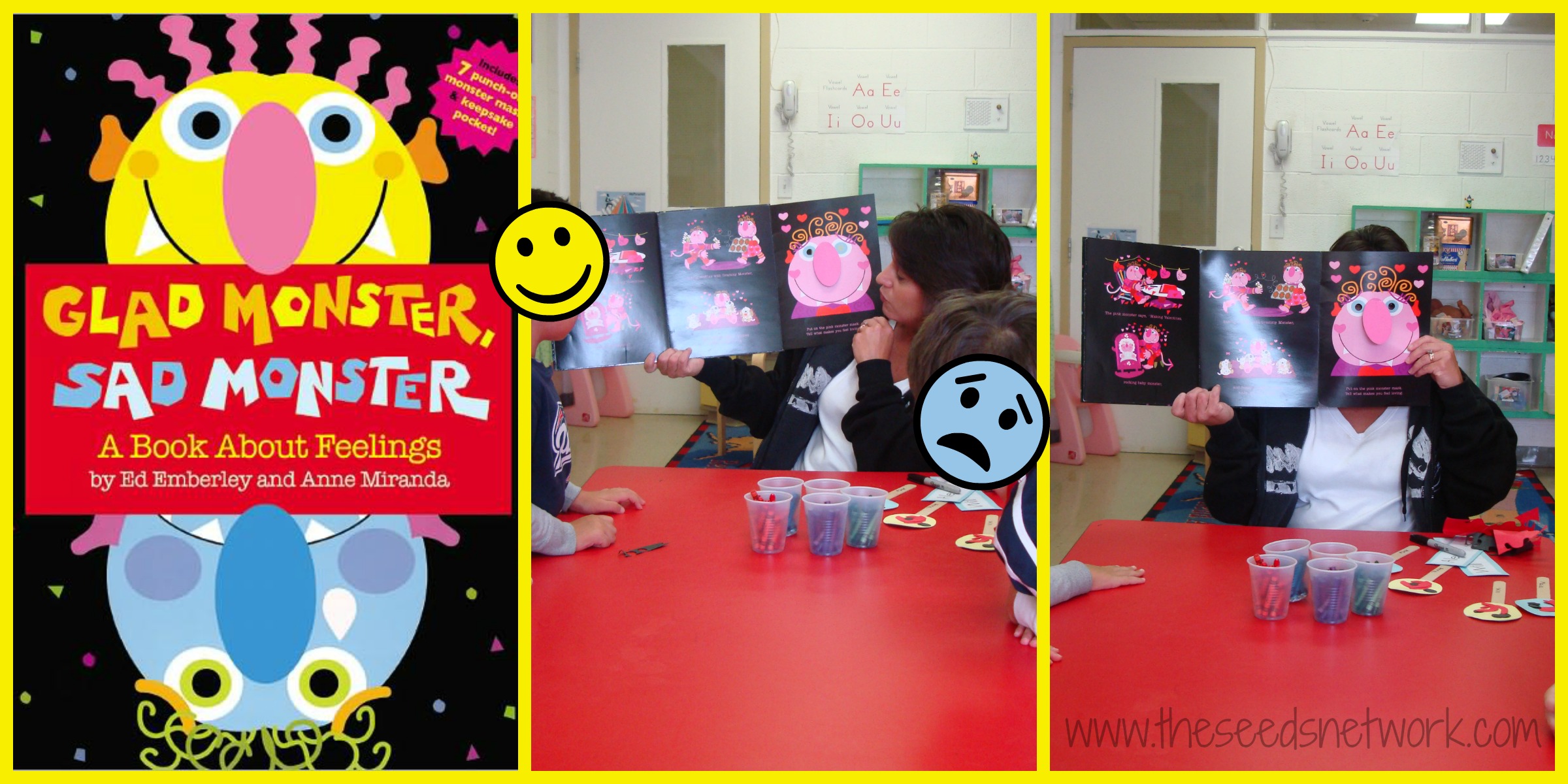
A fun way to explore feelings with preschoolers is through stories and interactive play.  One of my favorite books for this topic is “Glad Monster, Sad Monster” by Ed Emberley and Anne Miranda. The book illustrations are vibrant and fun, and it’s a good learning opportunity to have the children guess the feeling of each monster as you read (based on the expression on the monster’s face).

Monster book Collage

Glad, sad, silly, mad – monsters have different feelings just like we do. Use the opportunity to talk with the children about things that make them feel glad, mad, etc.  The favorite part of the story experience for the kids was when I would try on each monster mask as I read!

The Activity

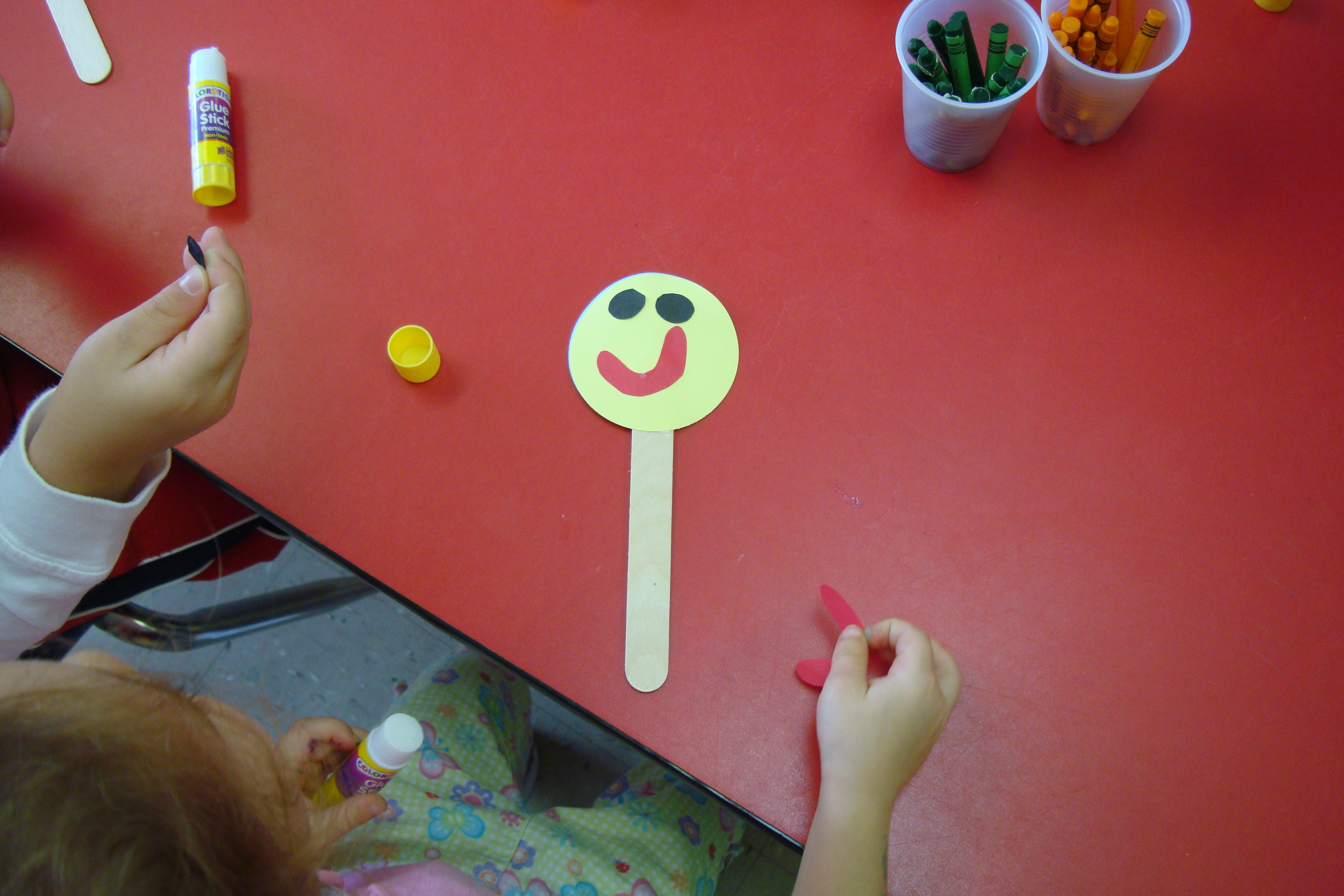
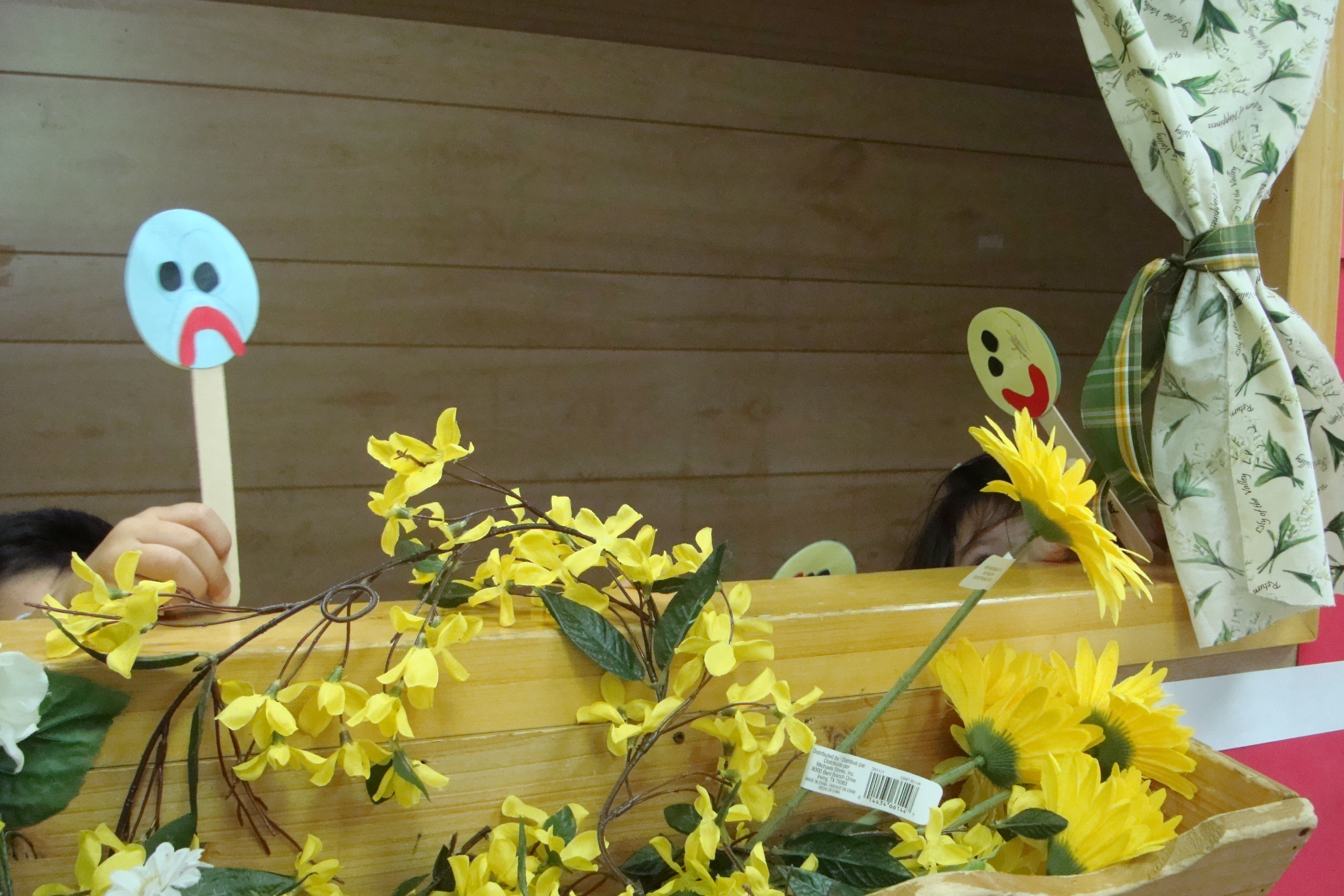
Follow-up on exploring feelings after storytime by making “feeling puppets”.  For our puppets, we made one side “Glad” (yellow) and the other side “Sad” (blue) – and used the same colors to represent those feelings as the story did.

DSC03622

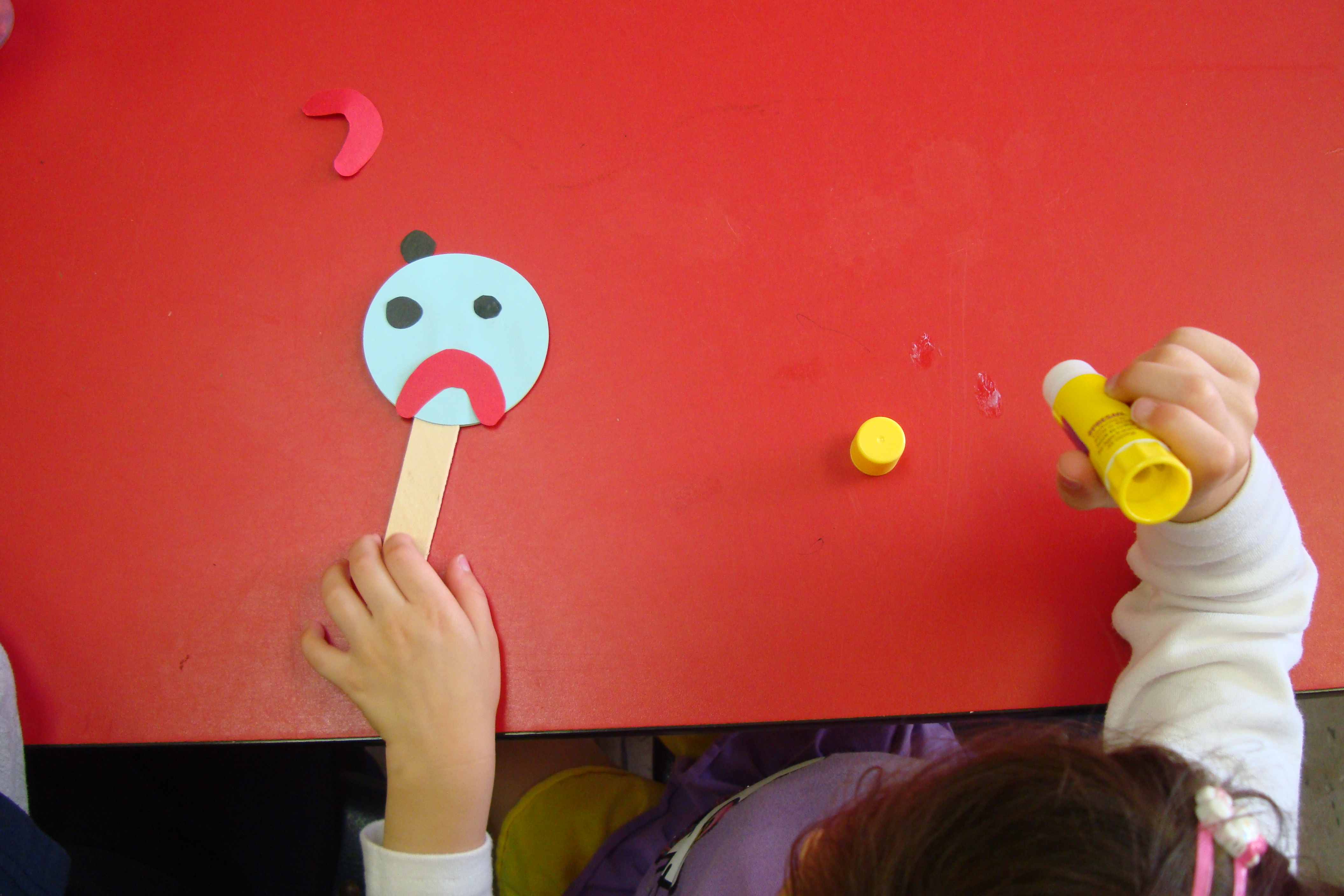
We had some cutout shapes for eyes and mouth that children glued onto the yellow and blue circle shapes.  We did this activity with younger 3 year olds – so we kept it basic as far as the feelings we explored and the way we made the puppets.  For older preschoolers, you can expand the activity by exploring more complex feelings (like “worried”) and making a variety of feeling puppets.

DSC03621

We attached the two faces together (back to back) and adhered it to a large craft stick.  So they can easily flip it from happy to sad.  We then had some time for the children to explore their feelings through a puppet play!

DSC03626

What favorite books and activities do you use with your preschoolers to learn about feelings and emotions?

Disclosure: The SEEDS Network, LLC is a member in the Rakuten LinkShare Affiliate Network

Supporting preschoolers with transitions

_MG_6452The following post is from information sent to us by Mary Tabb of the Early Childhood Consultation Partnership, which is a wonderful resource that is available to support the social and emotional development of children in your care and in your early childhood program. We recently posted an article from ECCP about supporting infants and toddlers with transition times in their day. Now, it’s time to provide some ideas to help preschoolers. Though preschoolers are slightly more adaptable to changes in schedule and routine, most children benefit from knowing what to expect.

A full day of preschool demands that children adjust to many transitions. It is important to remember that reducing the number of transitions as well as informing children of the upcoming change helps them feel safe and in control. When children feel safe, they learn better and are more able to control their behavior.

• To create a “Hello” and a “Good-bye” ritual, use a phrase, rhyme or song to greet each child at drop off and again at the end of the day. This may help parents with such transitions too.

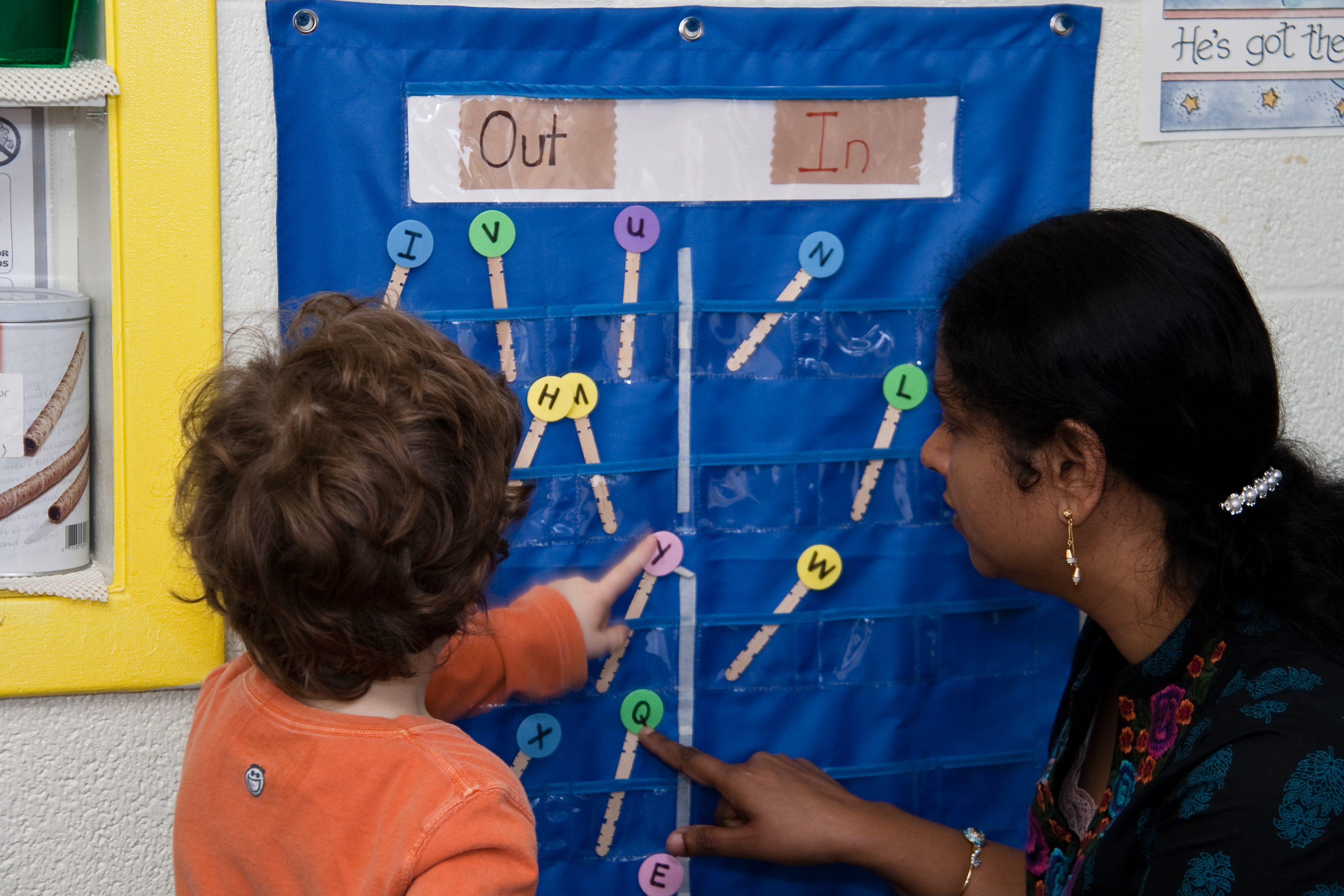
• Create a large picture schedule with each of the day’s activities and post it on the wall at children’s eye level. For children who have difficulty transitioning, remind them to go to the schedule and tell you what is next. (IDEA: Help children learn the daily schedule so they can become comfortable and sense what is coming next. Use books and other activities to teach preschoolers the daily schedule routine).

DSC07850

• Prepare children before every transition by telling them what activity will be next. Then give a 5 minute reminder and then 2 minute reminder before making the actual transition. (IDEA: Use of a visual timer can also be very beneficial to help children SEE how much time they have left for an activity so they can be more prepared for the upcoming transition.

• Use visuals, movement activities and songs to signal transitions. Ex. Lights off; hands in the air; sing a clean-up song; pretend to be mice walking in line; use guessing games to help children wait, etc.

• Plan slowing down activities to help children shift from active to quiet activities. Use a slow song with movement, lowering the volume, dimming the lights, and sharing expectations for the quiet activity. (IDEA: Create some relaxation bean bags that can be used with some special movement activities as a bridge from one activity to another).

If you found this helpful, you may also like an earlier post sent to us from ECCP on creating a quiet space for preschoolers.

What types of activities do you do in your classroom to help young children transition?

Resources:
• Transition Magician 2 by Mary Henthorne, Nola Larson & Ruth Chvojicek, (2000)
• Routines and Transitions A Guide for Early Childhood Professionals by Nicole Malenfant (2006)
• Momma Always Comes Home, by Karma Wilson
• The Kissing Hand, by Audrey Penn

Brought to you by:
ECCP
Early Childhood Consultation Partnership©
A program of Advanced Behavioral Health www.abhct.com
Funded by CT Department of Children & Families

Photo credit:
Dennis Brunelle Photography

Bursting the Self-Esteem Balloon – Part 1

charlie_1Below is the first of two posts from veteran educator and interview coach Charlie Margolis.

“I think high self-esteem is overrated. A little low self esteem is actually quite good. Maybe you’re not the best, so you should work a little harder.” — Jay Leno

Have you seen the State Farm Insurance commercial that features Green Bay Packers quarterback, Aaron Rogers? The setting is an elementary school on Career Day. A group of speakers are describing their jobs to the children. Aaron Rogers says, “I play football,” adding, “I was MVP last year.” One precocious student responds, “Mr. Hubble (teacher) says that trophies are for people with low self-esteem.” Even Madison Avenue recognizes the irony in one of education’s most fundamental practices; inflating the balloon of self-esteem.

I began teaching just as the self-esteem movement was gathering momentum. I confess to having been a “true believer.” I heaped praise on students, repeated affirmations and the papered the walls with inspirational posters. I taught a very popular parenting course which was based around methods of enhancing self-esteem… “You really did a nice job of taking-out the garbage.” For many years, I was immersed in self-esteem books, tapes and seminars. I even attended training workshops presented by Jack Canfield, the renowned author ofChicken Soup for the Soul. His idea was simple; the better children felt about themselves, the more successful they would be as learners. By the mid ‘70’s, the concept of self-esteem had become inculcated into most schools. Any trace of negativity was driven-out of the classroom faster than a kid with the chicken pox. Psychologists advised parents and teachers to never say “no” to a child, as it would impair developing egos. Everything became negotiable. Education evolved from a product to a process. Teachers were expected to inspire, engage and entertain their students. Soon, student centered education eviscerated the teacher’s authority. Everyone, from the stock broker to the plumber, became an “expert” on education.

Not all of this was bad. Certainly, there are individuals who suffer from a lack of self-worth. They feel unworthy and undeserving of anything good or nice. They compare themselves to others and always come-up short, at least in their minds. The root causes of negative self-esteem are neither simple nor entirely understood. No doubt, how a child is spoken to is a strong influence. As I have said in other articles, words do matter. They stick to the wall of our mind like wet cement. Negative comments seem to have an inordinate impact. Yet, the same words that damage one child can impel another to excel, for no other reason than to show the world that it was wrong. This is where resilience comes into play. Learning to persist in the face of adversity, the ability to recover from a setback and the courage to risk failure are learned traits.A consistent diet of praise is like eating nothing but Oreo cookies. It satisfies for a while, but in the long run, has dire consequences.

The discussion continues in Part 2 of “Bursting the Self-Esteem Balloon”.

Bursting the Self-Esteem Balloon – Part 2

charlie_1This the second post from Charlie Margolis regarding how overinflated self-esteem and excessive praise affects our children.

Pedagogy today is far superior to what – for those who are old enough to remember – teaching was like when no one cared how we felt. Unlike the “good old days,” stellar students do not receive all the attention while those of less academic achievement are ignored. Learning disabilities are recognized and remediation is provided. Every child is expected to learn. However, this came at a price. Told that virtually everything they did was “good,” students began to believe the hype. Contrary to Galileo’s celestial science, each successive generation of students became more convinced that the sun does, indeed, revolve around them.

Language influences thought in subtle and overt ways. What we used to call self-confidence has been swallowed into the black hole of self-esteem. Defining self-esteem is like trying to hold air. It is supposedly a generalized feeling of self-worth and worthiness. In the early days of the movement, it was characterized by the acronym IALAC – I Am Loveable and Capable. Children were – and still are – told they can be anything they want to be. Unfortunately, that is simply not true. Everyone who shows-up for high school is expected to attend college, whether or not they can read, write and compute. Students are passed on to the next grade even if they have not mastered the material. Tracking was dissolved in favor of homogeneous grouping to preserve self-esteem. Harvard Professor Howard Gardner postulated a well accepted theory of multiple intelligences. The gist of it is that each of us is endowed with different innate abilities. To me, auto mechanics is like “rocket science.” Then again,” rocket science” is like “rocket science.” We need electricians, cooks and roofers just as much – maybe more – than stockbrokers and corporate raiders.

In his column, “I Just Work”, Rex Huppke discussed generational differences among employees. He noted that millennials – a segment of the population born between 1980 & 2000 – entering the work force, seem to have difficulty with personal interactions. A millennial told a story of how her boss had “yelled” at her. She was asked if the boss raised his voice or used profanity. “No,” she answered. When pressed to explain what she mean by “yelling,” she said, “Well, he was really firm and disagreed with me”. This brand of unrealistic thinking and inability to tolerate even the most benign kind of criticism is typical of children educated under the umbrella of self-esteem.

Self-esteem, like everything else is desirable, in moderate doses; too little and an individual is defeated by the slightest resistance. It becomes a self-fulfilling prophecy that he/she will fail. Interestingly, an overabundance of self-esteem has the same effect, for different reasons. It used be that psychologists told students that bullies lacked self esteem. Subsequently, research revealed that bullies hold themselves in high regard. In other words, they feel empowered to do as they please, at the expense of others. High self-esteem is often associated with anti-social behavior. The child who had been showered with praise by parents and teachers is likely to overestimate his/her abilities. Again, research indicates that high self-esteem students tend to underachieve. Their sense of entitlement makes them believe everything they do is worthy of praise. Thus they do not put forth the effort or demonstrate the tenacity necessary to accomplish highly challenging tasks. Self-esteem is often confused with self-confidence which must be earned through practice, failure, trial and error. Generally, successful students are focused on the task at hand, rather than themselves. The traditional ideal of humility has been displaced by a “me first” attitude.

If you want to learn about a child, watch how he/she treats other children. Are they kind or dismissive? Do they share or exclude? Do they defend or attack? Are they humble or do they seek attention? Like a building under construction, a healthy sense of self is built brick-by-brick.

Eventfully, all balloons deflate because they lack substance. Nothing builds confidence like earned accomplishment.