Experiences that support early language and literacy learning

A great book I recommend for early education professionals to read is “Literacy Beginnings” by Gay Su Pinnell and Irene C. Fountas.  Fountas and Pinnell are well respected educators who have published various books about literacy learning. This book is focused on literacy experiences in the preschool classroom; and as such, can be used as a professional development guide for teachers who want to learn more about this topic.

This post is designed to serve as framework for a PD lesson for early educators who want to dive deeper into the chapters of this book. This post will focus on Chapter 5, titled “Using a Framework for Language and Literacy Learning“.

Read “Literacy Beginnings” – Chapter 5

The chapter starts off talking about essential learning experiences that need to be included in a prekindergarten classroom to support children’s development.  Some of these occur daily, whereas others occur over the course of a week. Activities such as circle time, outdoor play, projects (inquiry), choice time, reading and writing time are explained in this chapter. But then the authors talk about those activities that promote language and literacy.

For our exploration, we will focus on the reading activities that are discussed in this chapter.

Literacy Activities

The authors talk about 3 essential literacy activities: Read-Aloud and Shared Reading, Book activities and Library time.

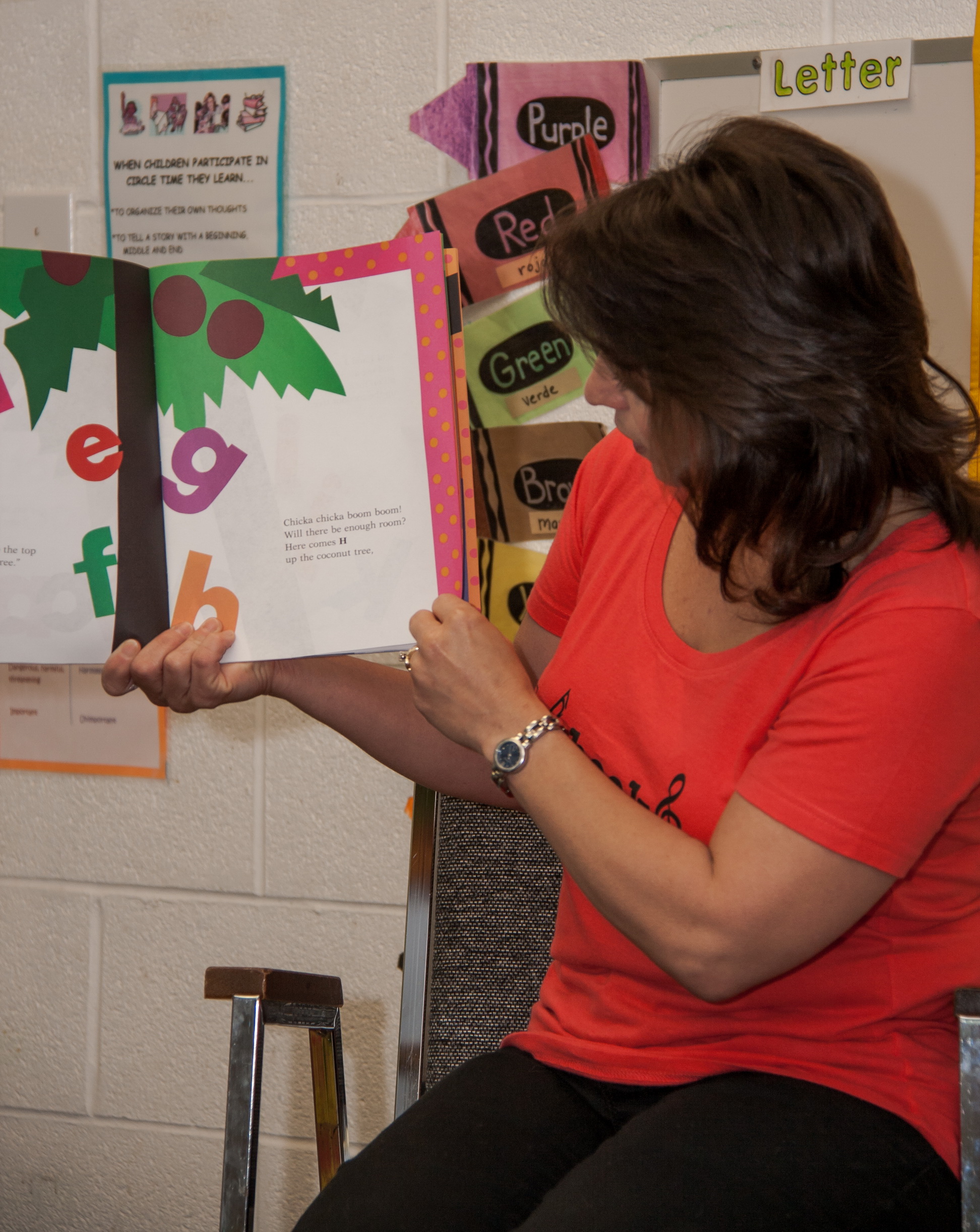
With an interactive read-aloud, teachers read books to the children and talk with them about the story. Teachers can make the story interactive by asking the children questions, talking about new vocabulary, pointing to the illustrations and encouraging discussion.

Shared reading is when teachers and the children read the text together (using big books, flip chart poems or songs or writing a rhyme on the chalkboard).

Book activities are my personal favorite (usually done after one of the above reading experiences). It was great to read in this chapter how children respond to literature by participating in an activity after reading it. 

Library time is when children have the opportunity to explore the classroom library. The authors have recommendations of ways teachers can setup their libraries, and suggest including books that you have read to the class, in addition to having some written by the children. 

Exploring and Sharing Literacy Activities

After reading this chapter, choose ONE of the literacy activities explored and share a way that it can be incorporated into a preschool classroom. The activity can be one that you researched online, or one that you have actually done in the classroom. For example, if you have an idea for a good interactive read-aloud, please share the book and some of the ways you can make that story interactive. Or if you know of a good book activity to help reinforce a story, please share that.

I setup a Padlet below for teachers to share their ideas.  Just click on the pink plus sign (+) in the padlet below to post your idea (which could be a link, photo, video, text, etc).  I added a couple of examples to get started. Let’s fill it up the page with ideas!

Made with Padlet


ISTE standards addressed:

  • ISTE® 3c: Evaluate and select information sources and digital tools based on the appropriateness to specific tasks. (Standards•S © 2007 International Society for Technology in Education. ISTE® is a registered trademark of the International Society for Technology in Education)

English Language Arts Standards addressed:

  • CCSS.ELA-LITERACY.SL.11-12.5 Make strategic use of digital media (e.g., textual, graphical, audio, visual, and interactive elements) in presentations to enhance understanding of findings, reasoning, and evidence and to add interest. (© 2018 Common Core State Standards Initiative)

Ready for Kindergarten Book Study: Counting and Number Recognition

Ready for Kindergarten book

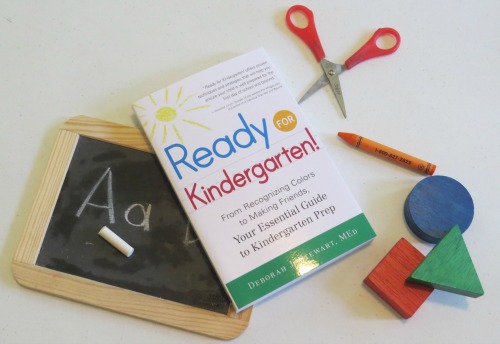
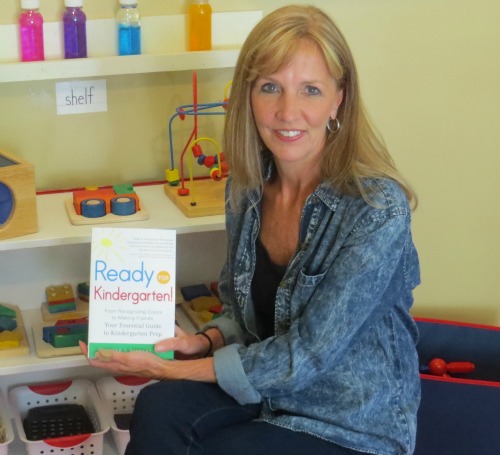
Parents, teachers and caregivers of young children, I am recommending a new book for you to add to your library!  Ready for Kindergarten!: From Recognizing Colors to Making Friends, Your Essential Guide to Kindergarten Prep by Deborah J. Stewart, MEd is the perfect resource for those wanting practical insight into preparing children for success in kindergarten.  Deborah shares information about things children should know and how parents and caregivers can help.  With each idea, the book describes “What Your Child Should Know”, “How You Can Help” and “Reflect, Revise, Revisit.”

For the book study, we are focusing on Counting and Number Recognition (a subsection of Chapter 10: The Core Concepts).  Be sure to read to the end, as then you will have a chance to WIN a FREE COPY of Ready for Kindergarten!

What Your Child Should Know: Counting Objects

Rote counting (verbal counting by memory, starting at “one” and going up) and counting objects (one-to-one correspondence) are actually two different sets of skills, as Deborah points out in this chapter. Both require interest by the child and a means to practice developing these skills.  We’ll be focusing on interactive ideas to help children practice counting objects.

How You Can Help: Using Games and Stories that Involve Counting

When integrating the use of numbers and the process of counting with real life objects and experiences, your child will develop a lasting knowledge and meaningful understanding of counting and number recognition.  — Chapter 10, Ready for Kindergarten

When it comes to finding opportunities to practice counting objects with your preschooler, it’s almost limitless!  You can count dandelions as you pick them outside, toy cars as you play, or Lego bricks as you build – real life objects that have meaning to a preschooler.  Find topics and items that your preschooler or class is interested in, and find ways to incorporate counting of those objects.  Here are a few ideas!

Count a seed pumpkin game

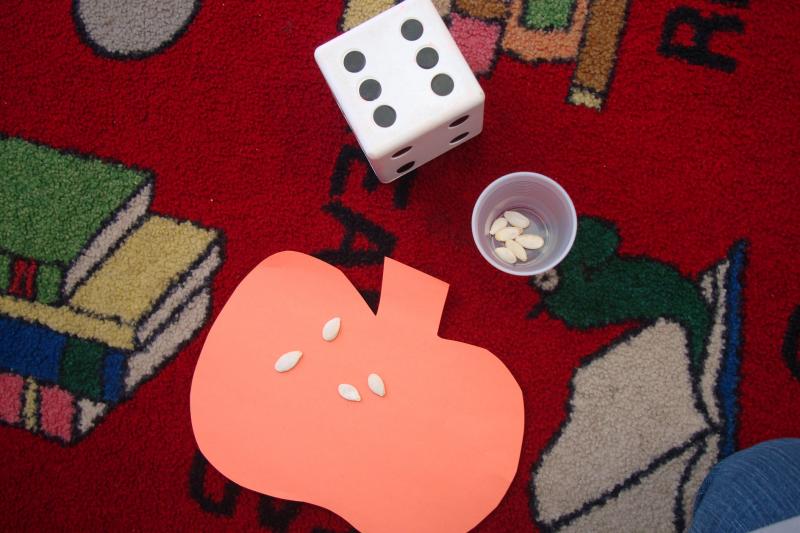
Using real pumpkin seeds and paper pumpkin cutouts, have each child take a turn rolling the die and counting the number of dots they have rolled.  Then they put that same number of pumpkin seeds on their paper pumpkin.
pumpkingame

Counting and graphing leaves

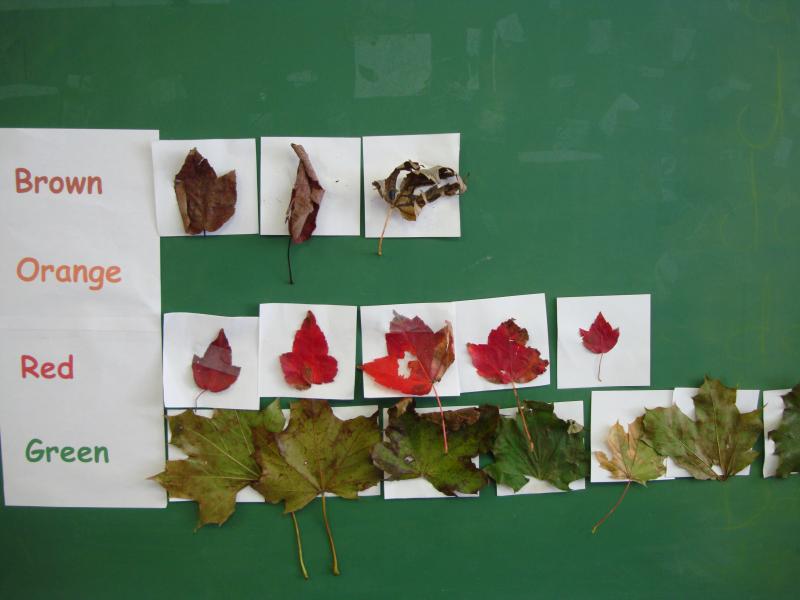
Go on a nature walk and collect a variety of different colored leaves.  Have each child choose a favorite and then graph those on a board by color – and then count how many of each color you have.
leaves

Using a story

Read “The Leaves are falling one by one” by Steve Metzger, and have a small amount of leaves (real or construction paper cutouts).  As you count the leaves in the story, tape a leaf to a chalkboard or posterboard, so children can see how the number of leaves increases.  Have them count along with you.

What Your Child Should Know: Number Recognition

Number recognition (ability to recognize numerical symbols such as 1, 2, 3) is yet a different skill than rote counting and counting objects.  But all these skills wind up being combined as children learn to recognize numbers. Deborah identifies that a child being able to recognize numbers 0 through 1 by kindergarten lays a solid foundation for continued counting and number learning as they enter school. 

How You Can Help: Using Play and Stories that Feature Numbers

I think of it as “number literacy”.  Those who work in education know that the more a child is exposed to stories and print, the better chances of success a child will have when learning to read.  Let’s do the same with numbers, by exposing children to what numbers look like through fun activities and books!

Play dough fun (and more) with Math Mats

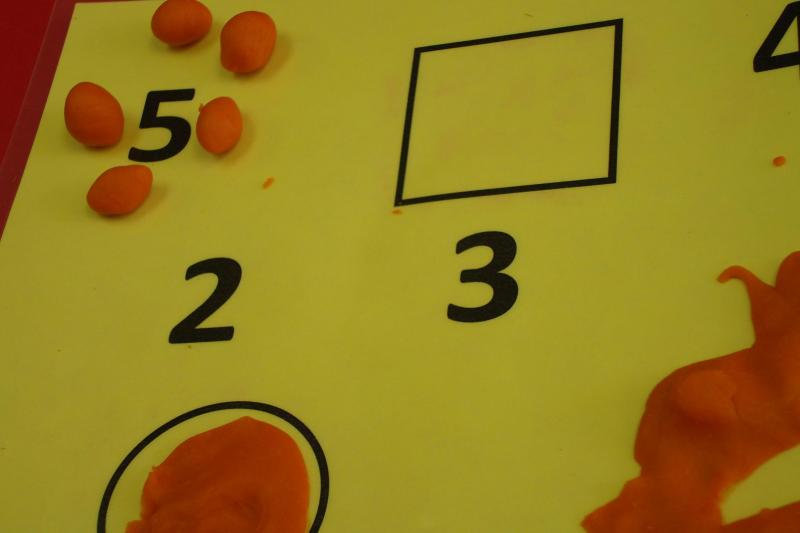
Preschoolers can practice number recognition and counting with these mats using play dough and a variety of other different materials. Providing different materials at different times can reinforce and scaffold learning.
math mats

Have preschoolers attempt to recognize numbers (particularly when they are not in numerical order). Identify the number and then use play dough or other small material to count out that number.

Using a story

Read simple books with your child that involve the creative use of numbers. Choose books that are about topics she’ll find interesting and fun to read.— Chapter 10, Ready for Kindergarten

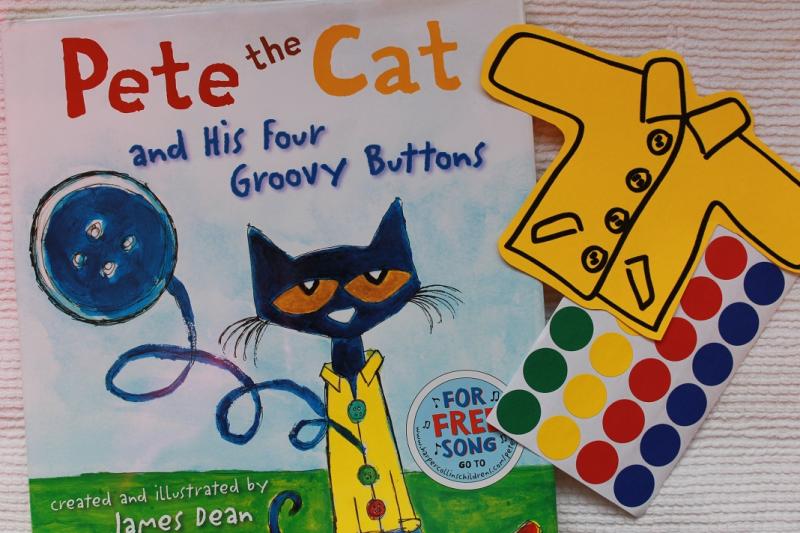
Read “Pete the Cat and his Four Groovy Buttons”, which uses numbers and the concept of counting backwards, as Pete looses his buttons.  Even though they count backwards in the story, you can use the concept of counting forwards as children help figure out how many buttons Pete has left.  AND, the story shows each number big and bold for children to learn to recognize!  So again, even though number recognition and counting are separate skills, they go hand-in-hand.
Pete the Cat

To add a hands-on component to this story, you can try this idea.  Before you read, print out shirt clipart (or do a freehand drawing) onto some yellow cardstock or construction paper to look similar to Pete’s shirt in the story.  Have children put 4 circle/dot stickers on their OWN shirt (you can put 4 dots on each circle with a marker to make them look more like a button, if you wish). I also put 4 sticker buttons on my shirt as well. As you read the story and Pete looses a button, have the children take one of their sticker buttons off their shirt and put it onto their yellow paper coat. Have them count how many buttons they have left on their own shirt – to go along with how many buttons Pete has left on his shirt.  Be sure to point out the written number in the book after the children figure it out, so they start to associate the number with the numeric symbol.  It’s a very fun story and a great read-aloud that children will want to hear more than once!

Reflect, Revise, Revisit:  Independent exploration

After playing counting and number games or reading a number story – make the materials accessible for children to explore independently later.  Use clear contact paper and laminate the math mats and put them in the play dough area.  Or laminate Pete’s yellow shirt and put it in the reading center along with the book and stickers.  Leave a cup of pumpkin seeds, pumpkin shaped cut-outs and a die in the math center.  While observing your child/ren revisiting the materials, you can get a sense of how they are learning and developing those skills.

Enter to Win “Ready for Kindergarten”!

Now’s your chance … want a copy of Deborah’s book?  Here’s what you do …

  • POST A COMMENT here on this blog post.  Share a counting or number recognition activity or let me know how you would use this book in your home or school.
  • Be sure to enter a correct email address when entering, as this is how the winner will be notified.

Give-Away Rules

  • The give-away will close on Sunday, September 82013 by 8pm EST.
  • The winner will be selected by Random Generator.
  • The winner will be notified by email and must respond within 48 hours from notification or a new winner will be chosen.
  • The winner will need to provide a shipping address when they respond to the email.
  • Deborah Stewart will send the winner of this give-away one copy of the book!  If you ask her, she will even sign it for you!!
  • No entries will be accepted by email, on Facebook or any other forum. YOU MUST LEAVE YOUR COMMENT BELOW ON THIS POST TO ENTER.
  • This give-away is void where prohibited by law.

Congratulations to Susie (comment #23)!  Thank you for entering!
Deborah’s book now available on Barnes & Noble and Amazon

Ready for Kindergarten

 You can learn more about the book or go ahead and purchase a copy of Ready for Kindergarten!: From Recognizing Colors to Making Friends, Your Essential Guide to Kindergarten Prep online!

Disclosure: The author of Ready for Kindergarten! is providing a copy of the book for the giveaway. All opinions expressed in this post are mine. The SEEDS Network, LLC is a member in the Rakuten LinkShare Affiliate Network

Are television and audio hurting or helping literacy?

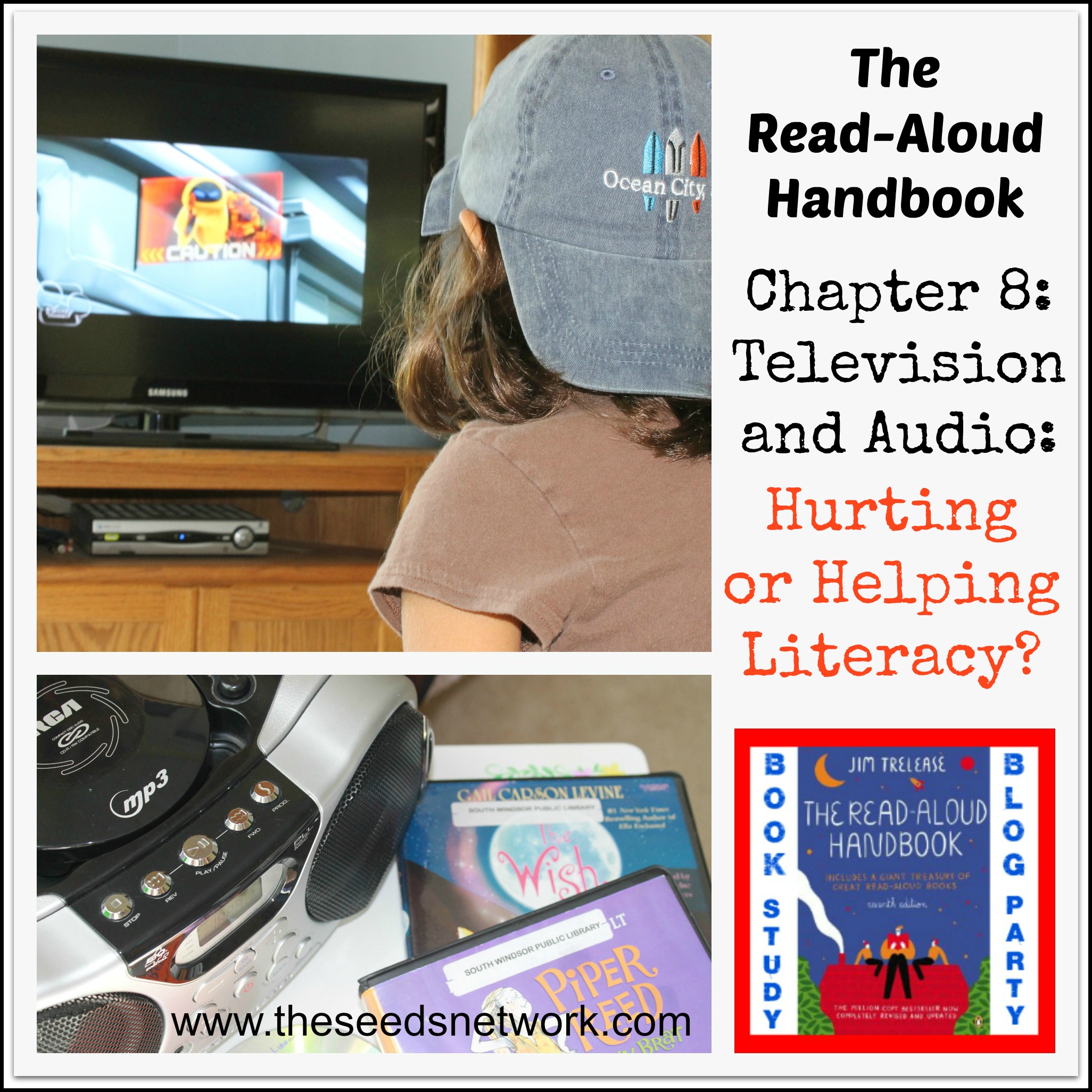
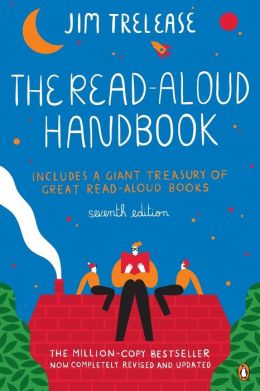
We are continuing with the summer book study of  “The Read-Aloud Handbook: Seventh Edition” by Jim Trelease with a review of Chapter 8: Television and Audio: Hurting or Helping Literacy?

readaloud3

Television

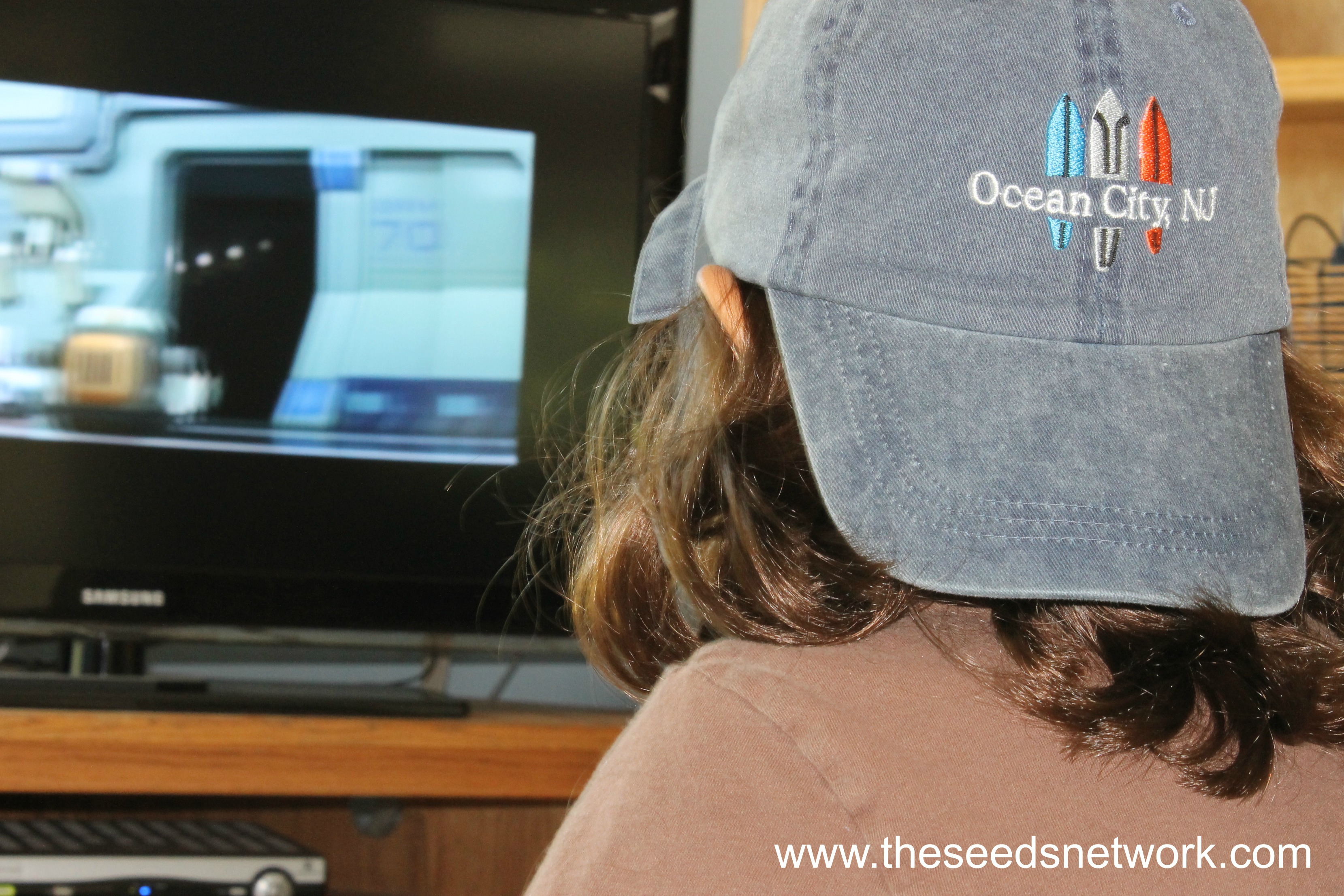
Talking about how much TV children watch can be a hot topic.  And with the introduction of more and more “screens” in our lives (computers, electronic games, iPads, etc.) – monitoring a child’s screen-time can become a full time job for some parents.  And parents not only need to consider the amount of TIME spent on these devices or watching TV — but the CONTENT has to be monitored as well.  Mr. Trelease starts this chapter by asking about the presence of TV in the family … is it positive, negative or null and void?

Positives

Mr. Trelease mentions that television can play a positive role for information sharing and raising public awareness (think in terms of reporting on wars, 9/11 and natural disasters).  And he also talked about the positive impact that Oprah’s Book Club had on reading.  Television as a form of entertainment and information sharing can be harmless … (but here’s the key) … only in the right doses.  Just like anything else that can be considered harmless or even good for us; in excessive doses those same things can become harmful. Children need our help in controlling how much TV and other “screen-time” they have so that the affects do not become harmful to them.  I like TV.  My kids like TV.  But finding the right balance is important.

Negatives

It is not so much what children are doing while they watch multiple hours of TV; it is the experiences they are not having that make the viewing so dangerous.  — [pg. 183]

I love that statement, because it is so truthful in it’s simplicity. To drive that point home, Mr. Trelease shares the incredible story of Sonya Carson (mother of Dr. Ben Carson) and how she controlled the dosage of TV for her children, and thereby affecting their lives in a positive way.  You can read that synopsis of the story in this chapter or check out “Gifted Hands: The Ben Carson Story” by Dr. Ben Carson.

Does the amount of TV viewing affect literacy and learning?  The American Academy of Pediatrics recommends a limit of 10 hours a week, and no TV for children under age 2.  Mr. Trelease states that research findings show that school-age children, who watched up to 10 hours a week of TV showed no detrimental effects on learning.  BUT, for children who watched more than that – scores began to decline (and the average student today watches three times that amount). 

tv

And again, he is quick to point out that in looking at the AMOUNT of TV viewing a child does … the academic damage that is being done is in what the child is NOT doing during that time.

While a child is watching TV, he/she is NOT …

  • playing games
  • doing chores
  • drawing
  • working on a hobby
  • playing with friends
  • doing homework
  • doing physical exercise, such as bike riding or throwing a ball
  • READING!

All those things listed above are important for a child’s development – socially, emotionally, physically and academically.  So again, in the simplest terms possible – if the TV is turned off more often – it frees up children to do other things that are important for their development.  There are great examples of families who took control of TV viewing that you can read about in this chapter.  I recommend giving it a closer look and taking away strategies that may work in our own homes.

Audio

This part is near and dear to my heart.  My youngest is fanatical about books-on-tape.  She listens to one every night (after her own reading or story read to her).  So the question raised in this section is “are stories on tape OK for children?“.

If the audio is used as a full-time substitute for a literate parent, no, they’re not okay.  But if used to supplement your readings or used by children whose parents are illiterate or unavailable, they are excellent!” – [pg. 196]

Whew!  Again, it’s all in how the technology is being used.  Mr. Trelease points out that as Americans spend more time in their cars listening to iPods; audiobooks have become more popular. This is a great example of how technology can be used to promote literacy.

Even when the audio story is used as “background noise” during a child’s play, they are hearing and learning new vocabulary.  You can even take the available technology to another level by recording stories in your own voice, or having distant relatives do the same to add a personal touch to a favorite story (what a wonderful idea!).

Will audio books make children “print lazy”?

Mr. Trelease points out that it’s just the opposite – and that the biggest users of audio books were the most literate people in America.  Thinking to all we’ve learned from previous chapters about how children can listen to a story that is at a higher level than what they can actually read on their own — it makes sense that a person who spends time listening to an audio book will continue to increase their vocabulary and story comprehension.

It makes me think back to this quote from Chapter 2 …

Listening comprehension feeds reading comprehension.“ – [pg 67]


I hope you enjoyed this Chapter review.  I am really learning a lot from this book and following along with others on this study.  What do you think about Chapter 8?  Is there anything you will do differently or will start to do in regards to your families’ use of TV and audio?  Feel free to share your comments below!

read-aloud-book-study-button

Follow the book study

New to the book study?  Visit the overview of the book study at Pre-K Pages.

Looking for next review?  Next up will be a review of Chapter 9 from Matt at Look at my Happy Rainbow on August 5!

I have also put together a post with a timeline for the book study, so check that out as you read along with us!


Summer book study | Chapter 2 reflections

I am thoroughly enjoying the summer book study of  “The Read-Aloud Handbook: Seventh Edition” by Jim Trelease.  It hits me as both a parent and a teacher.  I can relate to some of the questions that parents ask of Mr. Trelease about reading aloud to children … AND it reaffirms that all the reading aloud that I have done in the classroom and with Book & Boogie really does make a difference.

read-aloud-book-study-button

As a parent

I have 3 children of varying stages of their growth (elementary, high school and *GASP* heading off to college).  One common thing I did with each, we started reading to them all as infants.  It was a quiet and relaxing way to end the day and created a predictable routine for bedtime.  I love when Mr. Trelease describes how “the love of reading [is] nurtured by these parent-child experiences“, and that it helps to build a child’s verbal skills as the child grows.

The downside of my experiences with reading to my children, is in making the mistake that once they get to the upper elementary grades; the reading before bedtime routine became more of an individual activity for them (rather than a shared parent-child activity).

But reading alone and reading aloud are not mutually exclusive.” —  [pg 63]

What a missed opportunity!  Mr. Trelease so obviously points out that …

…kids usually listen on a higher level than they read.

This is my “Duh” moment!  Of course they do!  How much of our conversations with children involve words and language that they verbally understand, but may not be able to read for themselves when written on paper?

Listening comprehension feeds reading comprehension.” — [pg 67]

Mr. Trelease has some excellent examples of how this works in his book.  And it has challenged me as the busy parent to make reading aloud to my youngest a priority again, rather than just something we do on occasion.   [And we have had the perfect opportunity to do that this summer with the Summer Book Exchange we participated in.]

IMG_8705

As an educator

Mr. Trelease talks about how children’s attention spans for reading time is based on their experience with books.  So as educators, the more opportunities we give children to experience story time (either as a large group, small group or one-on-one) … their attention span for that activity will grow.  So yes, it IS important to attempt to read to that group of restless preschoolers!

_MG_5118_resize

Follow the book study

Read the Chapter 2 review over at Pre-K Pages … and feel free to share your thoughts or personal stories about when to start and end reading aloud in the comments below.  Bloggers can also link up using the linky below!

I have also put together a post with a timeline for the book study, so check that out as you read along with us!

The Summer Book Study Guide | The Read-Aloud Handbook

The summer book study of “The Read-Aloud Handbook: Seventh Edition” by Jim Trelease, is underway!  To learn about how the book study works, view our earlier post.

Use the guide below to find the Chapter Reviews and special author Q&A posts.

read-aloud-book-study-button

The Book Study Chapter Review Guide

Q&A with Jim Trelease

To join in on the Book Study discussion, write a comment below this post, or link up your Book Study blog post using the linky below.

Join the summer book study of The Read-Aloud Handbook

We are again looking forward to participating in a summer book study, hosted by Vanessa at Pre-K Pages! Our book for this summer’s study is “The Read-Aloud Handbook: Seventh Edition” by Jim Trelease, which will provide teachers, parents and caregivers with insights on the value of reading aloud, tips on ways to read aloud, and (YAY!) a list of great read aloud books!

read-aloud-book-study-button

The book study allows readers to follow along as several childhood bloggers post a summary and their thoughts on each chapter throughout the summer, and readers can join the discussion through comments.

WHEN DOES IT START?

The book study starts on July 8, 2013 and will continue each week with a chapter review by one of our fellow bloggers.

HOW DOES IT WORK?

Beginning July 8, bloggers will be posting chapter reviews twice a week. You can join the discussion by following the participating blogs, and leaving comments about any thoughts or questions that you have. If you have a blog, you can also participate by linking up your posts on the linky.

SOUNDS GREAT! WHAT BLOGS SHOULD I FOLLOW?

Here is a list of the bloggers who will be hosting the chapter discussions:

• Deborah Stewart of Teach Preschool
• Karen Cox of Prekinders
• Laura Eldredge of The SEEDS Network
• Vanessa Levin of Pre-K Pages
• Matt of Look at My Happy Rainbow
• Scott Wiley of Brick by Brick

WHERE CAN I FIND THE BOOK?

The Read-Aloud Handbook: Seventh Edition” will be published on June 25, 2013 and can be pre-ordered at Barnes & Noble and Amazon. Learn more about this book and why it was chosen for the study at Pre-K Pages. We hope this will gets you even more excited for the summer!

Literacy Beginnings – Chapter 22: Observing reading behaviors in preschool

Literacy BeginningsWe are nearing the end of our book study of “Literacy Beginnings” (Fountas & Pinnell). I have enjoyed all the ideas that I’ve gathered from the book and other bloggers in the Blog Party. We are now at the part of the book that talks about how to assess literacy learning in preschoolers. Now maybe that doesn’t sound as exciting as some of the other chapters … but it was interesting to me, in that this section gives some clear, concrete ways to observe and document reading and writing behaviors. In the words of the authors, this chapter discusses ways to “guide your observations”. And anything that can help teachers best utilize their time and talents when assessing children is worthwhile, and yes .. a little exciting!

“Teachers can become astute observers of reading and writing behaviors and skilled at producing responses which advance the child’s learning.” — Marie Clay

The best way to assess a child’s understanding of basically, anything, is to simply watch them play or work. Take time to interact with them as they play – talk and listen to what they tell you. Teachers do this on a daily basis all year long. So, how do we best document their understanding of literacy? What should we be looking for? And how long will all this assessing take?

I’ll answer the last question first … it doesn’t have to take long at all. The authors suggest observing 2-3 children a day and taking notes (using notecards or a clipboard) – with each observation only taking a few minutes. Doing this periodically 3-4 times a year will give you a great deal of information to aid in your planning and to share with parents.

The authors then discuss three types of reading experiences that can be observed –interactive read-aloud, shared reading and independent book experiences. The behaviors mentioned in the sections below are what you can expect to see from children AFTER they have had many experiences with the types of reading activities listed.

Interactive Read-Aloud

In an interactive read-aloud you read a story to the children and then discuss it. You can point out new vocabulary, talk about the sequence of events in the story, talk about how the story makes them feel, etc.

What should you look for while observing?

When observing a child participating in an interactive read-aloud, the authors give some clear things to look for on page 209 – such as, does the child…
• look at the book while it’s being read
• join in on repetitive parts of the book
• make comments that are appropriate while the story is being read
• make comments after reading that show an understanding of the story

These are specific behaviors that are observable and that teachers can take notes on.

Shared Reading

Shared reading is when teachers and the children read the text together (using big books, flip chart poems or songs or writing a rhyme on the chalkboard).

What should you look for while observing?

The authors give some more specific questions to keep in mind while observing a child during a shared reading activity on page 209 – does the child …
• participate during rereading with some accuracy
• look at the print while reading
• locate a few words in the text
• match spoken with written words (point under each word while reading)

Independent Book Experiences

Ideally, there should be times throughout the prekindergarten day for children to look at books independently or with a friend. Classrooms may have a specific “library time” or it could be a choice for children at specific times of the day. Observing children as they handle books can give teachers some insight into their understanding of literacy. Watching how a child holds the book (right side up), turns the pages (right to left) and talks about the pictures are important behaviors to note.

When observing a child during a reading experience, asking some of the questions below will help you gather specific evidence of that child’s understanding of literacy. The authors list some questions to ask on page 210, such as:
• Point to the title of the book
• Show me your favorite part of the book (and ask why)
• Show me the beginning/ending of the story (and ask what happens at the end)
• Can you find a word that starts with the same letter as your name?

Keeping track of your observations

The authors talk about using simple methods to keep track of your observations, such as on index cards or with a sheet on a clipboard. I came up with a simple “Literacy Assessment Sheet” that can printed and be used on a clipboard and stored in a 3-ring binder. It lists up to 3 children on a sheet (so you can quickly assess up to 3 children at a time). I also setup a fillable form version (opens up in MS Word), if you are transferring notes onto a computer and storing them there.

What methods to YOU use to keep track of your observations of children’s reading behaviors?

To get more indepth descriptions of reading experiences, such as interactive read-alouds and shared reading, refer to the following chapter reviews:
Pre-K Pages – Chapter 5 and Chapter 13
The SEEDS Network (Chapter 5)
Look at my Happy Rainbow (Chapter 11)
Growing in PreK (Chapter 12)

Next up – is Chapter 23: Observing writing behaviors in preschool!

Grab the button below:

book study blog party


Literacy Beginnings – Chapter 25: An end-of-prekindergarten checkup

Literacy BeginningsWe are wrapping up our review of how to assess literacy learning in young children as part of the Book Study Blog Party review of the book “Literacy Beginnings” (Fountas & Pinnell).

Today’s post is on chapter 25, which provides four simple systematic assessments you can use at the end of prekindergarten to help you record the growth of your students, and provide information to parents and kindergarten teachers. In addition to the formal assessments that we will talk about here – teachers should also collect drawing/writing samples and reading observation notes to be able to show families the progress their prekindergartener has made throughout the year. The quick optional assessments that the authors talk about are: letter recognition, phonological awareness, concepts of print and word writing.

Letter Recognition

To determine a child’s knowledge of letter names, you can make up or use a letter recognition sheet (samples shown on page 221 – and in Appendix L). These are fairly easy to make in a Word processing program – or you can download the letter recognition sheet that we made. By displaying the letters out of alphabetical order, the assessment is truly based on what the child recognizes (not memorizes). Go through the list and ask the child what each letter is, and if you keep getting no response, ask the child “Do you see any letters that you know?”. You can include the date on the sheet and make notes (such as how many letters were recognized).

You can also find letter assessment sheets and other downloadable assessments over at Pre-K pages.

Phonological Awareness

Helping children learn to say words slowly will help them to hear the individual letter sounds in words. Once they can identify the individual sounds, they can identify the individual letters within the words and begin to make that connection. For prekindergarteners, a good way to begin this process is to observe and record a child’s ability to hear the BEGINNING sound of a word. You can do this with initial picture sound cards (such as is shown on page 222 – and in Appendix M). For example, you have a picture of a CAT and say the name of the picture with the child. Then ask if they can tell what letter makes the first sound in “CAT”. The authors suggest showing pairs of pictures with the same beginning sound (ie. CAT / CAKE) to help the child hear the beginning sound (in this example, the letter “C”).

Phonological awareness can also be assessed by observing the child’s ability to hear RHYMES in words (the ENDING sounds). You can assess this similarly using picture cards and matching up pictures of objects that rhyme (ie. CAT / HAT). Rhyming card sheets are shown on page 223 and in Appendix N.

Concepts about Print Interview

Another assessment suggested in the book is to help you assess how well a young child understands print. Begin by using a sentence strip with the child’s name inserted (I will use an example like the author’s give on page 224):

Sarah and I can see the sun.

Point to each word while reading the sentence to the child. Then you can give the child a series of instructions to gather information about his/her understanding of print. Some examples are:
• Point to your name.
• Point to the first letter of your name.
• Point to the letter “I”.
• Where do you start reading?

Word Writing

The last optional assessment the authors suggest is word writing. You can ask the child to write his/her name or any words that he/she knows (you can guide this along by suggesting some words the child might know like MOM, DAD, CAT, etc.). You can ask the child “What did you write here?” and print the word next to theirs. This can be collected with other writing samples throughout the year and will show their progress in understanding print.

We have come to the end of the last chapter of our online book study! We’d love to hear your feedback!

What did you think of this book study? What is one thing new thing that you learned that you will definitely use in your classroom this year?

Thanks so much for joining us – and I hope you will visit us and all the wonderful early childhood blogs who participated often!

Grab the button below:

Pre-K Pages


Literacy Beginnings – Chapter 24: Observing for sound, letter and word knowledge

ABCWe continue on with talking about how to assess literacy learning in young children as part of the Book Study Blog Party review of the book “Literacy Beginnings” (Fountas & Pinnell).

In chapter 22 we talked about ways teachers can observe reading behaviors. Chapter 23 discusses ways teachers can observe writing behaviors by watching children in shared, interactive and independent writing activities. We are now on chapter 24, which talks about ways to observe young children for evidence of sound, letter and word knowledge.

For 3 year olds, formal assessing on sound and letter knowledge probably isn’t necessary. Rather, the authors suggest observing this age group for evidence of growing awareness of letter and sound knowledge as they participate in activities during their day. For four year olds, you can gather more information from formal assessments using some of the questions that are listed in this chapter.

Assessing awareness of sounds

Hearing individual sounds in words is an important early literacy skill. The key to being able to assess how well a child is able to do this is by encouraging them to say the word slowly. See the chapter 8 review on phonemic awareness and phonics to learn more about how to teach about the sounds of language. Evidence of sound awareness can be assessed by asking some of the following questions that the authors list on page 217.

Can the child:
• say the word slowly?
• identify the first and/or last sound of word?
• say a sound in response to a letter?

Assessing awareness of letters

Before they can connect a letter to a sound, children must learn how to identify individual letters. Chapter 19 discusses in depth about helping children to learn about letters and words. To help teachers observe a child’s understanding of letters, you can use some of the questions suggested by the authors (listed on page 217) – can the child:

• match letters that are the same?
• find a certain letter among a group of letters?
• find the letters in his/her name?
• quickly locate a letter after it’s named?

Assessing awareness of words

It is a great accomplishment for a prekindergartener to make the connection that letters put together make up words that have meaning to them. The concept that their name is a word is one of the first example of this that they can learn (check out the chapter 20 review on Names). Color words are also a common early concept that prekindergarteners may start to learn. Most children at this age will not yet be able to read words, but will show other signs of a growing understanding of words. To assess this, the authors suggest asking some of the following questions (full list on page 217) – can the child:

• recognize his/her name (by itself or among a list)?
• recognize his/her name embedded in print?
• recognize some frequent environmental words (“STOP”, “UP”, etc)?
• demonstrate knowing the difference between a letter and a word?

The next chapter we will review is chapter 25, which provides four simple systematic assessments you can use for letter recognition, phonological awareness, concepts of print and word writing.

Top photo credit: Maggie Smith/ FreeDigitalPhotos.net

Grab the button below:

Pre-K Pages


Literacy Beginnings – Chapter 23: Observing writing behaviors in preschool

writingPicAs we continue to review “Literacy Beginnings” (Fountas & Pinnell) as part of the Book Study Blog Party – we will now look at ways to assess writing behaviors in young children.

Similar to observing reading behaviors, teachers can observe writing behaviors by watching children in shared, interactive and independent writing activities.

Shared/Interactive Writing

Shared and interactive writing is when teachers and children write a story, poem or book together. In shared writing, the teacher does the writing with contributions from the children. Interactive writing allows for the children to do some of the writing (maybe writing a letter or word).

Shared/interactive writing activities are done as a group, but teachers can still observe individual children to assess their level of understanding. As with observing reading behaviors, a teacher can plan to observe 3-4 children a day.

On page 213, the authors list some behaviors to notice when observing a child participate in a shared/interactive writing activity. Here are a few of the behaviors from that list –does the child:
• Show that they know the routine of shared/interactive writing?
• Contribute ideas for sentences?
• Suggest understandable sentences?
• Look at the print while rereading the message as it is being constructed?

Independent Drawing , Writing and Bookmaking

Children in a preschool environment come home with many drawings and early writing markings throughout the school year. Some go on the fridge, and some are recycled or thrown out. Teachers take the time to see the learning behind the marks! Taking or photocopying samples of children’s work throughout the year can show a clear progression from marks on the page to eventually letters and words.

Using a notecard/clipboard system, teachers can observe and note specific behaviors when it comes to children’s drawing and writing. On page 213, some items the authors suggest looking for are:
• does the child appear eager to draw or write
• does the child talks about his/her drawings or writing in an understandable way
• does the child experiment with all kinds of marks on the page to represent writing
• does the child “read” the story that they wrote

Bookmaking takes the children’s literacy understanding to the next level. When observing a child making a book, the authors suggest asking some of the following questions (page 214:
• Are the ideas in the book connected in some way?
• Do the illustrations represent meaning?
• Is the child intentional about what is being represented on the pages?
• How does the book sound when the child “reads” it?
• How long did the child remain attentive while working on the book?

Assessments

The authors state that assessments shouldn’t involve a lot of extra work or take a teacher’s time away from the children. They again suggest using a simple system, like index cards or a clipboard with assessment questions you select . I put together a simple Writing Behaviors clipboard assessment sheet (to assess 3 children at a time), with a fillable form version as well.

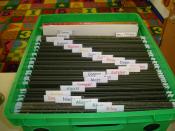
Keeping samples of a child’s writing work throughout the year is a great way watch a child’s progression along the writing continuum. There are many ways to store these samples, and again – we want something quick and efficient. One simple method to store samples children’s work is using a crate and file system.

We have used this system at my school for many other uses (such as parent-teacher communications). But this will work very well to store a child’s writing and drawing samples – as it is a quick way for a teacher to file them, rather than taking extra the time to put them in a binder or 2 pocket folder. Simply label each hanging folder with the child’s name, put them in alphabetically order and you are good to go! Take it a step further and ask children to file their OWN work when they have completed it. This saves the teacher time, and also gives the child some independence and MORE practice with literacy by having to find their name. They also learn to recognize their friends names, as well.

What methods to YOU use to for storing and assessing children’s work?

To get more indepth descriptions of writing experiences, such as shared/interactive writing and bookmaking, refer to the following chapter reviews:
Pre-K Pages – Chapter 5
PreKinders (Chapter 16)
Growing in PreK (Chapter 17)

Check back next week for reviews of the last 2 chapters in this section. The first one will be about observing children for evidence of sound, letter and word knowledge.

Grab the button below:

Pre-K Pages