Five Minute’s Peace for Mother’s Day

Mother's DayFor Mother’s Day, a fun story to read to your class is the book called “Five Minutes Peace“, about a mother elephant who only wants to have five minute’s of peace and quiet from her energetic children by taking a bath, (of course, her children have other plans!).

The Book

It opens up the conversation about how Moms need a rest sometimes (just like everybody else). I asked them “What can YOU do to help Mom relax?”. The children enjoyed coming up with ways that they can help out their mom around the house – and nice things they can do for mom on Mother’s Day. It was also funny to hear about how they think their mom relaxes …“Mommy likes to relax doing the laundry”!

The Gift

To go with this story, children can make bath salts for their own mom (or grandma, or other special lady). Give each child a ziploc baggie, and allow them to scoop in 1 cup of Epsom salt. I had the children each smell the salt before we added the fragrance oil, asking them questions like “what does it smell like?”, “does it smell good or bad?”, “would you want to put this into your bath water?”. Then help them add 2 drops of fragrance oil and 2 drops of colorant (both the oil and soap colorant can be found at local craft stores). I found my fragrance oil at the Dollar store, so it was very inexpensive – and I only needed less than 1 1/2 small bottles for 25 children. You only need a little bit of the oil and color – so a small bottle of each goes a long way.

Next, help the children zip up their baggie and then have them shake and mix together the oil and color in with the salt. This is great fun for the children, as they watch the color blend into the salt. We opened our bags again to take a new “sniff” to see if we liked the new smell!

The Card

Lastly, have children make cards or tags to attach to their bag of bath salts. Assist them in writing on the card who the gift is “to” and “from”. You can pre-print up tags or cards with a picture of a bathtub and the following poem, if desired:

Here’s a gift for Mother’s Day.
I’ll try my best in every way,
to give you quiet, and some rest.
Relax and soak … you are the best!

Mother's Day2

We printed up some small rubber duck clipart for the children to color, cut and glue onto their bathtub tag (printable PDF). We also had hole punched some white circles for the children to glue on as bubbles. (I love how some duckies didn’t quite make it into the tub – see picture below!)

We rolled up the baggies and used ribbon to attach the cards. The children can’t wait to give these to their special lady on Mother’s Day!

Earth Day books and activities blog hop

earthdaybloghopI am lucky to be part of a group of early childhood bloggers who network, share ideas and support each other online. We have banned together in our first ever “Preschool Blogger Network” blog hop – and we are excited to bring a host of ideas that you can share with your children or class for Earth Day. We decided to pair each of our activities with a book, for and added opportunity to extend the learning objectives. So sit back … relax … bookmark and “pin” all the wonderful ideas you’ll find below! Here is our idea for plastic bottle stamping … don’t forget to visit all the other ideas linked at the bottom of the post!

Plastic bottle stamping

Here we’ll use recycled plastic bottles to make Earth Day art! Collect a variety of empty water bottles – look for the ones that have indentations on the bottom of them. If you are able, collect a variety of bottles in a few sizes, to make a variety of prints.

First, talk to the children a little bit about recycling, and how we can REUSE things that we might otherwise throw away. Show children an empty plastic water bottle – many of them may already know that you can recycle it. But tell them how you will give that plastic bottle another use before you will wash it and put it into the recycle bin.

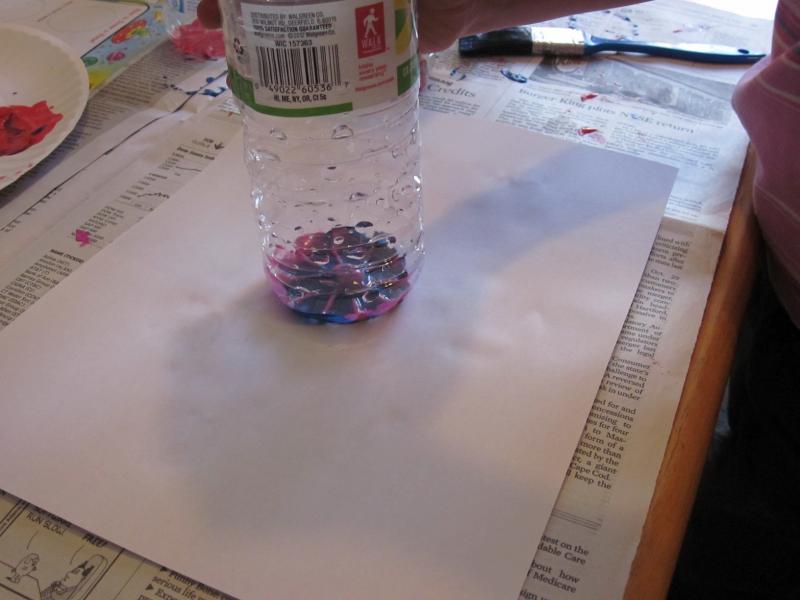
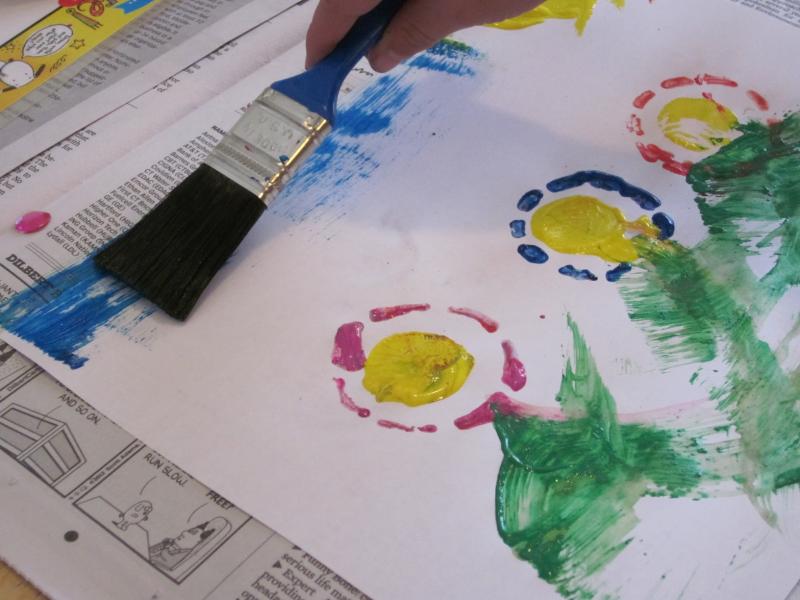
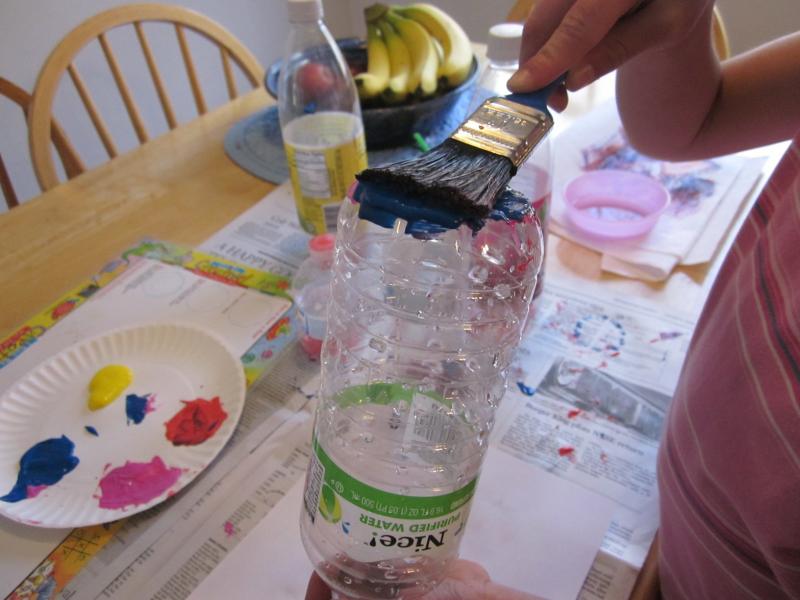
Next, cover tables with newspaper (another recycled item!), and have small containers of paint and with paint brushes. Then, have children paint the bottom of their plastic bottles and then press onto their paper to make designs or prints. This is how I did it with my daughter at home … in a classroom setting, I would try setting up shallow bowls or paper plates with paint for children to dip the bottles into and then stamp.

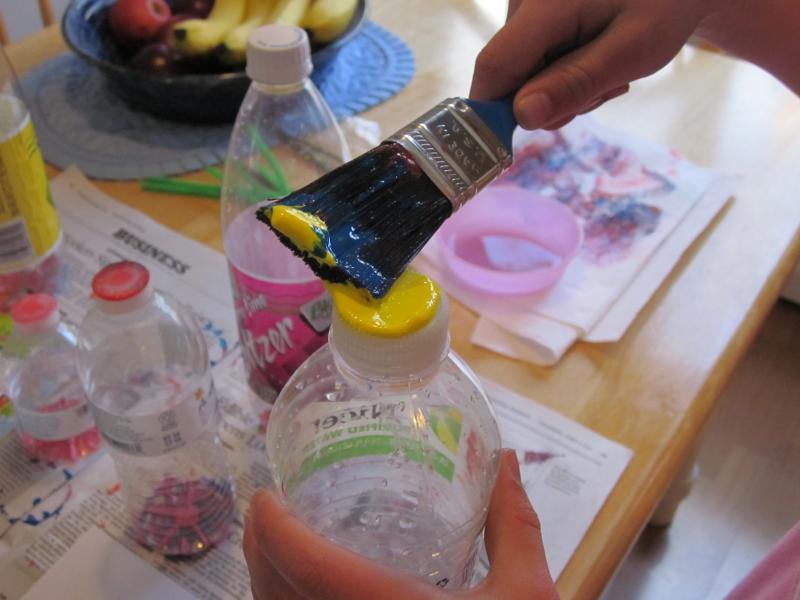
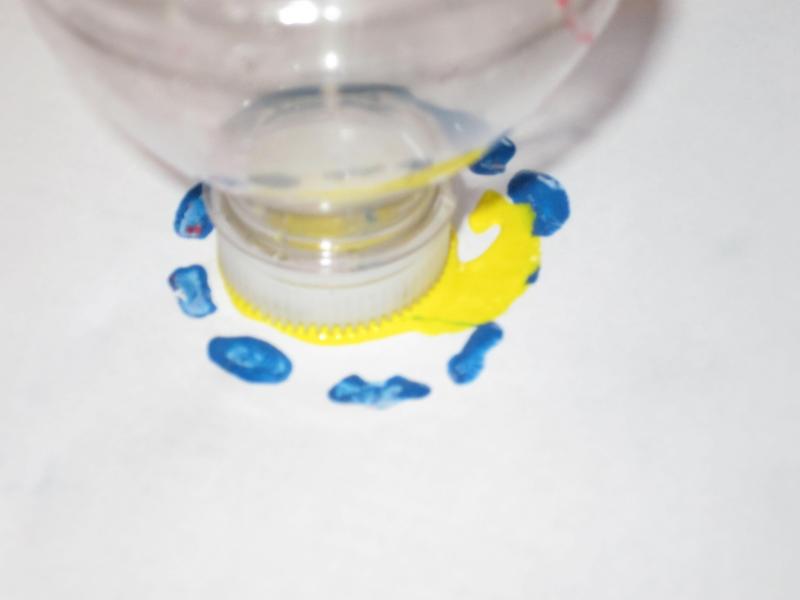
Next, have children turn the bottles over and paint the caps and press those as well.

Printing the painted cap inside the print of the bottom of the bottle can look like a flower!

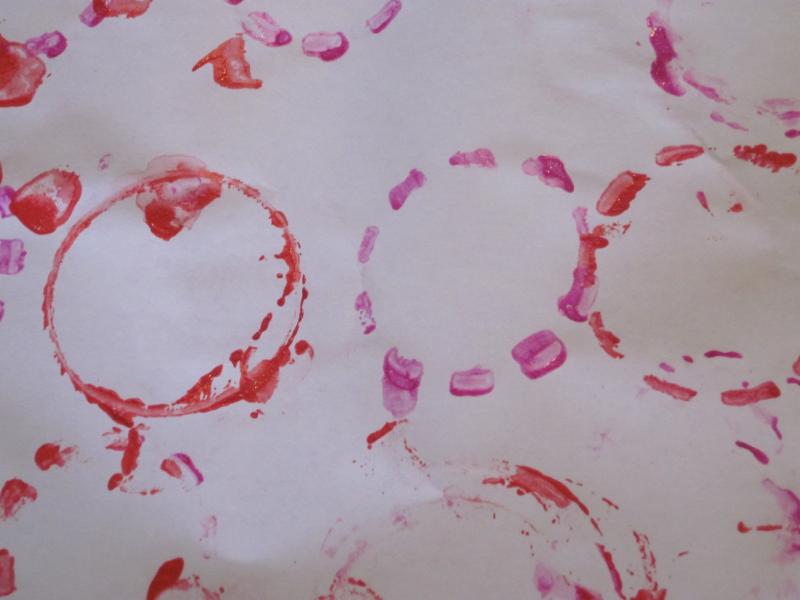
They can just make a bunch of prints …

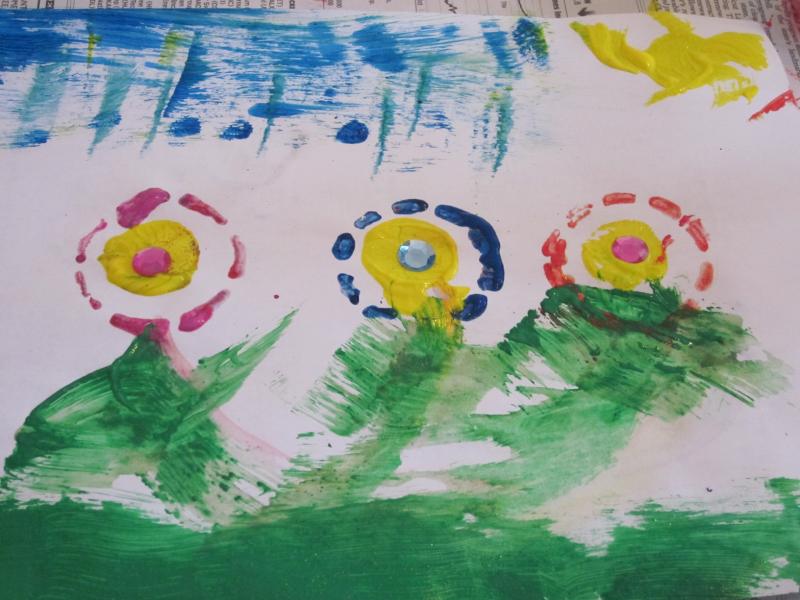
… or they can turn their prints into a painted scene.

My daughter added some gems to the center of her flowers. You can add other “recycled” items, such as old buttons, leaves or twigs from outside, discarded fabric pieces … anything! It’s a good open-ended art activity … I really had no idea how this would come out going — but my daughter sure did enjoy the process! (I think she really liked the large paint brush I gave her … she got a kick out of painting the bottom of the bottles!)

The Book

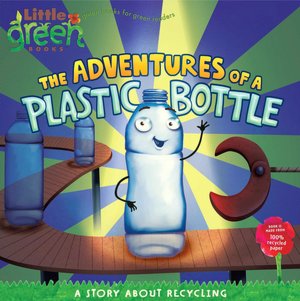
Pair this activity with the book “The Adventures of a Plastic Bottle“, which follows how plastic bottles are made, how they get recycled, and some of the things they can be recycled into. I definitely learned some things about the recycling process from this book!

;

The Blog Hop

Now don’t go away because there are even more Earth Day books along with super great ideas being shared by these bloggers today! Stop by and bookmark or even go ahead and pin them all! … Teach Preschool : Child Central Station : Living Montessori Now : Aunt Annie’s Childcare : The SEEDS Network : Flights of Whimsy : Pre-K Pages : Kreative Resources : I’m a teacher, get me OUTSIDE here! : Share & Remember : Music Sparks : little illuminations : Greening Sam and Avery : Putti Prapancha : Early Play : 52 Days to Explore : Little Running Teacher : Look at My Happy Rainbow : Rainbows within Reach

Book review of “I Took the Moon for a Walk”

Book reviewIt’s no secret … I LOVE children’s literature! I love finding out about new books (and books that are new to me). One way I find out about new books is by visiting my local library. The librarian’s at my local library in South Windsor, CT are GREAT! Truly a wonderful resource! Another great way to find out about a book that you may want to read to your children or to your class is through a book recommendation from another parent or teacher. Getting another parent or teacher’s perspective on the book can be very helpful. You can find out what questions the book generated and how the children felt about the book.

This is something we’d like to do here on our blog from time to time – and here is our first book review on “I Took the Moon for a Walk” By Carolyn Curtis and Alison Jay (review by parent Amanda Lukingbeal).

What are the ages of the children you read this with? The ages were 3 ½ and 1 ½ year old boys, Luke and Noah.

Were your children engaged while being read the story?

Both boys seemed pretty engaged. The cadence of the story, the way it rhymed, made it a perfect bedtime book. All 5 times, whether I read it or Daddy did, Noah sat down on our laps to cuddle while it was being read. Luke helped turn the pages after the first couple times because he could tell where the story break was. I think this may be one of Noah’s favorites for awhile. He’s been having a bit of adjustment issues lately with the new baby, and being read soothing stories has been a godsend.

Did they enjoy the book? Yes, they sure did.

Did you enjoy the book? Yes, because it was one of those old fashioned kind of books, simple and soft illustrations, calming subject, and again, short enough to not be a yawn for Mom and Dad to read…

Did reading it generate any questions from your child? Well, Luke was just all sorts of concerned with how the moon and the boy knew each other or came to be friends, or why the moon was following the boy without a leash, we had a good talk about how the moon is always there, behind the clouds or not, and you can always talk to the moon at night, because he’s a good friend.

Do you feel this book was appropriate for your child’s age? Absolutely, for both. Noah maybe even more so, he just quietly listened and enjoyed the flow of the words.

Would you recommend this book to a friend? YES!

Thanks for reviewing the book, Amanda! Sounds beautiful! “I Took the Moon for a Walk” is now available at 20% off, as well as EVERYTHING at Barefoot Books in 2012 (use coupon code TWENTY12). Love online coupon codes!!!

Do you have a great book that you would like to share? Want to write a book review for us? Comment below or email us! Happy Reading!!

Children’s book and music for MLK Day

MLKposterThe winners have been announced in our “I have a dream” CD giveaway … thanks for all who entered and shared their dreams for children! Now we want to share some additional resources that you can use in your homes and classrooms on Monday to celebrate Martin Luther King Jr.

First up … music you can download (for FREE!). Daria is offering her “I Have A Dream” song as a free download this month. Based on Martin Luther King’s famous speech, the “I Have A Dream” song has become popular in schools, classrooms and community organizations to celebrate this day across the USA. Click here to link to the free download. You can find the song lyrics to the song on Daria’s monthly song page, along with a few other free resources.

Next up … learn about children’s book “Let Freedom Sing” by Vanessa Newton. “Let Freedom Sing” is a book for preschoolers that talks about the Civil Rights movement in the US. This story interweaves the book pages with the words from the song “This Little Light of Mine” and shows people singing. This book is reviewed in more detail by Carolyn Wilhelm on her Wise Owl Factory website. Included in her post is a FREE printable about the “march on DC” – which is suitable for preschool and includes signs that say roadblocks and open doors.

I hope you find these resources useful in your classrooms or at home with your children! Feel free to share any additional resources by leaving us a comment!

Make a hibernation book in preschool

hibernation bookDuring the winter months, you can teach young children about hibernation and where/how/which animals hibernate. This activity focuses on concepts of science (nature, animals) and literacy(knowledge of books and print, reading and writing, story comprehension). This also provides children with an experience to practice fine motor skills(drawing/writing).

A great way to start of an activity like this is with a book! There are many great children’s books about hibernation, such as “Don’t Wake the Bear” by Marjorie Dennis Murray, “Hibernation Station” or “Bear Snores On“. You can start by reading one of those books with your child/children – and then make your own book about hibernation. Not only will they learn something about the animals and how they hibernate – but this early literacy activity can provide an experience for children in making their own book.

Start off by determining which animals you want to discuss or that the children want to learn about. In our class, we talked about bears, frogs and chipmunks. You can start by printing some of the page templates we created – or you can print/write your own.

Next, find some animal clipart to print or cut from a magazine. Our book focused more onWHERE the animal was hibernating, so the children drew/illustrated the location, rather than the animal itself. Depending on what you want to focus on, you can change that accordingly.DSC09580.JPG.th

Children/teachers would read each page, then the child would illustrate the hibernation location and then glue on the animal. For additional writing practice, children can then trace/write the WORD that represents the hibernation location (ie. “cave”, “pond”, “ground”).

Our last page was more open-ended, and allowed the child to think about where he/she would hibernate if they were an animal! Children can draw/dictate/write what they feel. You can have children glue on a picture of themselves to finish off the book!

Put a book on every bed

bookonbedThe other day I read this wonderful idea in the paper in the “Ask Amy” column. It was about a literacy campaign that she launched with the Family Reading Partnership called “A Book on Every Bed.” The idea is to put a million books at the foot of a million beds for a million children on Christmas morning. What a WONDERFUL idea! It’s a tradition I plan to start this year with my own children (two of which are well beyond the preschool years – but I think they will still get a kick out of it!) It is such a simple idea – and one that doesn’t even need to cost anything – the book you give can be one that is passed down. Here is the idea:

Take a book.

Wrap it.

Place it on a child’s bed so it’s the first thing the child sees on Christmas morning (or whatever holiday you celebrate).

That’s it.

A Book on Every Bed” is an appeal to spread the love of reading from parents to children. As early educators we know that a love of literacy starts EARLY. Children who are exposed to books and stories while they are young will be more likely to have a love of reading throughout their life.

What can we do help to put a book on every bed?? If you work at a preschool or child care center, how about ….

Holding a book swap with the families at your center

Collecting used books in good condition and donating them to a women’s shelter

Organize a Scholastic book fair and take your profit in books to donate

DO YOU HAVE OTHER IDEAS?? Please share them!


VIDEO: Amy Dickinson and Sahela reading

Image credit: Amy Dickinson and the Family Reading Partnership

Phonemic Awareness: Another Building Block for Early Literacy

ColleenProfile_0Lots of people have heard of phonics and indeed there has been a heavy focus on them in schools for years, and then not so much of a focus as we looked at whole language approaches, and then back again to a phonics-intensive focus (don’t you just love the education pendulum?).

But before phonemic awareness can develop, or at least before it can develop effectively, a child has to have a grasp on phonemic awareness. Phonemic awareness is the ability to hear, differentiate, and manipulate individual units of sound (or phonemes). This includes tasks like segmenting a word (“cat” is “c-a-t”), blending a word (“caaaatttttt”… “cat”!), making substitutions (Say “sat” with an /m/ sound instead of /s/… “mat”!), deletions (say “and” without the /d/ sound… “an”!) playing with onset and rime (cl-ap) and finally rhyming – both identifying rhyming words and creating their own.

Most children develop these skills naturally, especially when exposed to a rich environment of talk, music, and literacy from infancy through the preschool years. However, some children do not, either because they are going to have learning needs that require more explicit instruction in these skills, or they lacked the rich early learning environment so necessary for later literacy success.

Whatever the case, we know that children who struggle with phonics may actually first have a deficit in phonemic awareness, and that needs to be addressed before phonological awareness and reading can really thrive.

For the most part, you won’t need to teach phonemic awareness explicitly, but you will want to integrate lots of play with sound and words into your daily activities. It doesn’t have to involve print, in fact, it often shouldn’t, since it is essentially children’s auditory processing you are focusing on here. There are lots of other chances for great print experiences, and of course you should go for those too!

If you teach Kindergarten or even first or second grade, be on the lookout for those struggling early readers and make sure to get a formal check on those phonemic skills. Sometimes all it takes is a little extra attention in this area and kids begin to thrive with reading!

What sort of fun activities do you use that invite children to play with phonemic awareness?

Language: A Key Contributor to Early Literacy

ColleenProfile_0One of the most important parts of a child’s early literacy experience actually has nothing to do with books or print at all. Instead, it is all about their early language experiences centering around talk – both being talked to (not at!) and later, talking back.

Researchers Betty M. Hart and Todd R. Risley focus on this idea in their book “Meaningful Differences in the Everyday Experience of Young American Children“. They discovered that the most important predictor for a child’s language acquisition was how much language they heard on a daily basis from their caregivers (in the case of this study, the parents). The amount of spoken language heard by children had a direct impact on both the quantity and quality of their spoken vocabulary. A strong oral vocabulary lays a strong foundation for a quality early literacy experience.

So talk to the children in your care, and talk a lot! Again, I stress talking to kids, meaning you keep up a running commentary and dialogue going, even before the child can really talk back (yes, sometimes you might feel like you are talking yourself silly!). But talking to kids using descriptive words, and praise, and positive interaction is infinitely important. Sure, sometimes we have to talk at our kids, giving directions, managing behavior and routine, etc. But make sure a vast majority of what your kids hear is positive and interactive.Language

Chat about what you are doing as you give a bath, make dinner, take a walk, etc. Observe that that car over there is red and that the slide at the playground is blue and twisty. Anything, really! Keep up a chatter of narration about your day, and engage your child in even the smallest task and routine. A language rich environment paves the way for a successful literacy later in life (but only a few short years away!) in very powerful ways.

What are some ways you can think of to engage a child in early oral language experiences?

Having a preschool storybook character parade

storybookHave a fun time promoting literacy at your child care program or school by having a “Storybook Character Parade“. This is a fun opportunity to allow children to come to school in costume, and can be done at any time of the year.

Beforehand, talk to the children about some of their favorite books and characters. Ask them why a certain character is a favorite (what did the character DO in the story, did the character go through a hard time, who were some of the characters friends, etc.). Then, invite the children to come to school dressed up as their favorite storybook character AND have them bring the book to school for show and tell!

Allow each child to tell the class who they are dressed as and to show their book. Allow the child to tell a little bit about the book, like a short “book talk”. This activity helps children in recalling stories, and it gives the other children an opportunity to hear about new books that might interest them. Then, it’s time for the parade (what child doesn’t love a parade, right?). Children can parade into other classrooms or through the hallways.

A variation of this activity is to read a pre-selected storybook in class and have dress-up clothes available for children to dress up as some of the characters in the story. They can have fun re-enacting the story for their teachers and classmates. For added fun, the children can reenact the story for another classroom while a teacher narrates the story.

This type of activity really brings stories to life for young children. Share with us some of your favorite literacy activities!

Choosing great books in preschool

booksThe following post is from Colleen Brunetti … our Early Literacy Expert. She will be doing a series of posts on early literacy for preschoolers. Since this ties in so nicely with our recent Book Study Blog party of the book “Literacy Beginnings” (Fountas & Pinnell, 2011), I’ll interject a couple of quotes from the book along the way! –Laura

Choosing high quality children’s literature is an important part of inviting your child into the world of books, and for fostering a love of literacy. But what exactly is “quality children’s literature”? Google the phrase and you come up with a list of hits that are non-specific, and very much based on opinion. So, in that spirit, here’s my opinion! My top 5 tips for choosing quality children’s literature.

1) Choose something with engaging pictures: Illustrations very much carry the story, especially in the early years. Brightly colored illustrations are great, but don’t discount black and white. Touchable pictures (scratchy cardboard box, or a soft kitty) for the very young are very engaging, as are pictures of real children. There’s nothing babies like better than looking at pictures of other babies!

“Select informational texts that have large, clear pictures and focus on familiar topics that children can understand.” (Fountas & Pinnell, “Literacy Beginnings”, 2011)

2) Look for stories with simple prose: Less is more in the early years, and you can go to reading longer and longer stories as your child indicates they are ready (i.e.: can sit through more than a page or two!). Enjoy the time lost in words together. It’s okay if children don’t sit through a whole story at first. Everything in time.

3) Look for rhyming stories, or writing with a rhythm to it: Lots of exposure to rhythm and rhyme is excellent for young children. It develops early phonemic awareness skills (a child’s ability to hear and distinguish units of sound), which are key to later reading success. We’ll talk more about that in a future blog.

“When children hear poems and rhymes, they start to notice the words that sound alike at the end. Recognizing rhyme is one of the first signs of phonemic awareness.” (Fountas & Pinnell, “Literacy Beginnings”, 2011)

4) Don’t forget the classics and look for award winners: There’s a reason some books have stood the test of time. Certain characters have captured children’s hearts and continue to charm the generations. Think titles like “Goodnight Moon” or “Where the Wild Things Are”, for example. There are also wonderful awards out there that can help you choose some great books. Look for past Caldecott winners (for illustrations), the Newbury Award for distinguished children’s literature, or the Nutmeg Book Award for Connecticut’s very own awards. (CheckHERE for a list of awards in other states too!)

5) Avoid the crummy stuff: Now this item is probably left more to opinion than any other. What is bad children’s literature? Consider things like appropriate content, underlying messages, good role models, diversity… pick things that are important to your own social values and consider if they are reflected in the books you share with your children. Personally, I also don’t care for books that are a weak synopsis of things like movies. Pick up a Disney book re-telling one of their classic movies and see what I mean. The descriptions and dialogue are weak, the pictures un-original and computer generated. Personally, I’d rather invite my child into a world of books where his own imagination takes hold, and not the pre-conceived images he’s already seen on screen.

How about you? What makes for good (or bad) children’s literature in your opinion? What are some of your favorite titles and why?