Experiences that support early language and literacy learning

A great book I recommend for early education professionals to read is “Literacy Beginnings” by Gay Su Pinnell and Irene C. Fountas.  Fountas and Pinnell are well respected educators who have published various books about literacy learning. This book is focused on literacy experiences in the preschool classroom; and as such, can be used as a professional development guide for teachers who want to learn more about this topic.

This post is designed to serve as framework for a PD lesson for early educators who want to dive deeper into the chapters of this book. This post will focus on Chapter 5, titled “Using a Framework for Language and Literacy Learning“.

Read “Literacy Beginnings” – Chapter 5

The chapter starts off talking about essential learning experiences that need to be included in a prekindergarten classroom to support children’s development.  Some of these occur daily, whereas others occur over the course of a week. Activities such as circle time, outdoor play, projects (inquiry), choice time, reading and writing time are explained in this chapter. But then the authors talk about those activities that promote language and literacy.

For our exploration, we will focus on the reading activities that are discussed in this chapter.

Literacy Activities

The authors talk about 3 essential literacy activities: Read-Aloud and Shared Reading, Book activities and Library time.

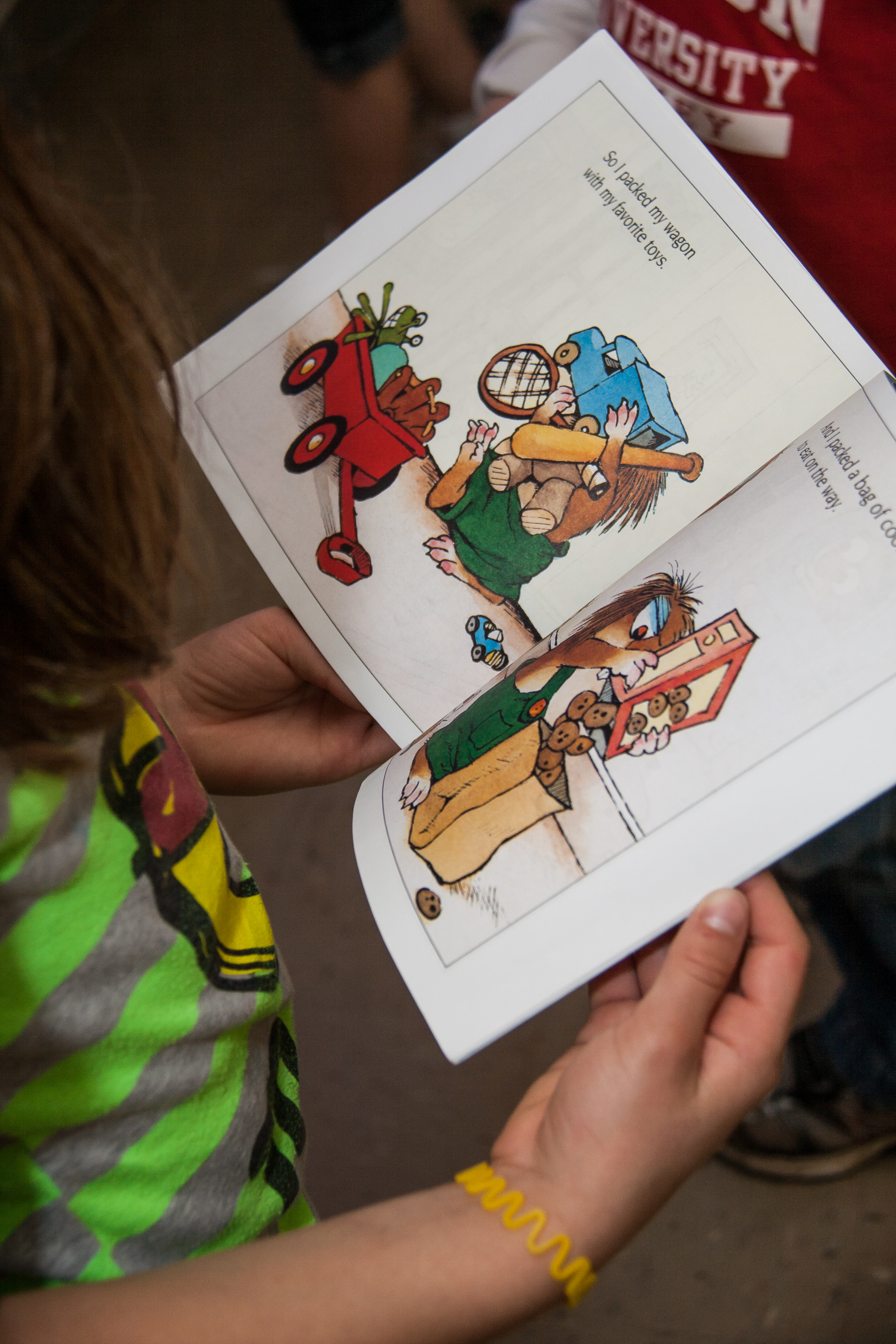
With an interactive read-aloud, teachers read books to the children and talk with them about the story. Teachers can make the story interactive by asking the children questions, talking about new vocabulary, pointing to the illustrations and encouraging discussion.

Shared reading is when teachers and the children read the text together (using big books, flip chart poems or songs or writing a rhyme on the chalkboard).

Book activities are my personal favorite (usually done after one of the above reading experiences). It was great to read in this chapter how children respond to literature by participating in an activity after reading it. 

Library time is when children have the opportunity to explore the classroom library. The authors have recommendations of ways teachers can setup their libraries, and suggest including books that you have read to the class, in addition to having some written by the children. 

Exploring and Sharing Literacy Activities

After reading this chapter, choose ONE of the literacy activities explored and share a way that it can be incorporated into a preschool classroom. The activity can be one that you researched online, or one that you have actually done in the classroom. For example, if you have an idea for a good interactive read-aloud, please share the book and some of the ways you can make that story interactive. Or if you know of a good book activity to help reinforce a story, please share that.

I setup a Padlet below for teachers to share their ideas.  Just click on the pink plus sign (+) in the padlet below to post your idea (which could be a link, photo, video, text, etc).  I added a couple of examples to get started. Let’s fill it up the page with ideas!

Made with Padlet


ISTE standards addressed:

  • ISTE® 3c: Evaluate and select information sources and digital tools based on the appropriateness to specific tasks. (Standards•S © 2007 International Society for Technology in Education. ISTE® is a registered trademark of the International Society for Technology in Education)

English Language Arts Standards addressed:

  • CCSS.ELA-LITERACY.SL.11-12.5 Make strategic use of digital media (e.g., textual, graphical, audio, visual, and interactive elements) in presentations to enhance understanding of findings, reasoning, and evidence and to add interest. (© 2018 Common Core State Standards Initiative)
Edcamp for early educators

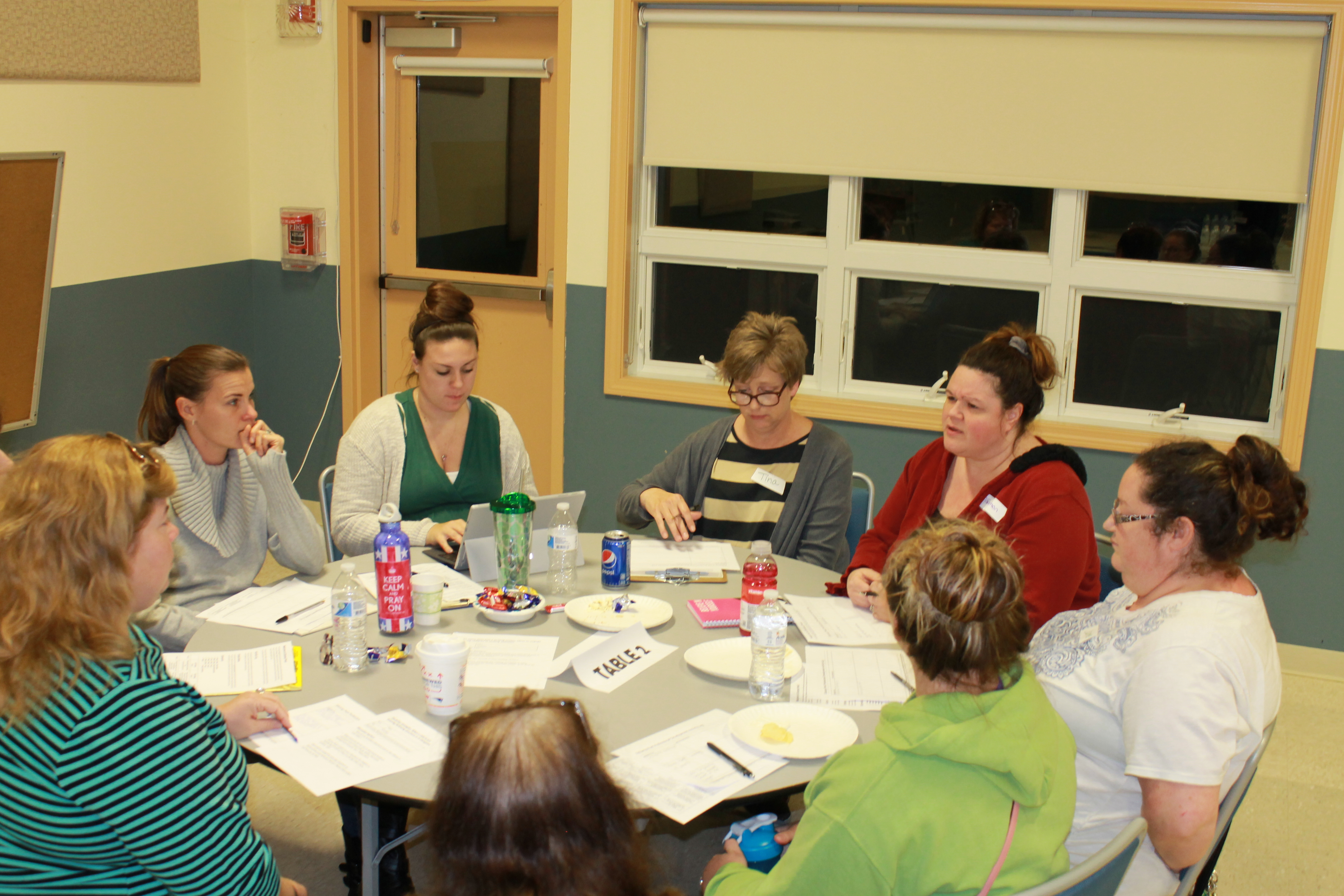
After learning about the concept of an edcamp training during a course I am taking at the University of Saint Joseph; I knew this was something I wanted to organize for preschool teachers and staff in my local area.  I put together the following educational video (below) to explain the idea of an edcamp; and how I applied the model to deliver a professional development session specifically for preschool teachers, directors and child care staff.

What is an Edcamp all about?

Edcamps are free, participant-driven professional development which is done in an “unconference” format.  Session topics are determined by participants, and there are no pre-scheduled presentations or keynotes. The goal is to keep sessions spontaneous, interactive and responsive to everyone’s needs. (Visit edcamp.org to learn more.)

I adapted the Edcamp style to create a shorter professional development session (2 1/2 hours) for infant, toddler and preschool teachers, as well as child care staff and administrators. 

How did the Edcamp work?

  • Participants registered and submitted topic ideas in advance.  

    Using an online registration page, participants were asked to register and submit one or multiple topics for consideration as a breakout session.  About a week prior to the training, I setup a schedule based on session topics that were submitted.  Having topics submitted and the schedule set beforehand allowed us to streamline the training into the shorter timeframe.

  • Participant chose what sessions they wanted to attend.  

    Participants self-selected breakout sessions that were of interest based on the final published schedule.  Teachers were encouraged to move to another session if they had selected a session that did not meet their needs. 

  • Experience, not Experts.  Everyone participated!

    This is the best part!  There is no one expert giving a presentation.  Everyone actively participated, with the guidance of a volunteer facilitator, or discussion leader.  Everyone was encouraged to ask questions, share best practices and support each other to get the most out of the training.  

  • Notes were taken and shared!

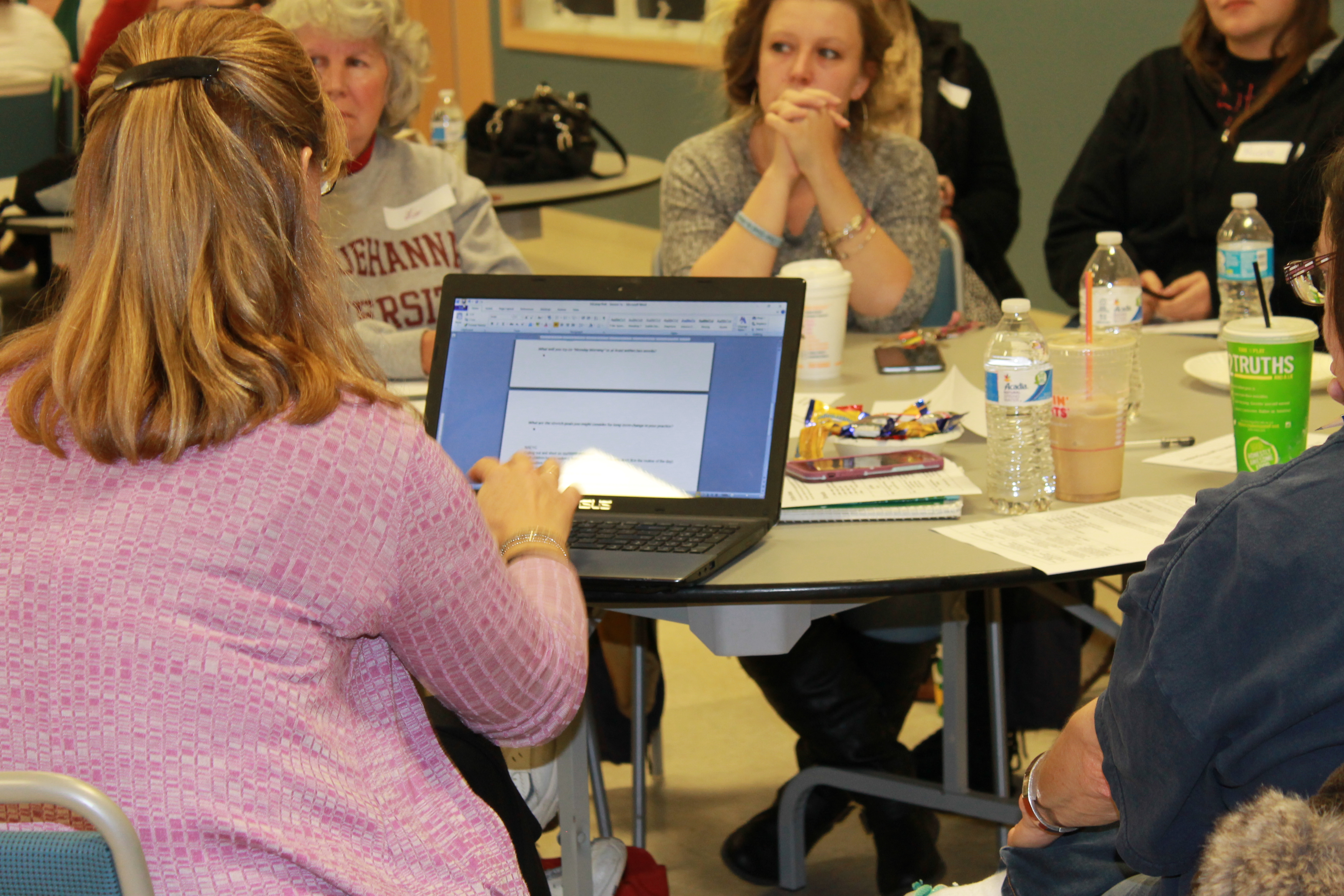
    Participants were given a “session log” to take notes on anything that was important to them. Digital notes were also taken on laptops that were available for each breakout session.  After the training, all laptop notes were uploaded to Google docs and made accessible to all those that attended.  In this way, teachers had access to notes from ALL the sessions (even the ones they didn’t attend)!


 What did participants think about the Edcamp experience?

The feedback was very positive, with many attendees wanting to have another training in the future.  Here is a snapshot of some of the responses:

I loved being able to talk, reflect, share and learn from other centers, directors, staff and my staff!

Do another Edcamp!

Very helpful!  Really enjoyed the open discussion.

I liked the networking/discussions with teachers that I do not work with and compare what works in their classrooms on the topics of stress, literacy and movement.

I think that it was really interesting to be able to talk with other teachers.


Anyone can organize an Edcamp!

Take a look at the video below to get a peek at how we setup this edcamp training for ECE professionals. I hope it inspires others to consider this type of collaborative training model for their school and/or community!

Getting back into the swing of things

riley_0For programs who shut down over the summer or for those who run a summer camp program, it’s somewhat bittersweet to return to school in the fall. For me, it is always sad to see summer come to a close, but there is also something exciting about a new school year starting.

Here are some things that I look forward to as a new academic year kicks off….please feel free to share your excitement with us too.

  • Meeting new students and parents
  • Greeting returning students and seeing how much they have grown since last year.
  • Ordering supplies for our teachers and watching them get excited about setting their classrooms up.
  • Having our floors waxed and buffed…that smell reminds me of back to school!
  • In-service training….I do in fact enjoy spending time with my staff and getting to know them better while we train.
  • Hosting our “stop by and say hi” event. I love watching our students come in to see their cubbies, meet their teachers, and see their classrooms.

For me, the beginning of the school year represents a new beginning for us. I find that staff are at their most energized and motivated…..a very special time of year. If you share in my excitement we’d love to hear from you!

Having fun with textured clothespins in preschool

textured clothespinsI was inspired by the textured clothespin idea from Teach Preschool, so we used some other materials to make some textured clothespins of our own! Using these around the preschool classroom is a fun sensory experience and wonderful for fine motor skill development.

You could use almost any type of collage materials that you can find (buttons, googly eyes, pom poms, beads, foam shapes) and you can change these up every so often to reflect themes and topics that you are discussing in the classroom.

We used tacky glue to stick on heavier objects, it is less drippy and holds well. We also tried to leave the ends of the clothespins clear of objects so that little fingers could grasp the ends easily. We also had some sticky-back foam pieces that stick well (but can also be easily pulled off). That can also be a good thing … since you can then easily change up the foam pieces on the clothespins and reuse them.

Some ideas for using textured clothespins are:

– Make clothespins using objects of all the same COLOR, or use colors that reflect the season (ie. fall, winter, spring or summer colors … green for St. Patrick’s Day, red-white-blue for Memorial Day or July 4th, etc).

87867824f74729419cecIMG4409.JPG.main

– Make clothespins with various SHAPES and do some shape matching games with them (make up index cards with one shape on them – have them clip the matching clothespin on the card).

IMG4417.JPG.main

– Make clothespins with various PATTERNS and see if children can identify the pattern. Or make some monochrome clothespins, and see if children can make their OWN pattern by clipping them on a clothesline.

– Make clothespins with various LETTERS (using small foam letters). Some uses for this … letter matching games using letter flash cards, matching upper to lower case letters, finding the letters in your name, etc.

IMG4423.JPG.main

– Spell children’s NAMES on the clothespins … can use these for various activities in a classroom, such as a way to “check-in” to a learning center, attendance board, name matching games.

– Use these as a 3-D ART project, allowing children to use various materials to decorate clothespins as they wish. These can be displayed in all kinds of ways in the classroom, and you can clip the child’s name or picture along with their clothespin.

IMG4412.JPG.main

Be sure to check out the other textures that Deborah used for her Textured Clothespins at Teach Preschool. So many ways to use these (and they are inexpensive to make)!

Melting marshmallow snowmen in preschool

snowman

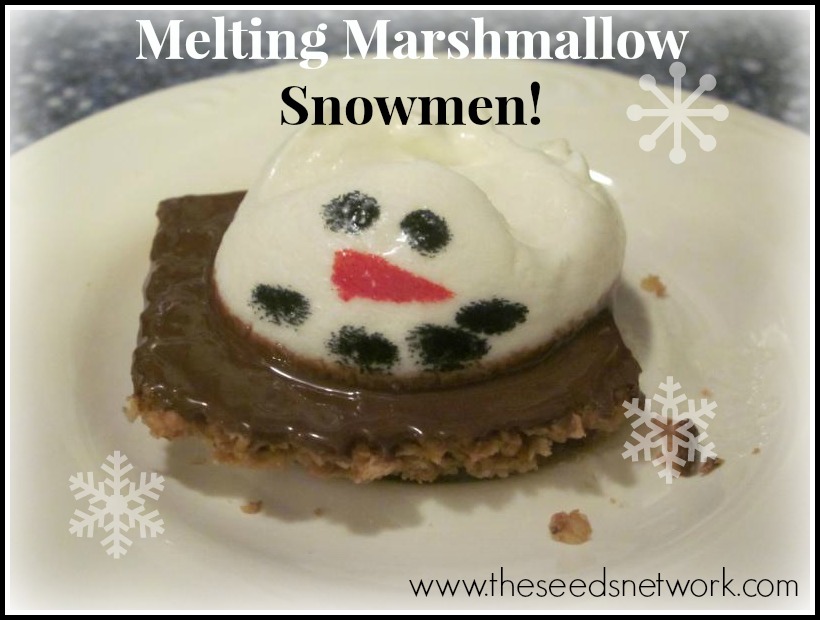
I saw these adorable snowman treats on The Amazing Mess blog – so I made a bunch for myself and bagged them up as small gifts. But then I thought – this was so easy and fun … the kids would LOVE this! And even though making these are fun (and tasty) – there were other ways to extend this activity so that the children learn a little something along the way, too!

Decorate your snowman

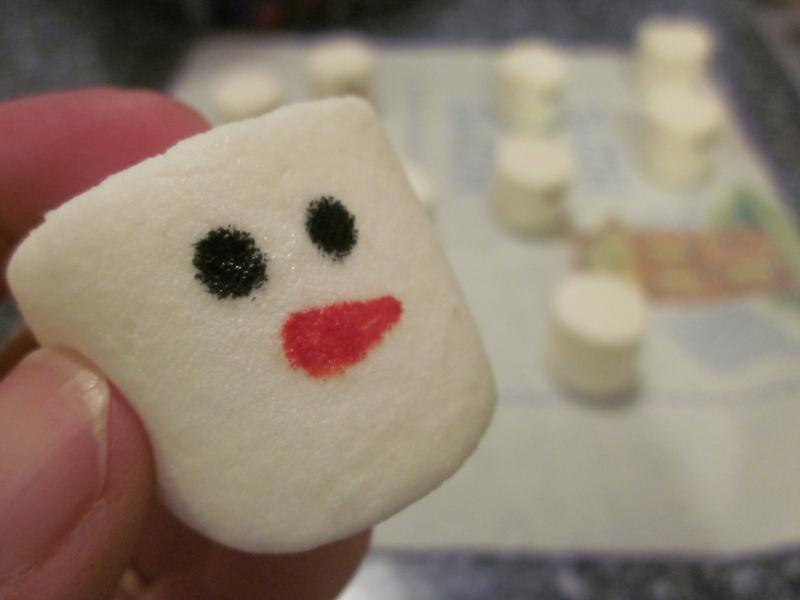
So first, here’s how to make the edible melting snowmen. Take a marshmallow and make a snowman face using food coloring markers (these are very easy for adults AND children to work with – and it’s edible).  You can find these in a local craft store that sells cake decorating supplies.

IMG2133.JPG.main.jpg (800×600)

Then, place it on top of one striped cookie (you can substitute other types of cookies, like graham crackers or nilla wafers if you do not wish to have any chocolate on the cookie – but for me, it’s ALWAYS about the chocolate! Ok, I digress!).

Extend the activity with a story

As I was making my snowmen I thought … what BOOKS could I use to go with these? Maybe a little backwards in my usually thinking (usually the book comes first, then the activity). But the main concept is the melting of the snowman, and there are lovely children’s books that go with this theme and can lead to further discussion. A few books I liked were The Smiley SnowmanWhere do Snowmen go?  or Snowmen at Night. You can have a discussion about what happens to snowmen when the weather gets warm (they melt) and talk about why that happens.

Watch him MELT!

Allow children to make their own marshmallow snowman and put it on top of one cookie. Then, ask them what they think will happen to THEIR marshmallow snowman if you put them in the microwave or oven. If their snowmen get hot, what will happen to them? And there you can touch upon the scientific concept of melting (properties of matter) and have them make predictions.

Next, SHOW them what happens by putting their cookie/snowman in the microwave for 10 seconds. When it comes out – it will be like a melted snowman! (They will really get a kick out of this!) . Top off with another striped cookie, and it’s time to enjoy!

Gift idea

These can also be put together as gifts for the children to give (or gifts you can make to give) by putting them in plastic baggies and attaching the melted snowman.

The tags are designed so that you can get 6 tags per sheet, and that when you attach them, the microwave instructions fold over the top of the plastic bag and display on the back.

Find more SNOWY ideas for preschoolers

Check out our Pinterest page!

PinterestSnow

Pets in the preschool classroom

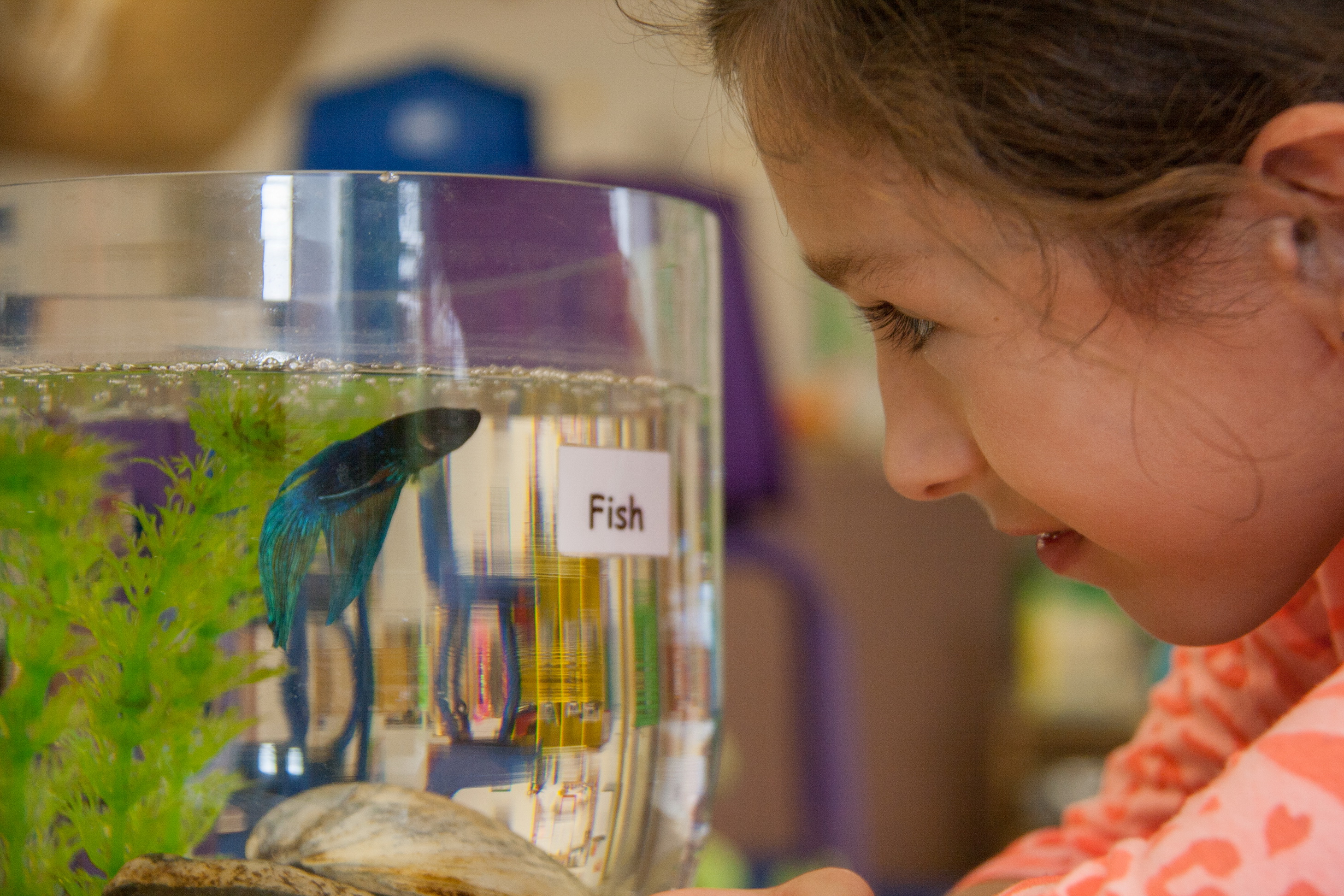
PetsCaring for a small pet, such as a fish or reptile, can provide young children with the opportunity to learn more about animals firsthand. As preschool teachers, we know that young children are engaged and learn best by DOING. We can certainly teach about animals through books and pictures … but how much MORE will they learn when they can actually interact with one. They can learn about caring for animals and the responsibility that goes with it. For preschool programs, having a classroom pet provides a wonderful opportunity for learning about nature, science and living things.

At our preschool (and at my home), we have Betta fish, which have a low start-up cost and are very easy to take care of. At the beginning of the school year, we have the class name the fish – and that really helps to give the children ownership of the pet. One of the most favorite classroom jobs a child can have for the day is the “Fish Helper” – where it is their day to feed the fish. The Betta fish food are really tiny pellets, so it’s also a good fine motor skill for the children to pick up the pellets and put them into the tank.

I think children can learn a lot from seeing and interacting with living things. At various times during the year, we will also bring in special visitors who bring in some other animals that the children can learn about. During our summer camp, we even had some older children come in and share their pets with the preschoolers. This gave the children an opportunity to observe, touch and feel an animal they may not have seen before, or only seen in pictures.

Grants to bring pets into the classroom

Updates on a few grant programs to help teachers who want to bring in a pet into their classroom.

PetSmart is now offering a “Pets in the Classroom” grant for Pre-K through 6th grade teachers to cover all the expenses of a classroom pet. Teachers will also receive additional assistance with a PetSmart associate who can help them with the basics of pet care.

Teachers can visit www.petsmart.com/teachers to apply for the grant and learn about ways to incorporate a classroom pet into their curriculum. This section of the website also provides teachers with some lesson plan ideas, some of which can be adapted to fit into a preschool curriculum.

Petco also offers a

The Pet Care Trust helps to promote public understanding regarding the value of and right to enjoy companion animals, to enhance knowledge about companion animals through research and education, and to promote professionalism among members of the companion animal community.

Pets in the Classroom grants are offered to Pre-Kindergarten through Eighth grade classes only in both public and private schools.  These grants are intended to support pets or aquariums in the classroom for the purposes of teaching children to bond with and care for their pets responsibly.

Petco is also a partner with The Pet Care Trust, which supplies products and funding for classroom critters at low cost to schools, with no out of pocket supply cost.

Do you have a pet in your classroom? Other than fish and reptiles, what other types of pets would be good in a preschool classroom?


Tips for incorporating the CT Early Learning and Development Standards

A couple of Fridays ago, I was invited to attend a training for Educational Consultants on the Connecticut Early Learning and Development Standards (CT ELDS).  As our state continues to encourage programs to use these standards, it is my job as a consultant to support programs when and where needed.  During our 6 hour training, great conversations around early education, teacher responsibility, and child development took place.  Hot topics that arose included continued challenges in bridging the gap between preschool and public school, and of course, the challenge of allocating proper planning time into program budgets.

As the CT ELDS continue to be introduced and incorporated into centers, there will be a time of transition.  Transitioning to something new can be challenging, however, with proper communication, time, and education it can be done.  As the training took place and discussions were had, I jotted down some tips that came to mind.  I hope you find these helpful in your quest to bring the CTELDS to your program.

Tressa’s Tips and Thoughts for incorporating the CT ELDS into your program …

  1. Implementing the CT ELDS will be a process that will take time for administrators and staff. As programs begin to transition to using the CT ELDS, it crucial that communication between staff AND families takes place.
  2. The CT ELDS are intended to better the growth of children age zero through five, stressing that all age groups are crucial to a child’s development.
  3. When beginning the implementation of the CT ELDS, it is important to reflect and acknowledge the areas in which the program is already meeting the standards. These acknowledgements can then become a spring board for further progression and improvement.  It will also provide self-reflection in regards to standards that are not being met.
  4. Provide staff time to discover similarities between their curriculum, the CT Preschool Framework, and NAEYC criteria. There are TONS of similarities!
  5. Encourage staff to plan experiences around specific CT ELDS. This will provide staff deeper meaning for that specific standard, and hands-on experience with specific learning progressions.
  6. Encourage staff to document progress; note how students are doing based on the CT ELDS, and look for ways to stretch thinking, plan and move through learning progressions. Use the intentional teaching cycle!
  7. Provide teachers time for opportunities to collaboratively create experience plans so they can talk through the progressions and help each other understand them, as well as brainstorm creative execution approaches.
  8. Try to steer away from teaching for assessment and steer toward helping children through learning progressions.

Have a specific question about how to implement CT ELDS?

Post a comment or email us!

Here are some helpful links!

CT Office of Early Childhood ELDS page:
http://www.ct.gov/oec/cwp/view.asp?a=4541&q=536726

CT ELDS:
http://www.ct.gov/oec/lib/oec/earlycare/elds/ctelds.pdf

CT ELDS with aligned Preschool Framework:  http://www.ct.gov/oec/lib/oec/earlycare/elds/ct_elds_and_paf_alignment.pdf

Creative Curriculum / CT ELDS crosswalk:
http://teachingstrategies.com/wp-content/uploads/2014/06/CT-CC-Alignment-Early-Learning-PS-2014.pdf


Painting with snow and other fun snowy activities!

Painting with snowIf you are lucky enough to live somewhere with winter weather – you can bring the outdoor in for a little snow day fun! Painting with (and ON) snow is a fun way to let children explore concepts of color mixing and the scientific properties of snow.

First, we scooped up a small bucket of clean snow and brought it inside (if you scoop your snow before you are ready to use it, then you’ll need to keep it in the freezer until you are ready). We put snow into small bowls for children to use while watercolor painting. Instead of using cups of water — children wet their paint brushes with the snow. We discussed what snow is made from (water) – and how as the snow gets warmer inside it will start to melt (properties of matter). Using the snow instead of water keeps the brushes from getting TOO wet, and makes the watercolor pictures more vibrant, as well.

Painting with snow2

Inevitably, as the children cleaned and wet their brushes on the snow, the snow started to turn colorful. So we explored some color mixing in the process. In the end, many children enjoyed painting the snow more than their pictures! So we brought out some bowls and scooped some snow for children to paint on individually.

Another way one class did some indoor snow painting was by using liquid watercolors in cups and had the children dip their brushes in the colors and painted on the snow.

If you don’t have SNOW where you live …

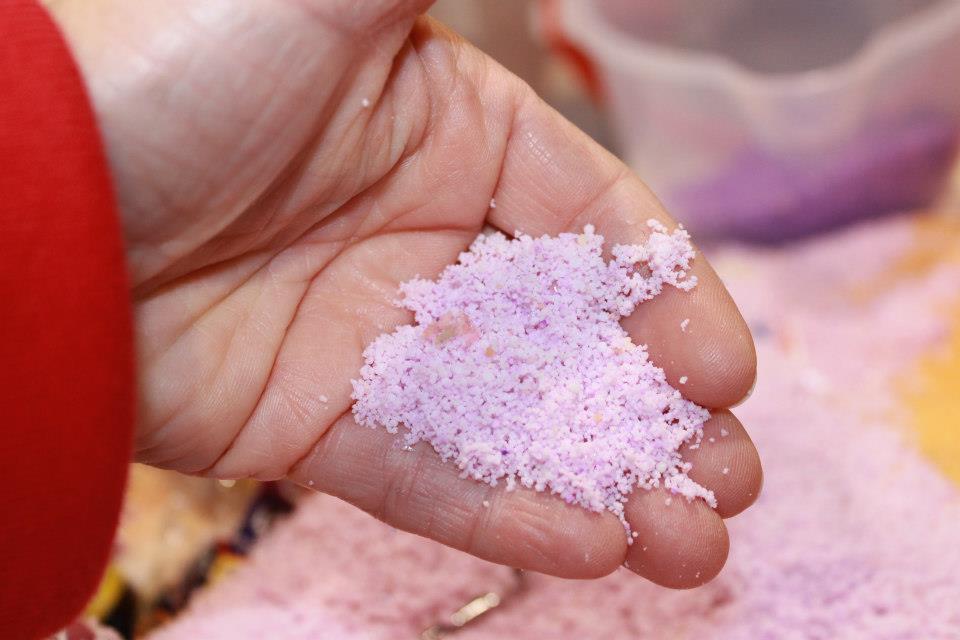
We are fans of Insta-Snow / Super Snow, to make your own “snow-like” experience! It has a cool texture to it, and a small amount of powder makes a good portion of snow that lasts quite awhile.

Initial thoughts

While we were at the NAEYC conference in Atlanta, Discount School Supply had a booth with some Insta-Snow mixed in with opal glitter and coloring (very pretty).

Other SNOWY activities and art projects

If you search on “snow” in our Idea Search Tool … you’ll find a lot of fun snowy activities (many requiring materials OTHER THAN snow!).

You can also check out our Snowy PINTEREST board for more art and educational ideas related to snow!

Painting with snow

We are thankful in preschool

preschoolAt this time of year, children get excited about all the holidays coming up. It is important to take some time before and during Thanksgiving to talk to young children about their blessings … what they have to be thankful for. Many children can easily talk about all the things they would like to have or “want” … but how about talking about how grateful they are for the things they already “have”? Teachers and parents can do some fun, creative and thoughtful crafts and activities with their children to bring out discussions about what we are thankful for!

Thankful Turkey Craft

This project can help children work on their fine motor skills (by cutting, writing and gluing), as well as being a good conversational activity. Use colorful construction paper turkey feathers to highlight things your child is thankful for.

Thankful Hanging LeavesDSC04180.JPG.th

This is a cute project that makes a great keepsake for families! Beforehand, cut out leaf shapes from construction paper in various fall colors – and children will dictate or write their blessings on the leaves. Decorate with glitter, attached to some raffia and tie off with a bow!

Thankful Pumpkins

This craft was inspired by Thankful Pumpkin Craft at christianpreschoolprintables.com. Decorate a paper plate as a pumpkin, and attach a paper pumpkin leaf listing something the child is thankful for.

Paper Bag Thanksgiving Book14138181374ecaf2c123d7dpumpkin.jpg.th

I found the idea for this book at ArtsyMommy.com. This is the type of project that can be adapted for older and younger children. I adapted it here for preschoolers (ages 3-5), including a page to draw what the child is thankful for, and a page to list favorite Thanksgiving foods.

Thankerchief Game

Have children sit in a circle. Have them pass around a “thankerchief” (handkerchief/bandana) around as everyone says the following poem:

Thankerchief, thankerchief, around you go
Where you’ll stop, nobody knows.
But when you do, someone must say,
What they are thankful for this day.

When the poem ends, the player holding the “thankerchief” must say aloud one thing they are thankful for. Continue the game until everyone has had a turn saying something they are thankful for.

What types of crafts/activities do you do with children for Thanksgiving?

More pumpkin activities in preschool

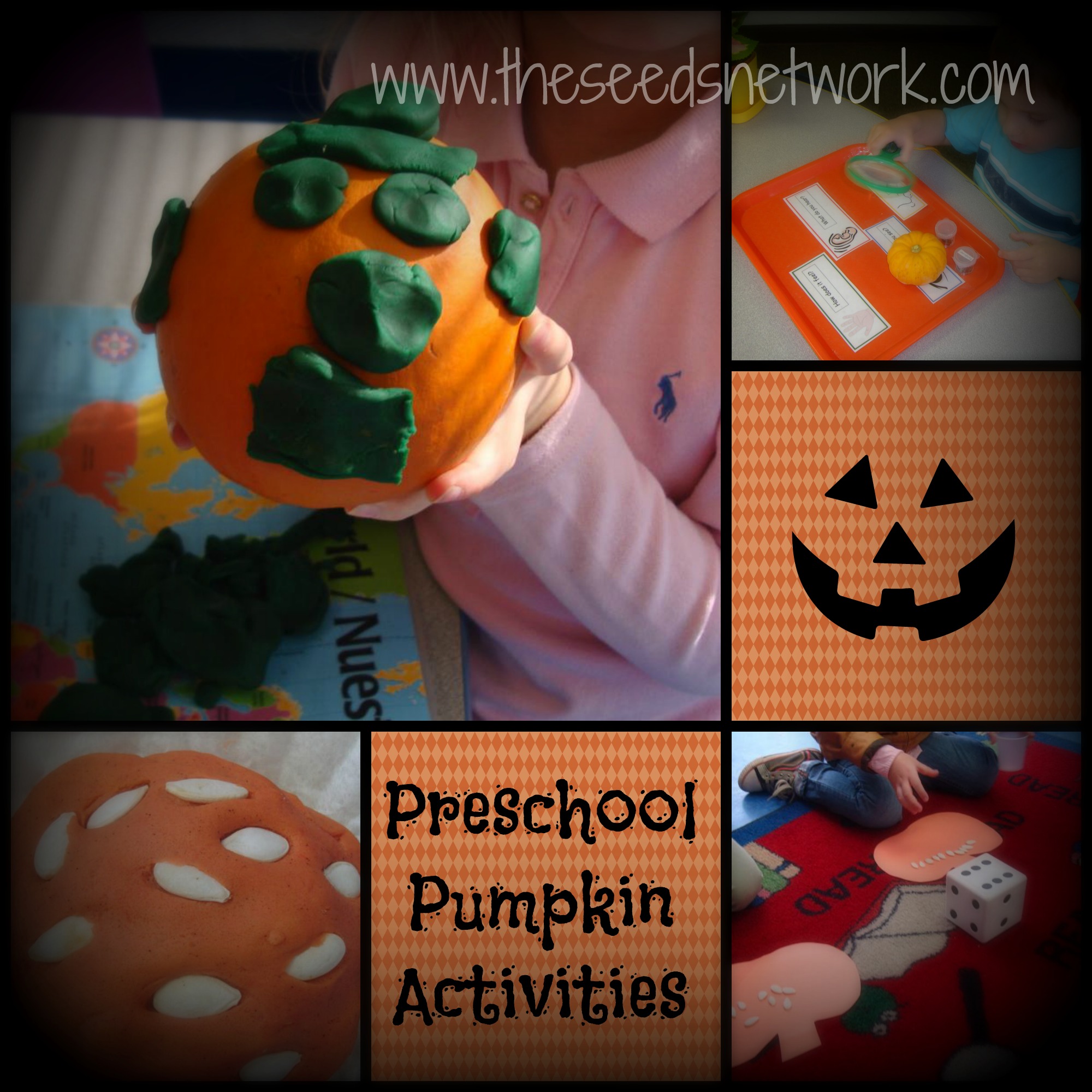
PicMonkey Collage


As we continue to enjoy the Fall season, we have explored pumpkins in our classrooms in many ways!

We’ve opened them up, scooped them out, counted the seeds and made delicious pumpkin treats!

I talked about some ideas in the “Learning about apples and pumpkins” post … but here are a few other ideas for ways to play and learn with pumpkins in preschool!

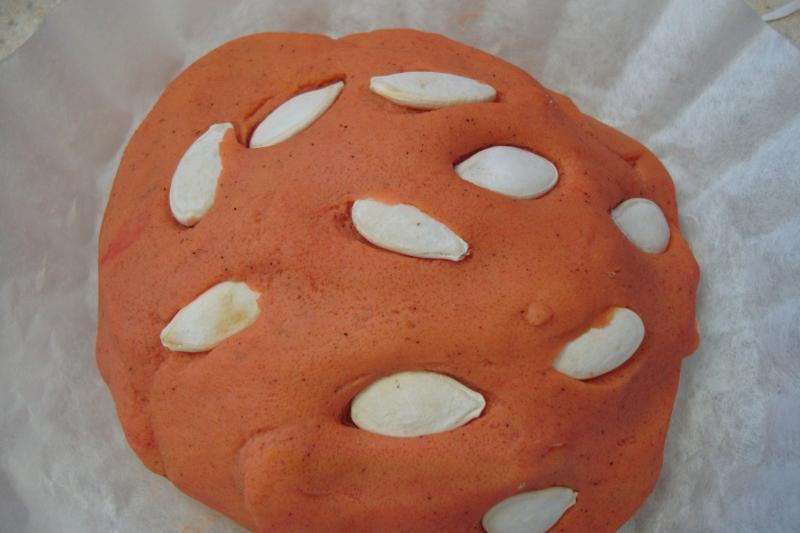
Pumpkin Playdough – We took a simple, no-cook playdough recipe, added red and yellow food coloring … and then added some cinnamon and pumpkin pie spice to the mixture! The children loved the smell! I asked them what they thought it smelled like … I got some really cute answers like “donuts” and “apple sauce”! Then we added some pumpkin seeds to the dough, for an extra sensory experience.

pumpkinplaydough

Pumpkin butter – Using heavy whipping cream, salt, canned pumpkin, powdered sugar and cinnamon (or pumpkin pie spice), the children can measure, mix and then SHAKE the ingredients to make a delicious pumpkin butter to spread on crackers or bread. Great science experiment to see how the liquid transforms to the creamy butter as they shake!

Pumpkin Pudding pies – Another yummy recipe featuring vanilla pudding and pumpkin pie filling!

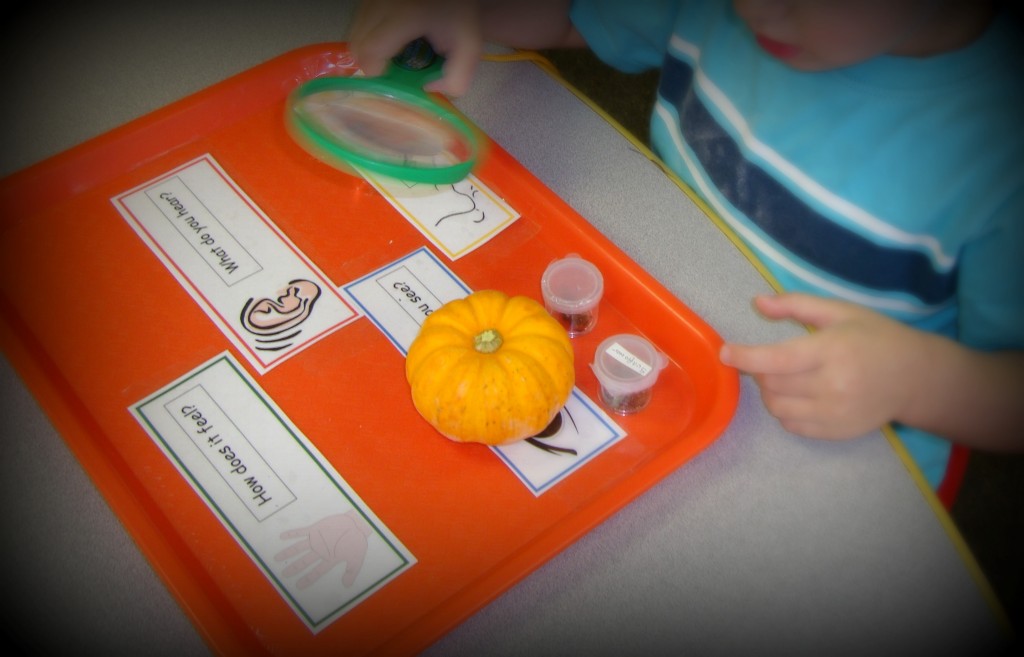
Using Our Senses Pumpkin Exploration – Allow children the opportunity for some individual exploration with a small pumpkin, pumpkin pie spice (in a container) and pumpkin seeds (in a container).  Children can explore what they see, feel, smell and hear!

pumpkinkid

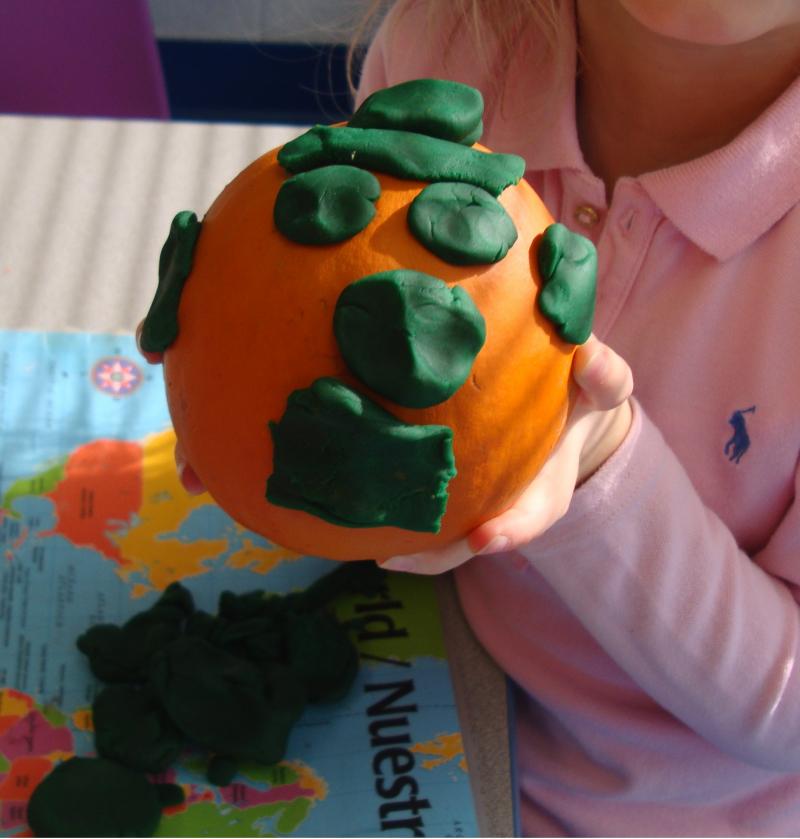
Pumpkin Playdough faces – We had fun with this great idea by Deborah at Teach Preschool where we made faces on real pumpkins simply using playdough!

pumpkinface

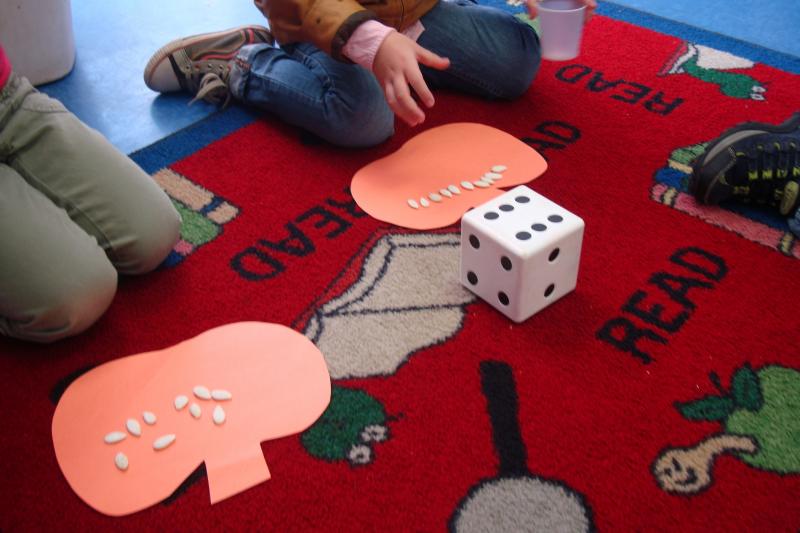
Count a seed pumpkin game – This is a fun, cooperative game that will help children practice counting (one-to-one correspondence).

pumpkingame2


Do you have any other fun pumpkin ideas to share?

Leave a comment or link below!