How can we enter kids’ world to teach them?


Teaching is often undervalued. After parents, teachers are the people that have the most impact on who we are as human beings, on both a personal and a professional level. This influence is particularly important at early ages when kids are developing the basis of all their knowledge and social skills.

Nowadays, teachers have a hard time finding ways to engage kids due to their short attention span – and also because these kids were born in the digital age and, too often, schools and teachers are still far behind.

Entering kids’ worlds to increase engagement can be a great strategy to overcome these obstacles.

Video consumption plays an important role in kids’ lives but is not always a positive feature. It is normally a passive experience without interaction and one which doesn’t help to reinforce knowledge.

But now teachers can use video resources in a more productive way, making them attractive for kids and a useful tool to work specific themes or skills.

Using kiddZtube Academy, teachers can create video-quiz lessons with the videos that kids love. The content is selected by the teacher from YouTube, and then personalized with questions testing topics of the teacher’s choice.

Example of how teachers can use this tool

If the subject that is being taught during the week is, for example, Christmas, the teacher can use kiddZtube Academy to create a Christmas playlist with songs and cartoons and create questions that will reinforce vocabulary, activities, emotions, colors and much more. They can practice the songs in the classroom together and the teacher can even give kids access to the video lessons to watch at home. This gives parents and kids a chance to work on the quizzes together and helps educators push their teaching beyond the classroom.

Using videos that kids love will certainly grab kids’ attention because teachers show that they understand their worlds and adapt to their needs.

Easy for teachers to use

Apart from all the fun, kiddZtube Academy is intuitive and easy for teachers to use. The platform is designed to save teachers time but is also powerful enough to track kids’ performance with a full dashboard that gives the teacher a view on how the class is performing and how kids are doing in specific subjects.

Because it’s free to use both for parents and teachers, it is really Universal and available for everyone to try out.

The kiddZtube Academy platform was created with teachers and for teachers, proving itself to be an innovative, useful and simple-to-use resource that will put a smile on the faces of kids and teachers alike.


Hugo Filipe Ribeiro – CEO of Co-Founder of magikbee (educational technology company) is Father to 2 young girls and with more than 12 years experience in Mkt and Innovation in TELCO Multinationals, with a particular focus on products to the youth segment. Inspired by how his daughters were using digital devices, he decided to start his own company to create better solutions based on technology that could give kids new ways of learning through fun interactive experiences.

Edcamp for early educators

After learning about the concept of an edcamp training during a course I am taking at the University of Saint Joseph; I knew this was something I wanted to organize for preschool teachers and staff in my local area.  I put together the following educational video (below) to explain the idea of an edcamp; and how I applied the model to deliver a professional development session specifically for preschool teachers, directors and child care staff.

What is an Edcamp all about?

Edcamps are free, participant-driven professional development which is done in an “unconference” format.  Session topics are determined by participants, and there are no pre-scheduled presentations or keynotes. The goal is to keep sessions spontaneous, interactive and responsive to everyone’s needs. (Visit edcamp.org to learn more.)

I adapted the Edcamp style to create a shorter professional development session (2 1/2 hours) for infant, toddler and preschool teachers, as well as child care staff and administrators. 

How did the Edcamp work?

  • Participants registered and submitted topic ideas in advance.  

    Using an online registration page, participants were asked to register and submit one or multiple topics for consideration as a breakout session.  About a week prior to the training, I setup a schedule based on session topics that were submitted.  Having topics submitted and the schedule set beforehand allowed us to streamline the training into the shorter timeframe.

  • Participant chose what sessions they wanted to attend.  

    Participants self-selected breakout sessions that were of interest based on the final published schedule.  Teachers were encouraged to move to another session if they had selected a session that did not meet their needs. 

  • Experience, not Experts.  Everyone participated!

    This is the best part!  There is no one expert giving a presentation.  Everyone actively participated, with the guidance of a volunteer facilitator, or discussion leader.  Everyone was encouraged to ask questions, share best practices and support each other to get the most out of the training.  

  • Notes were taken and shared!

    Participants were given a “session log” to take notes on anything that was important to them. Digital notes were also taken on laptops that were available for each breakout session.  After the training, all laptop notes were uploaded to Google docs and made accessible to all those that attended.  In this way, teachers had access to notes from ALL the sessions (even the ones they didn’t attend)!


 What did participants think about the Edcamp experience?

The feedback was very positive, with many attendees wanting to have another training in the future.  Here is a snapshot of some of the responses:

I loved being able to talk, reflect, share and learn from other centers, directors, staff and my staff!

Do another Edcamp!

Very helpful!  Really enjoyed the open discussion.

I liked the networking/discussions with teachers that I do not work with and compare what works in their classrooms on the topics of stress, literacy and movement.

I think that it was really interesting to be able to talk with other teachers.


Anyone can organize an Edcamp!

Take a look at the video below to get a peek at how we setup this edcamp training for ECE professionals. I hope it inspires others to consider this type of collaborative training model for their school and/or community!

A few of my favorite #DigCitSummit things!

The Digital Citizenship Summit is a conference that focuses on engaging in conversations about kids and technology use. This organization brings together parents, educators, industry organizations AND students to talk about positive ways to address social media and technology use as a community.

The latest DigCitSummit took place in Utah on November 3 & 4, 2017.  If you follow #DigCitSummit, you can see the conversations that took place.  Here are a few of my favorite resources that I learned more about from the Summit!

Favorite thing #1

BOOK:
“Noah’s New Phone – A story about using technology for good” –  

I love using books and stories as a way to teach kids.  It’s a great way to help connect with them at a level that is age-appropriate and meaningful to them.  This book is geared towards kids ages 7-11, and can be used to start the conversation about good ways to use a cell phone when introducing it to your child.

Favorite thing #2

WEBSITE: 
educateempowerkids.org

This website is a great resource for parents and teachers as they teach their kids about digital citizenship, media literacy and the dangers of inappropriate online content.  There are sections for parent that include videos to help guide you through digital issues you may face; such as how to react when your child is obsessed with a video game.  There are also lessons with activities to teach about many topics, such as media literacy, gratitude, using tech for good and more.

To get an idea of what you can find, start with this post on “5 ways kids can use smartphones for good“.

Favorite thing #3

SOCIAL LEARNING TOOL: 
Flipgrid

Flip the classroom and break down the walls!  Flipgrid is a video discussion tool that teachers can use in the classroom to promote student voice and collaboration.  Teachers can add a topic which the students can respond to using short videos. Use it to engage with the classroom across the hall, a school in another state or a classroom in another country.  

Favorite thing #4

COMMUNITY ORGANIZATION:
BRAVE Girls Leadership Inc. – girlsarebrave.org

Our mission of this amazing student-run organization is “to inspire and challenge humans to be BRAVE and self-empowered contributors to a better world”. They work towards this mission through mentoring, leadership opportunities and community engagement projects – all run by and for students! 


Being MAKERS in preschool!

Today, October 24, 2017 is #GlobalMakerDay!

Did you know that? Global Maker Day is a day of learning, sharing and MAKING!  You can take a peek inside other classrooms and view presentations to inspire your students to create. Their theme is to “Create locally and share globally“!  During the online Youtube presentations, elementary and middle school classrooms around the world participate by sharing what their students create on Twitter using #GlobalMakerDay.  What a great concept for students to learn from each other.

For early childhood educators, hopefully almost EVERY day is MAKER day!  Young children are natural MAKERS … they have a natural curiosity to explore, build and experiment with the world around them. As teachers, we can intentionally set up opportunities for preschoolers to be MAKERS by providing them the materials, space and time to be collaborative, inclusive and creative; while also providing an opportunity for problem-solving.


I found some great Youtube resources to help preschool teachers think about ways you can incorporate more MAKER opportunities in your early childhood classroom …

Check out globalmaker on Twitter!


Create fun worksheets for your kindergarten class

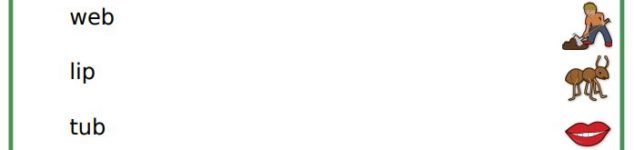
Looking for an easy way to create worksheet resources for your kindergarten class? Check out the free worksheet generator over at education.com.

Here’s a sample worksheet to spark your little one’s reading skills with this fun matching game.


This guest post was sent to us by Education.com, an award winning educational materials like worksheets, games, lesson plans and activities designed to help kids succeed.


DigCitKids Challenge: How do you help your neighbors?

If you read my first post on digital citizenship, I shared what it is and how we can start by teaching our kids that when it comes to technology … it’s important to BE GOOD and use it FOR GOOD.

Using technology FOR GOOD

As a way to get started, I encourage you to check out the DigCitKids Monthly Challenge: How do you help your neighbors?  This is a great idea for classrooms of all ages/grades to start a conversation on ways we can help our neighbors – both near and far. For the month of September, the challenge is to come up with ways to help your neighbors.

Start by asking your kids to brainstorm answers to the following question ….

Then go to the DigCitKids page to take the pledge and share your ideas on Twitter using #bethatKINDofkid!

Don’t forget to tag @theseedsnetwork as well, so we can follow along! 🙂

Digital Citizenship: What is it and why is it important in the education of our children

It’s back to school time!  But this year, it’s not just my kids who are in a classroom.  I have taken the plunge to go back to graduate school again; this time pursuing a degree in educational technology.  For me it’s a perfect fit, as it blends my career history and interests.  While I am both excited and terrified at the same time, I am eager to begin sharing what I am learning. 🙂

My first class, to my great delight, is called “Technology for Learning” being taught by Marialice B.F.X. Curran, Ph.D. (you should definitely check her out on Twitter!).  We are 2 classes in, and the focus for the semester will be on digital citizenship. This is the first time I have actually heard of the term. However, many elements of digital citizenship are what we strive to accomplish with this website. So, what is digital citizenship?

What is digital citizenship?

Digital citizenship is the norms of appropriate, responsible technology use. (Gribble, M. Retrieved from www.digitalcitizenship.net)

It’s the concept of what ALL users of technology need to know in order to be good online citizens.

When asked to define digital citizenship in my own words, my main takeaways were:
    • Being a responsible user of technology (using it wisely and safely)


    • Consideration for others when using technology to communicate and collaborate (social etiquette)


  • Understanding the way all users learn when using technology to teach, communicate and collaborate (not everyone will have the same comfort level and knowledge in using technology)

There is much more to it than this – in fact, there are nine elements to digital citizenship. As the semester goes on, we will cover each of those indepth. But this is a good starting point to begin thinking about how we can explain the concept to our children.

How do we explain digital citizenship to our kids?

Children are using all kinds of technology at an increasingly younger age. It is our job as parents and teachers to make sure that children know the “rules of the road” when it comes to technology use. We wouldn’t give our teenagers the keys to our car without first teaching them traffic laws and having them practice with an experienced driver.  The same level of care and instruction should happen when we allow our children to use a new technology or device.

Our first reaction in teaching our children safe and responsible technology use may be to focus on the “Don’ts”.  (“Don’t bully anyone online”, “Don’t share your personal information”).  Instead, let’s teach them what they should DO with technology!

For our youngest learners, let’s focus on the GOOD!
  • DO BE GOOD online!  Be kind, considerate and respectful in our interactions with others on the internet, phones and other devices.  We spend time teaching our children good manners, how to introduce themselves to a new friend and to be respectful to others.  Those same values hold true for online interactions.
  • DO use technology FOR GOOD!  Use it to learn, connect, educate and collaborate. Look for apps that promote cooperation and teamwork, videos that teach about other cultures, global read-aloud opportunities, etc.

More to come as the semester goes on. I hope you are interested in learning more about digital citizenship along with me!

Getting back into the swing of things

riley_0For programs who shut down over the summer or for those who run a summer camp program, it’s somewhat bittersweet to return to school in the fall. For me, it is always sad to see summer come to a close, but there is also something exciting about a new school year starting.

Here are some things that I look forward to as a new academic year kicks off….please feel free to share your excitement with us too.

  • Meeting new students and parents
  • Greeting returning students and seeing how much they have grown since last year.
  • Ordering supplies for our teachers and watching them get excited about setting their classrooms up.
  • Having our floors waxed and buffed…that smell reminds me of back to school!
  • In-service training….I do in fact enjoy spending time with my staff and getting to know them better while we train.
  • Hosting our “stop by and say hi” event. I love watching our students come in to see their cubbies, meet their teachers, and see their classrooms.

For me, the beginning of the school year represents a new beginning for us. I find that staff are at their most energized and motivated…..a very special time of year. If you share in my excitement we’d love to hear from you!

Using social media to build your preschool classroom

Is your school or child care center on a tight budget?  Silly question, right?  The answer is always “YES”, and we know many times teachers and early childhood staff are using their own money to purchase needed supplies to build a dynamic and engaging classroom.

Tressa had an even bigger challenge in her role at youth services … she had a space to hold a regular infant-toddler group – but NO budget for supplies of any kind.  So she got creative and went to social media and was able to get EVERYTHING she needed for FREE!

Listen to how she did it!

Play Shape Tree Match-Up

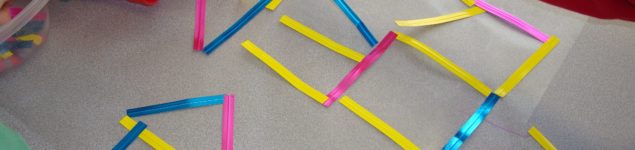
apple-tree-shape-match-350x440Want to test your child’s shape recognition skills? Challenge her to a game of shape match-up—an entertaining way to boost her observational ability. With this matching game, the fun abounds as the learning and creativity flourish! She’ll craft the “game board” out of construction paper, inadvertently boosting her fine motor skills as she cuts the pieces!

What You Need:

  • Construction paper
  • Scissors
  • Paste or glue

What You Do:

  1. Start out by helping your child craft a big tree that will constitute the playing board. Cut the leaves and tree top from a piece of green construction paper. Invite her to make the edges rounded if she wishes.
  2. Next, talk a bit about the tree. Does she want it to be tall or short? Should it have a thin trunk or a thick one? Talking about the tree is a great excuse to practice descriptive words, especially ones having to do with size– these are key math concepts for preschoolers. Once you’ve decided on a trunk shape, let her cut it out from the brown construction paper.
  3. Paste the green tree top onto the top of the brown tree trunk.
  4. After your child has fully constructed the tree, ask her to leave the room. Cut a bunch of colored pairs of shapes, such as triangles, squares, circles, ovals, and more out of construction paper. Vary the colors and shapes so that the pairs are not exact matches. For example, make a red circle and a green circle, and so on.
  5. With at least five to ten sets of shapes cut out, it’s time to glue one of each set to the tree. Try to space them out nicely, gluing a few on the trunk if you run out of space. Perhaps those shapes are falling off the tree! Once there is one from each set glued onto the tree, place the rest of the shapes on the table.
  6. Invite your child back into the room, and then encourage her to see how fast she can match up the shapes to their partners. Guide her with hints like “warmer” and “cooler”—based on her distance from the correct spot. Make sure to congratulate her on each pairing!

The more shapes involved, the more difficult this game becomes. For a more advanced twist, try making smaller and larger shapes, and then matching smaller triangles to larger triangles, and so on.


This guest post was sent to us by Education.com, an award winning educational materials like worksheets, games, lesson plans and activities designed to help kids succeed.