Having fun with textured clothespins in preschool

textured clothespinsI was inspired by the textured clothespin idea from Teach Preschool, so we used some other materials to make some textured clothespins of our own! Using these around the preschool classroom is a fun sensory experience and wonderful for fine motor skill development.

You could use almost any type of collage materials that you can find (buttons, googly eyes, pom poms, beads, foam shapes) and you can change these up every so often to reflect themes and topics that you are discussing in the classroom.

We used tacky glue to stick on heavier objects, it is less drippy and holds well. We also tried to leave the ends of the clothespins clear of objects so that little fingers could grasp the ends easily. We also had some sticky-back foam pieces that stick well (but can also be easily pulled off). That can also be a good thing … since you can then easily change up the foam pieces on the clothespins and reuse them.

Some ideas for using textured clothespins are:

– Make clothespins using objects of all the same COLOR, or use colors that reflect the season (ie. fall, winter, spring or summer colors … green for St. Patrick’s Day, red-white-blue for Memorial Day or July 4th, etc).

87867824f74729419cecIMG4409.JPG.main

– Make clothespins with various SHAPES and do some shape matching games with them (make up index cards with one shape on them – have them clip the matching clothespin on the card).

IMG4417.JPG.main

– Make clothespins with various PATTERNS and see if children can identify the pattern. Or make some monochrome clothespins, and see if children can make their OWN pattern by clipping them on a clothesline.

– Make clothespins with various LETTERS (using small foam letters). Some uses for this … letter matching games using letter flash cards, matching upper to lower case letters, finding the letters in your name, etc.

IMG4423.JPG.main

– Spell children’s NAMES on the clothespins … can use these for various activities in a classroom, such as a way to “check-in” to a learning center, attendance board, name matching games.

– Use these as a 3-D ART project, allowing children to use various materials to decorate clothespins as they wish. These can be displayed in all kinds of ways in the classroom, and you can clip the child’s name or picture along with their clothespin.

IMG4412.JPG.main

Be sure to check out the other textures that Deborah used for her Textured Clothespins at Teach Preschool. So many ways to use these (and they are inexpensive to make)!

After Christmas tree bird feeders

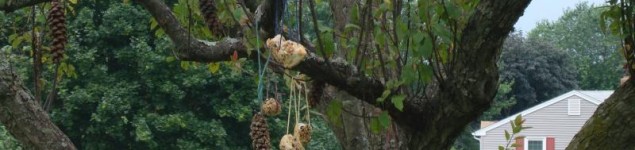
Here is an activity to go with the story “The After Christmas Tree” by Linda Wagner Tyler.   The story is about happens to the family Christmas tree after Christmas is over.  What do you do with it?  Family members and friends take their Christmas tree into the backyard and decorate it with edible trimmings for the wild birds and animals.

This is something that families can do together or teachers can do with their classes.  There are many ways to make birdfeeders (with pinecones or out of milk cartons).  This birdfeeder is made out of biscuits.

Biscuit Bird Feeders

First, make biscuits according to package instructions (or buy them pre-made).  Then, post a straw through the middle (this is where you will feed the yarn or string through for hanging).

Next, have children spread peanut butter or shortening onto the biscuit and then have them roll it around in the birdseed.

Put your Christmas tree outside and hang them on it for the birds and animals.  You can also hang them on any trees that you have outside!

Melting marshmallow snowmen in preschool

snowman

I saw these adorable snowman treats on The Amazing Mess blog – so I made a bunch for myself and bagged them up as small gifts. But then I thought – this was so easy and fun … the kids would LOVE this! And even though making these are fun (and tasty) – there were other ways to extend this activity so that the children learn a little something along the way, too!

Decorate your snowman

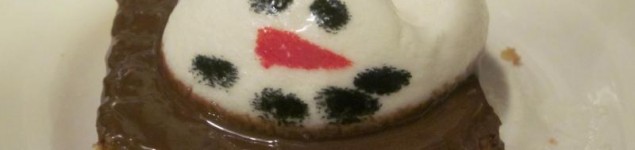
So first, here’s how to make the edible melting snowmen. Take a marshmallow and make a snowman face using food coloring markers (these are very easy for adults AND children to work with – and it’s edible).  You can find these in a local craft store that sells cake decorating supplies.

IMG2133.JPG.main.jpg (800×600)

Then, place it on top of one striped cookie (you can substitute other types of cookies, like graham crackers or nilla wafers if you do not wish to have any chocolate on the cookie – but for me, it’s ALWAYS about the chocolate! Ok, I digress!).

Extend the activity with a story

As I was making my snowmen I thought … what BOOKS could I use to go with these? Maybe a little backwards in my usually thinking (usually the book comes first, then the activity). But the main concept is the melting of the snowman, and there are lovely children’s books that go with this theme and can lead to further discussion. A few books I liked were The Smiley SnowmanWhere do Snowmen go?  or Snowmen at Night. You can have a discussion about what happens to snowmen when the weather gets warm (they melt) and talk about why that happens.

Watch him MELT!

Allow children to make their own marshmallow snowman and put it on top of one cookie. Then, ask them what they think will happen to THEIR marshmallow snowman if you put them in the microwave or oven. If their snowmen get hot, what will happen to them? And there you can touch upon the scientific concept of melting (properties of matter) and have them make predictions.

Next, SHOW them what happens by putting their cookie/snowman in the microwave for 10 seconds. When it comes out – it will be like a melted snowman! (They will really get a kick out of this!) . Top off with another striped cookie, and it’s time to enjoy!

Gift idea

These can also be put together as gifts for the children to give (or gifts you can make to give) by putting them in plastic baggies and attaching the melted snowman.

The tags are designed so that you can get 6 tags per sheet, and that when you attach them, the microwave instructions fold over the top of the plastic bag and display on the back.

Find more SNOWY ideas for preschoolers

Check out our Pinterest page!

PinterestSnow

Making scented pinecone Christmas trees

 pineconetree

We have been exploring “scents of the season” these past couple of weeks in preschool. As we get ready for Christmas, I saw these cute pinecone trees on The Wool Acorn blog, and I thought this would be wonderful for the children to make. But I wanted to incorporate a holiday scent for the children to explore … so we made sure our pinecones were scented!

I did intend to scent the pinecones myself (I really did!). The pinecones that were collected were a little damp and not yet open – so they were put them in a warm oven. They DID start to open … however the smell coming from the oven was not so pleasant, so we ended that process and ran to store to buy the pre-made scented ones. But I still do want to give this another try at some point (maybe after the pinecones dry out naturally). In any case, the store-bought ones had a lovely cinnamon scent. If you make them yourself, you can experiment with other scented oils.

DSC09252

So, we started off with having the children explore the scent and have them guess what the pinecones smell like. Some of the responses were “delicious” and “cookies” … other responses were “they smell like pinecones”.

DSC09259

Next, we placed the pinecones in a small paper cup (this helped to keep them upright while children were working on the project). It was also helpful because we could write each child’s name on their cup.

DSC09261

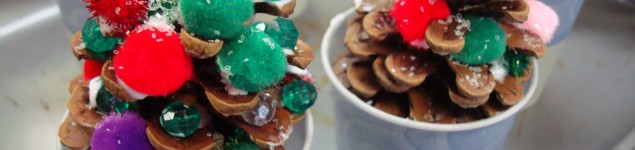
Then we poured a small amount of Tacky glue onto a paper plate. Tacky glue was a great choice for this project because it is thicker than regular white glue (so it’s less drippy). Also, children only need a small dab of Tacky glue and the items will stick very well to the pinecone. We showed the children how to take a pom pom (and other embellishments) and dip them in the glue – explaining that they only need a small dab. (Our 3-year old class still liked to put A LOT of glue on their pom poms!). This was great for fine motor practice. Then we had the children explore the materials and decorate their pinecone Christmas tree as they wished.

DSC09262

Once they are done decorating, we had them take a Q-tip and dip it in the glue and spread the glue around the edges of the pinecone. Lastly, have children got to sprinkle some white “snow” glitter on top.

DSC09264

The children still liked smelling their pinecone trees after they were finished!

DSC09258

The leaves are falling in preschool … a Book & Boogie activity

Today we are sharing one of our Fall season Book & Boogie selections (where we incorporate books and literacy with music and movement activities) – and extending the fun and learning by adding a fine motor craft activity to go along with it.

The Book

Fletcher and the Falling Leaves”  by Julia Rawlinson

I really enjoy this sweet story about Fletcher the fox and his favorite tree!  Fletcher doesn’t understand what is happening to his tree as it is changing colors and losing its leaves. Fletcher tries to help and find ways to stick the leaves back onto the tree (but even the children will realize that this is a hopeless effort) … and poor Fletcher is sad.  But when winter comes, Fletcher gets a big surprise!

"Fletcher and the Falling Leaves" by Julia Rawlinson,   Tiphanie Beeke (Illustrator)

The Music

The music that Tressa selected to go along with this story is called The Leaves Fall in the Fall” –  by Ernest S. Papay, kids’ songs! – Kid Karoake – Songs for the Young and the Young at Heart (can be found on iTunes).  Have the children stand up, listen to the music and put their hands in the air and wiggle their fingers like the leaves in the trees.  When the music says “the leaves are red … and falling” – wiggle your fingers all the way down to the ground.  You can even give children real, fabric or paper leaves as they dance.  Use swaying motions, like the leaves swaying as the wind blows them off the tree and down to the ground.

The Activity

After your story and your boogie … invite the children to make some simple leaf bracelets.  We purchased fabric leaves from our local craft store (and we did it AFTER Halloween when the fall decor is discounted in price).

IMG_9117

I snipped off all the leaves from the plastic stems, and then punched a hole into each of the leaves.

IMG_9125

We bought some rubber bracelets, (but you can use pipe cleaners, as an alternative) and have the children string some leaves through them.

IMG_9126

Voila! Very simple, but a great takeaway activity after the story and music!

IMG_9131

As the song says … “It’s just that time of year!

It’s apple picking season (and apple life cycle video)!

apples1
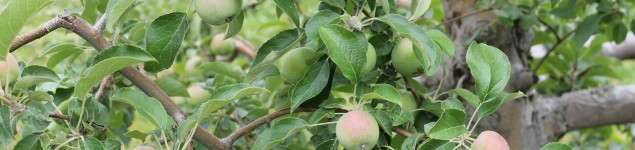
August through October is apple picking season here in Connecticut! Our family visited one of our local pick-your-own farms for some Macintosh and Gala apples which are in season right now. We’ll definitely be back later this fall for the Cortlands, Golden Delicious and others.

Many local preschools schedule a field trip to an orchard, which helps the children learn about where apples come from and they really enjoy being able to pick their own.

We start off with a tractor ride to take us out to the trees that are in season. This is always exciting for the kids!

apples8

The great thing about apple trees at an orchard are that they are not too tall.  Little hands can easily reach and pick apples!  Fill up some bags to take back to your classroom for use in cooking/snack making, crafts (like apple stamping) or exploration.

IMG_6832

Bringing the apple orchard to your classroom

If you live in an area where you can visit a local apple orchard, that is a great field trip to take with your preschoolers.  If you do not, there are many other ways to teach children about the apple life cycle, and show children what an apple orchard is.  Another option is to try an in-house apple demonstration, as we did one year.

Another idea is the use of photos and videos.  You can make a slide show of videos of an apple orchard (such as the photos we used in this post).  We also created a downloadable video as another resource you can use to introduce this topic in your classroom – or use it as an preview to a field trip.

View the video above … or download it FREE at our Teachers Pay Teachers online store.

More Apple Resources

For all kinds of other APPLE activities, snack ideas and crafts – check out our SEEDS idea search, our Pinterest “Apple” board, AND digital resources (videos, high quality photos, printables, curriculum guide) at our Teachers Pay Teachers online store.

applesmilesthumbnail


Sailing the seas at summer camp

jackWe have some awesome college students who are lead the planning of our summer camp one year! Their enthusiasm and creativity are evident in all they do … and we just had to share it here! These are ideas from our “Sailing the seas” theme, which lent itself to great projects and experiences like building tin foil boats, making sandcastles and seashell picture frames. The week ended on a truly high note when we had none other than Captain Jack Sparrow (aka Miss Martina) visit our school for Pirate day! (Isn’t that the BEST costume ever?!) Below are some decorating and activity ideas our camp leaders came up with this week!

DECORATING IDEAS

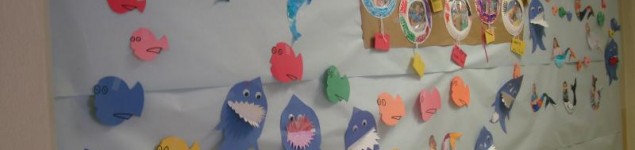
Hanging blue/green streamers on ceiling to look like waves and seaweed.  Include some paper fish and jelly fish. Use some blue/green window paint and have kids paint an ocean scene, using someHomemade Window Paint. Use large blue bulletin board paper and tack it up on a large wall in the hallway or classroom. Make a brown paper cruise ship and put it on top – making it look like it’s sailing on the water. All through the week, the camp staff added children’s “under the sea” artwork to the display! Make a ship out of large pieces of cardboard!

ACTIVITIES

Building sandcastles in the sandbox Making a Coral garden (out of painted cheerios) At the Beach play dough At the Beach snack  OR cupcake

MORE ACTIVITIES YOU CAN TRY

Beach Towel Boogie

Sand Dough

Ocean in a bag

Seashell painting

I hope their creativity inspires you!

Pets in the preschool classroom

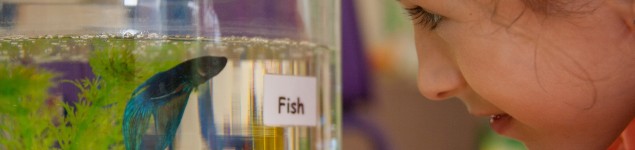
PetsCaring for a small pet, such as a fish or reptile, can provide young children with the opportunity to learn more about animals firsthand. As preschool teachers, we know that young children are engaged and learn best by DOING. We can certainly teach about animals through books and pictures … but how much MORE will they learn when they can actually interact with one. They can learn about caring for animals and the responsibility that goes with it. For preschool programs, having a classroom pet provides a wonderful opportunity for learning about nature, science and living things.

At our preschool (and at my home), we have Betta fish, which have a low start-up cost and are very easy to take care of. At the beginning of the school year, we have the class name the fish – and that really helps to give the children ownership of the pet. One of the most favorite classroom jobs a child can have for the day is the “Fish Helper” – where it is their day to feed the fish. The Betta fish food are really tiny pellets, so it’s also a good fine motor skill for the children to pick up the pellets and put them into the tank.

I think children can learn a lot from seeing and interacting with living things. At various times during the year, we will also bring in special visitors who bring in some other animals that the children can learn about. During our summer camp, we even had some older children come in and share their pets with the preschoolers. This gave the children an opportunity to observe, touch and feel an animal they may not have seen before, or only seen in pictures.

Grants to bring pets into the classroom

Updates on a few grant programs to help teachers who want to bring in a pet into their classroom.

PetSmart is now offering a “Pets in the Classroom” grant for Pre-K through 6th grade teachers to cover all the expenses of a classroom pet. Teachers will also receive additional assistance with a PetSmart associate who can help them with the basics of pet care.

Teachers can visit www.petsmart.com/teachers to apply for the grant and learn about ways to incorporate a classroom pet into their curriculum. This section of the website also provides teachers with some lesson plan ideas, some of which can be adapted to fit into a preschool curriculum.

Petco also offers a

The Pet Care Trust helps to promote public understanding regarding the value of and right to enjoy companion animals, to enhance knowledge about companion animals through research and education, and to promote professionalism among members of the companion animal community.

Pets in the Classroom grants are offered to Pre-Kindergarten through Eighth grade classes only in both public and private schools.  These grants are intended to support pets or aquariums in the classroom for the purposes of teaching children to bond with and care for their pets responsibly.

Petco is also a partner with The Pet Care Trust, which supplies products and funding for classroom critters at low cost to schools, with no out of pocket supply cost.

Do you have a pet in your classroom? Other than fish and reptiles, what other types of pets would be good in a preschool classroom?


Tips for incorporating the CT Early Learning and Development Standards

A couple of Fridays ago, I was invited to attend a training for Educational Consultants on the Connecticut Early Learning and Development Standards (CT ELDS).  As our state continues to encourage programs to use these standards, it is my job as a consultant to support programs when and where needed.  During our 6 hour training, great conversations around early education, teacher responsibility, and child development took place.  Hot topics that arose included continued challenges in bridging the gap between preschool and public school, and of course, the challenge of allocating proper planning time into program budgets.

As the CT ELDS continue to be introduced and incorporated into centers, there will be a time of transition.  Transitioning to something new can be challenging, however, with proper communication, time, and education it can be done.  As the training took place and discussions were had, I jotted down some tips that came to mind.  I hope you find these helpful in your quest to bring the CTELDS to your program.

Tressa’s Tips and Thoughts for incorporating the CT ELDS into your program …

  1. Implementing the CT ELDS will be a process that will take time for administrators and staff. As programs begin to transition to using the CT ELDS, it crucial that communication between staff AND families takes place.
  2. The CT ELDS are intended to better the growth of children age zero through five, stressing that all age groups are crucial to a child’s development.
  3. When beginning the implementation of the CT ELDS, it is important to reflect and acknowledge the areas in which the program is already meeting the standards. These acknowledgements can then become a spring board for further progression and improvement.  It will also provide self-reflection in regards to standards that are not being met.
  4. Provide staff time to discover similarities between their curriculum, the CT Preschool Framework, and NAEYC criteria. There are TONS of similarities!
  5. Encourage staff to plan experiences around specific CT ELDS. This will provide staff deeper meaning for that specific standard, and hands-on experience with specific learning progressions.
  6. Encourage staff to document progress; note how students are doing based on the CT ELDS, and look for ways to stretch thinking, plan and move through learning progressions. Use the intentional teaching cycle!
  7. Provide teachers time for opportunities to collaboratively create experience plans so they can talk through the progressions and help each other understand them, as well as brainstorm creative execution approaches.
  8. Try to steer away from teaching for assessment and steer toward helping children through learning progressions.

Have a specific question about how to implement CT ELDS?

Post a comment or email us!

Here are some helpful links!

CT Office of Early Childhood ELDS page:
http://www.ct.gov/oec/cwp/view.asp?a=4541&q=536726

CT ELDS:
http://www.ct.gov/oec/lib/oec/earlycare/elds/ctelds.pdf

CT ELDS with aligned Preschool Framework:  http://www.ct.gov/oec/lib/oec/earlycare/elds/ct_elds_and_paf_alignment.pdf

Creative Curriculum / CT ELDS crosswalk:
http://teachingstrategies.com/wp-content/uploads/2014/06/CT-CC-Alignment-Early-Learning-PS-2014.pdf


Celebrating Dr. Seuss in preschool

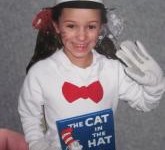
CelebratingI may be going out on a limb here, but I imagine almost EVERYONE has a favorite Dr. Seuss story that they remember growing up. My personal favorite Dr. Seuss book is … “Green Eggs and Ham” … hands down! I could recite it by heart! For my children, it’s “The Cat in the Hat“.

We are coming up on March 3rd and NEA’S Read Across America Day.  Read Across America takes place each year on or near March 2 … and schools and libraries across the country participate by bringing children and books together. This year’s theme is “Get ready to grab your hat and read with the Cat in the Hat“!  How will YOU celebrate?


Looking for some fun Seuss-related activities to go along with your reading?

We have a few Dr. Seuss favorite activities that we have done .. such as:

colorful feeling telescopes

AND

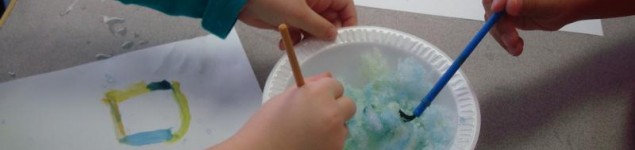
ice cube painting

But there are SO, SO, SO many wonderful Dr. Seuss activities around the web as well … so this post is all about sharing some of those great ideas with you!

Some of my favorite preK Dr. Seuss ideas:

Handprint Things on parade (Joyfully Weary)
Cat in the Hat Fruit Snack (Muffin Tin Mom)
Cat in the Hat Ice Cream Cone Snack (Motherhood on a Dime)
Green Eggs and Ham craft (Teach Preschool)
My Many Colored days door decoration (Room Mom 101)
One Fish, Two Fish graphing (Oopsey Daisy)

Want more Seuss? Check out …

Dr. Seuss Pinterest board
Seussville.com

And, check out this GREAT video clip of “Mr. David” as he puts a playful hip-hop spin on “Green Eggs and Ham”!

Ok, so share … what is YOUR favorite Dr. Seuss book?