Create fun worksheets for your kindergarten class

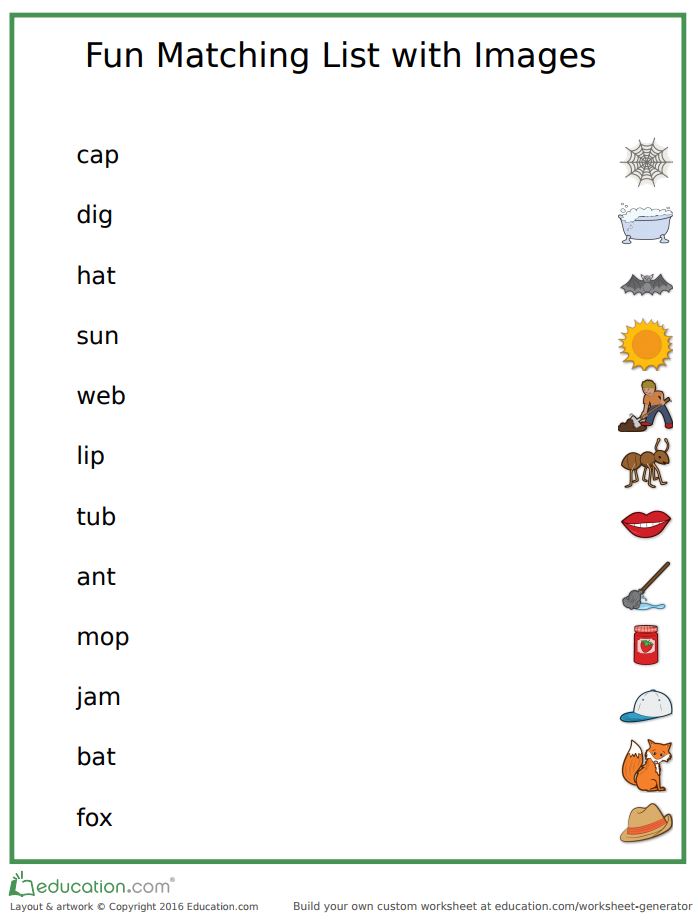
Looking for an easy way to create worksheet resources for your kindergarten class? Check out the free worksheet generator over at education.com.

Here’s a sample worksheet to spark your little one’s reading skills with this fun matching game.


This guest post was sent to us by Education.com, an award winning educational materials like worksheets, games, lesson plans and activities designed to help kids succeed.


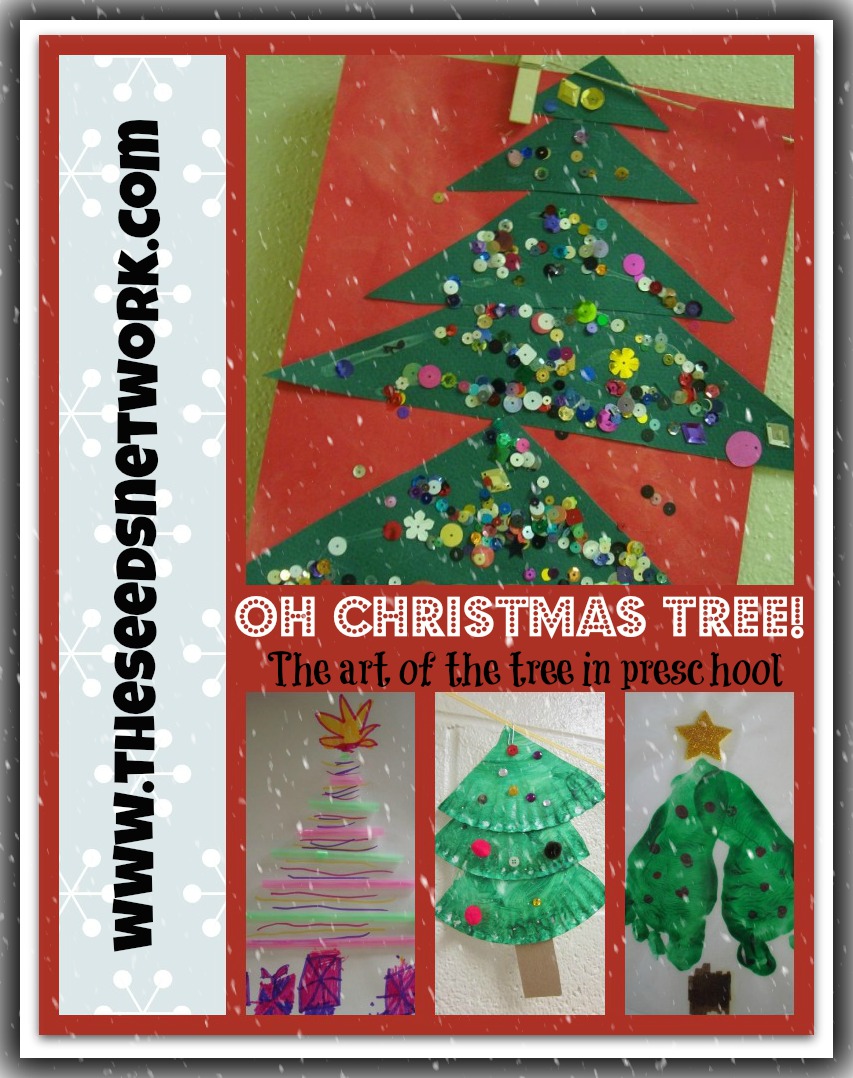
Oh the many ways to make Christmas trees in preschool

Christmas tree


Oh Christmas tree – so MANY WAYS to make a Christmas tree in preschool! From tissue paper to egg cartons, sticks to straws – there are so many different materials that can be used to make Christmas Tree Art projects. And lots of learning that can take place in the process – creative expression, counting, sequencing, fine motor development … so here’s a round-up of some really creative trees that can be made with infants to kindergarteners!


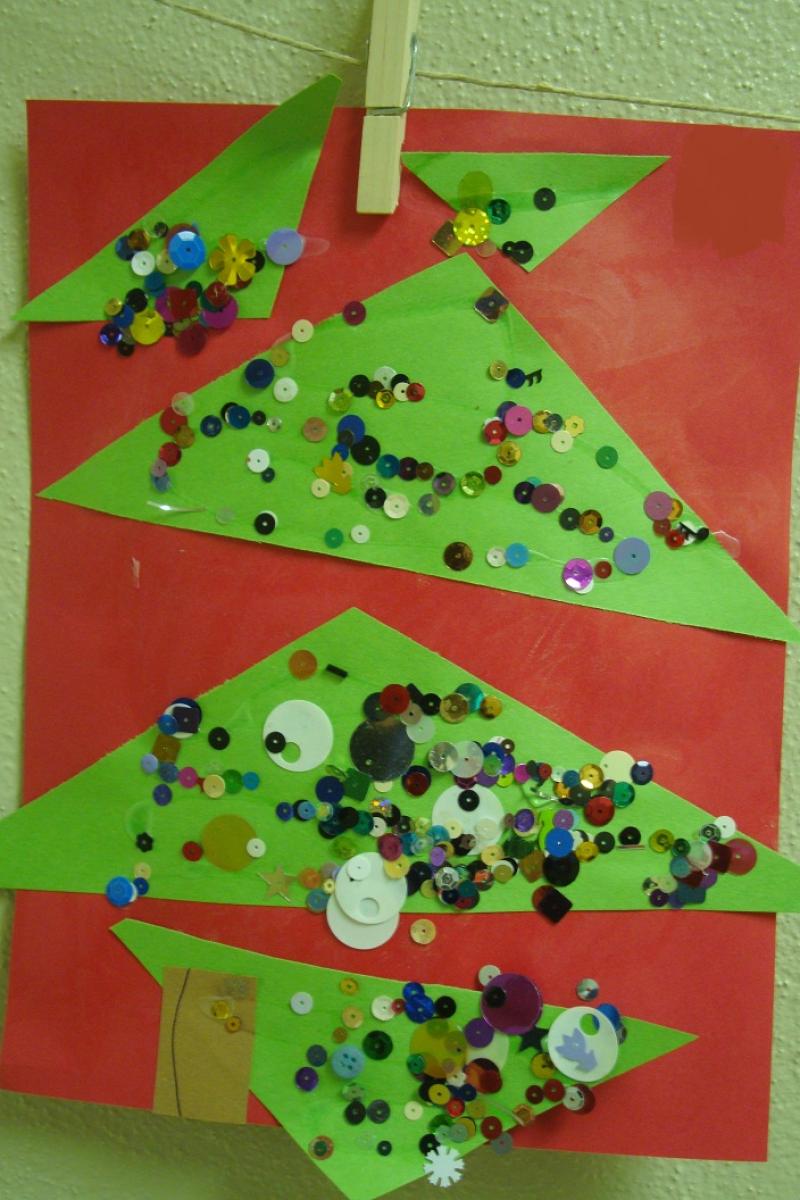
Easy TriangleTrees

Perfect activity for toddlers and young preschoolers to express their creativity! Give them some pre-cut triangle shapes in various sizes and have them put together a tree on a piece of paper, and then embellish with sequins. The “not so perfect” tree shapes are priceless!

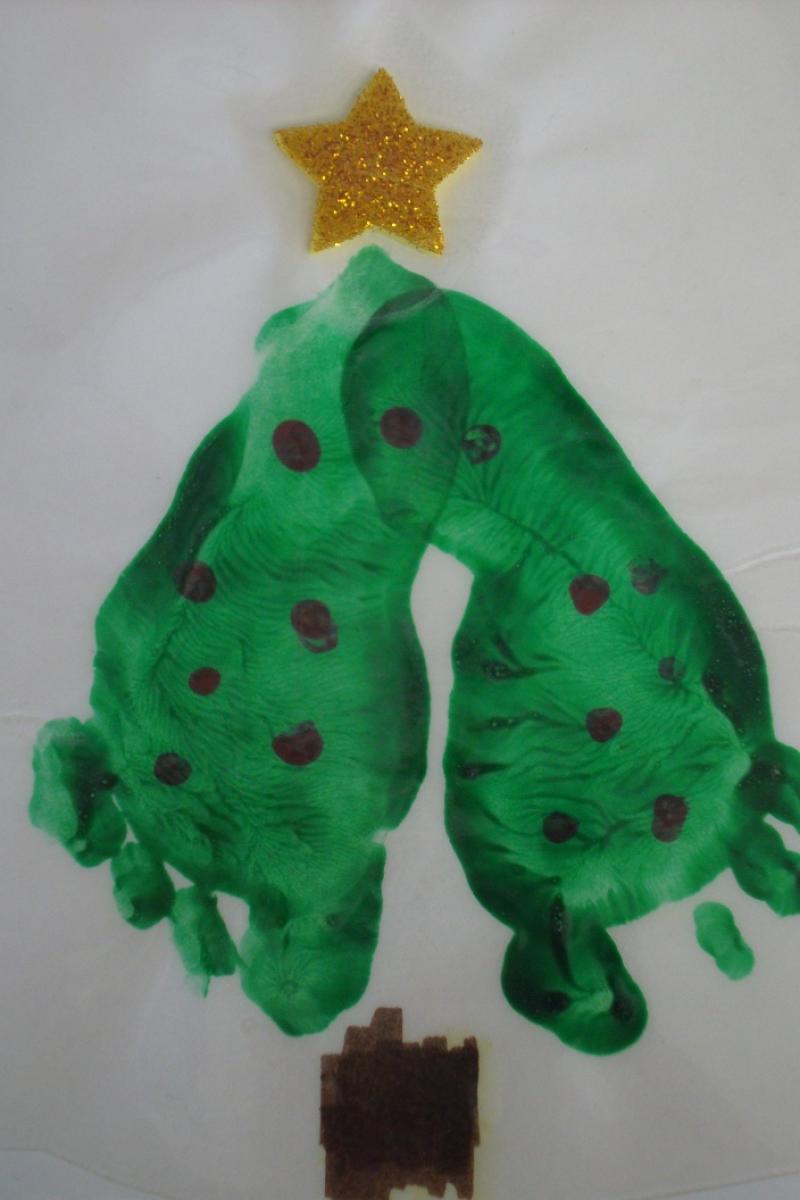
Infant Mistletoes

This is such an adorable Christmas keepsake!

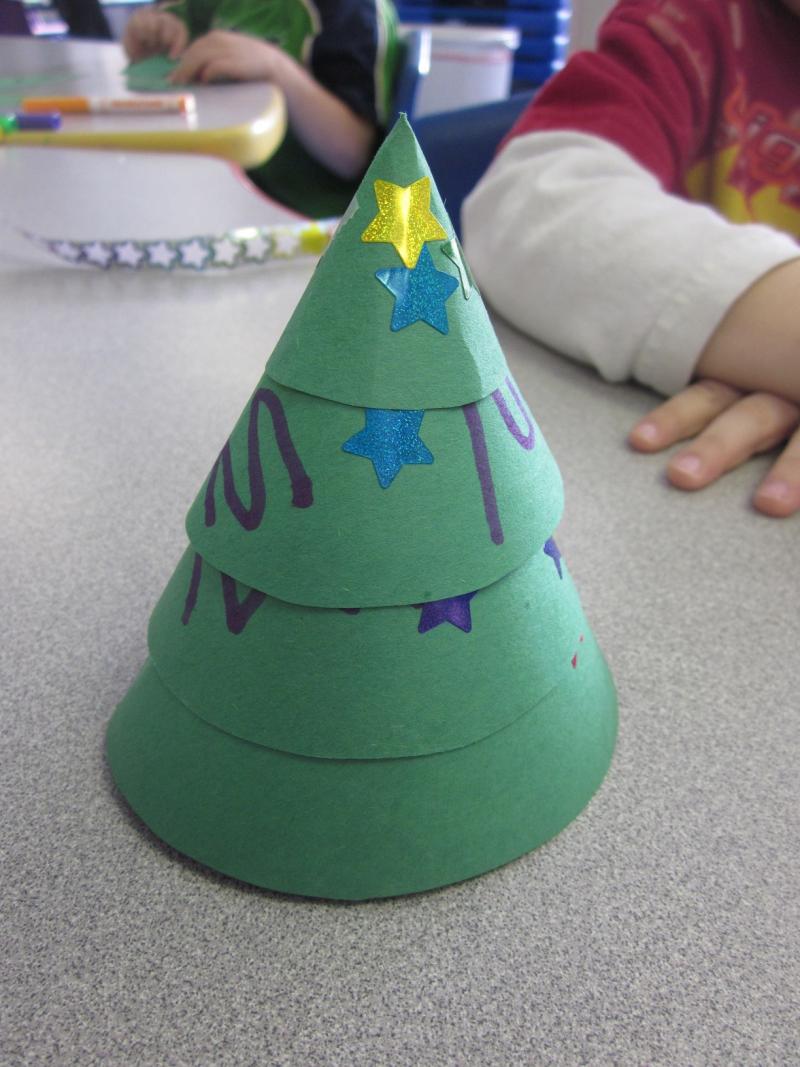
Stackable trees

I have the children make these trees after reading “Mr. Willowby’s Christmas Tree”. They get four different size semi-circles to decorate. After decorating, we turn the half circles in cone shapes and then stack the (good sequencing activity to go from largest to smallest cones to stack).

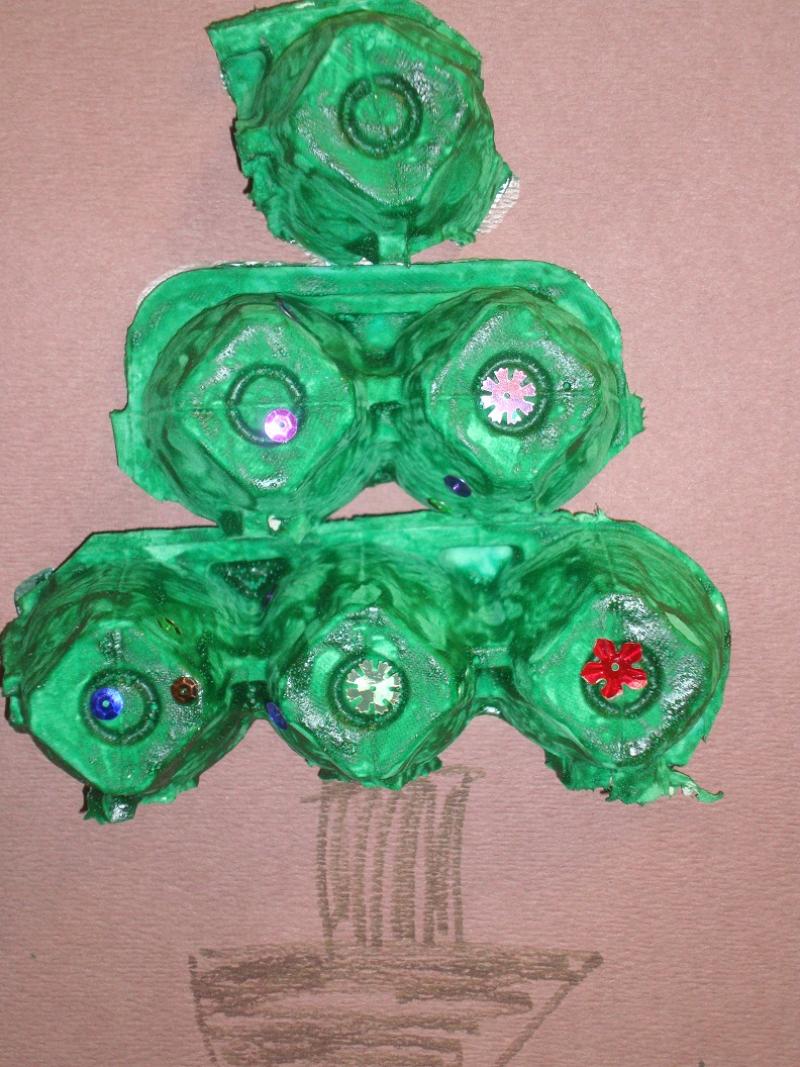
Egg Carton trees

Older preschoolers and kindergarteners can use recycled egg cartons which they cut, paint and arrange to form a tree.

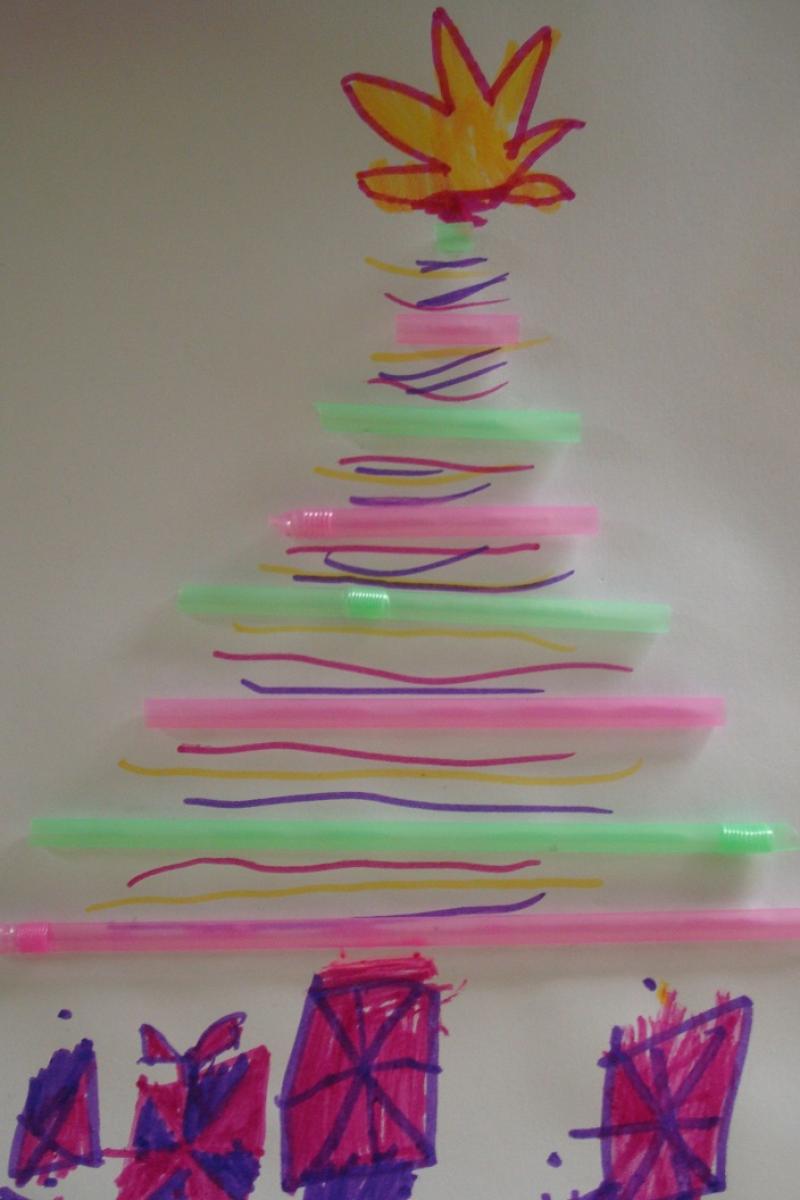
Christmas Tree of Straws

Children will get some great fine motor practice cutting the straws into all different sizes. They can then work to arrange the straws from longest on the bottom to shortest on the top to form their tree.

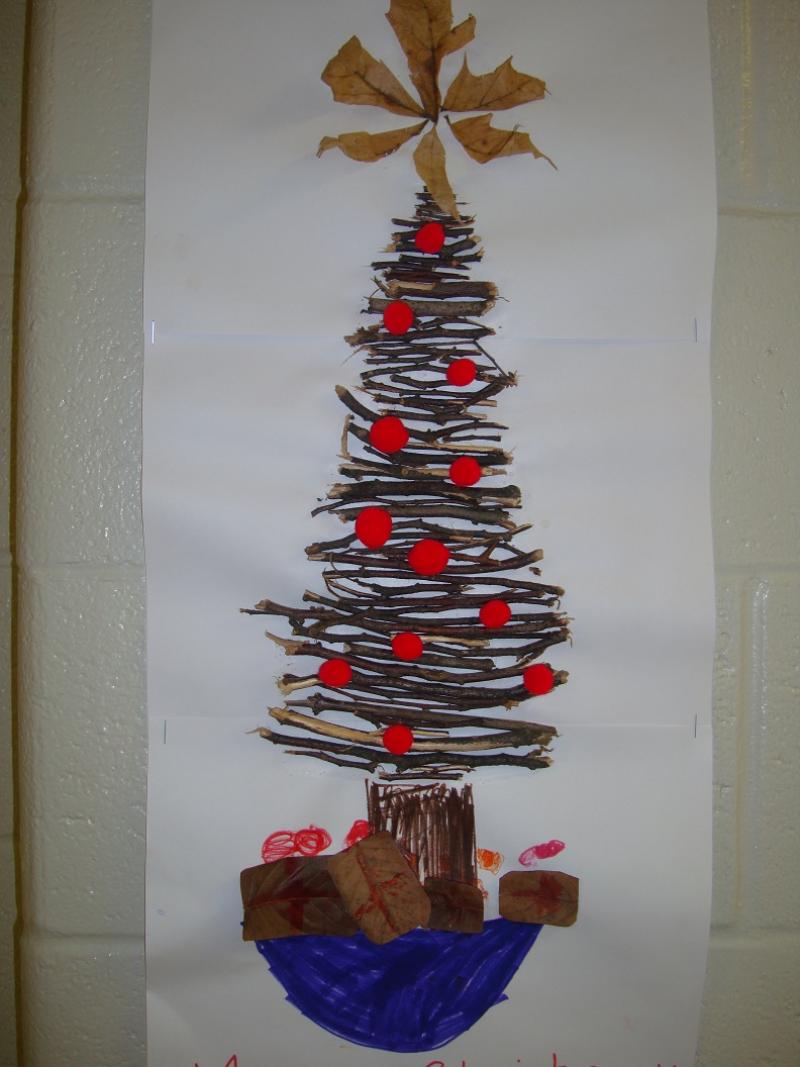
Nature tree

I love this tree made out of some items found outdoors! After going on a stick hunt, parents and teachers may need to cut some of the sticks so there are various size pieces. Children can work together to arrange the sticks in order to form a tree. Embellish with pom poms – and a star made out of leaves tops it off!

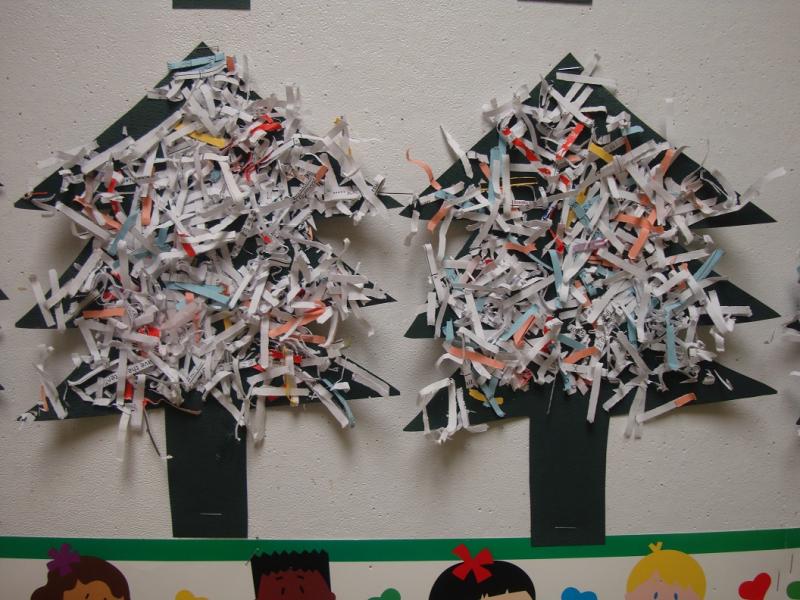
Shredded paper tree

It’s great when you can use recycled materials in an art project. Here shredded paper is used to decorate this tree shape.

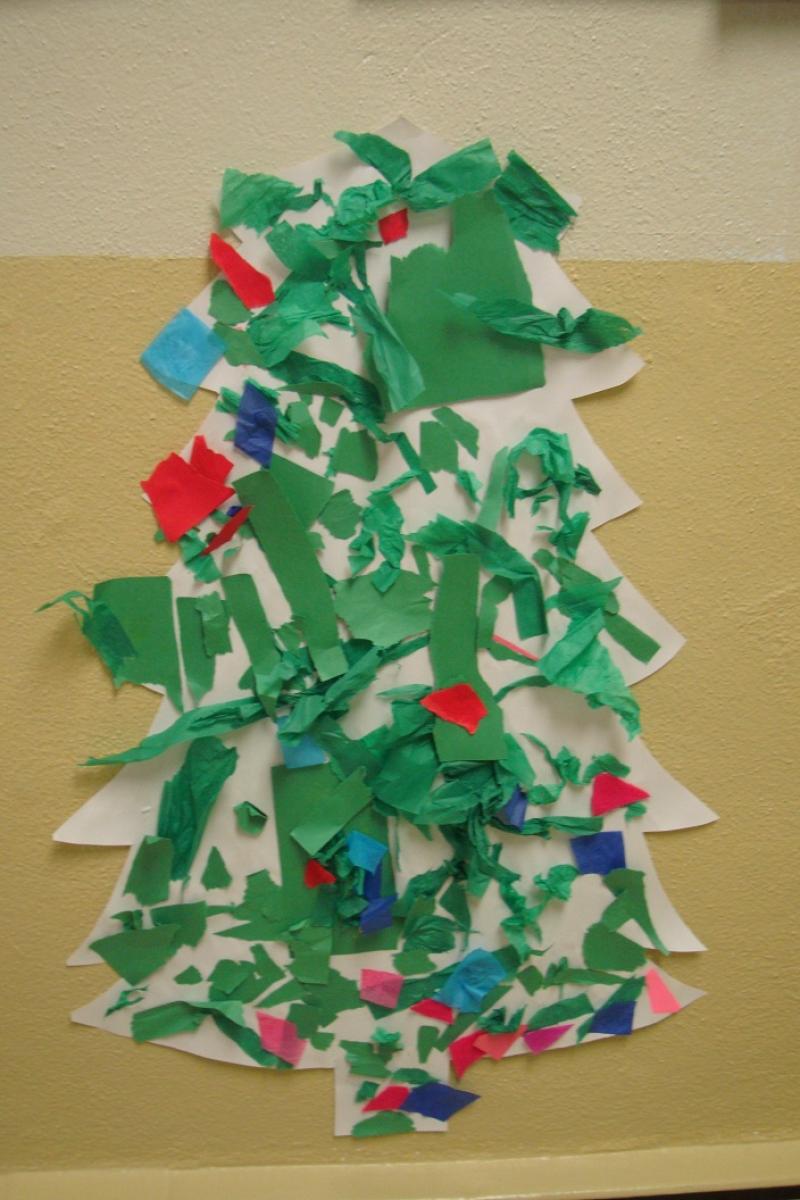
Large paper trees

Children can tear and crinkle the paper to their hearts delight as they work together to fill in the space on the large tree cut-out.

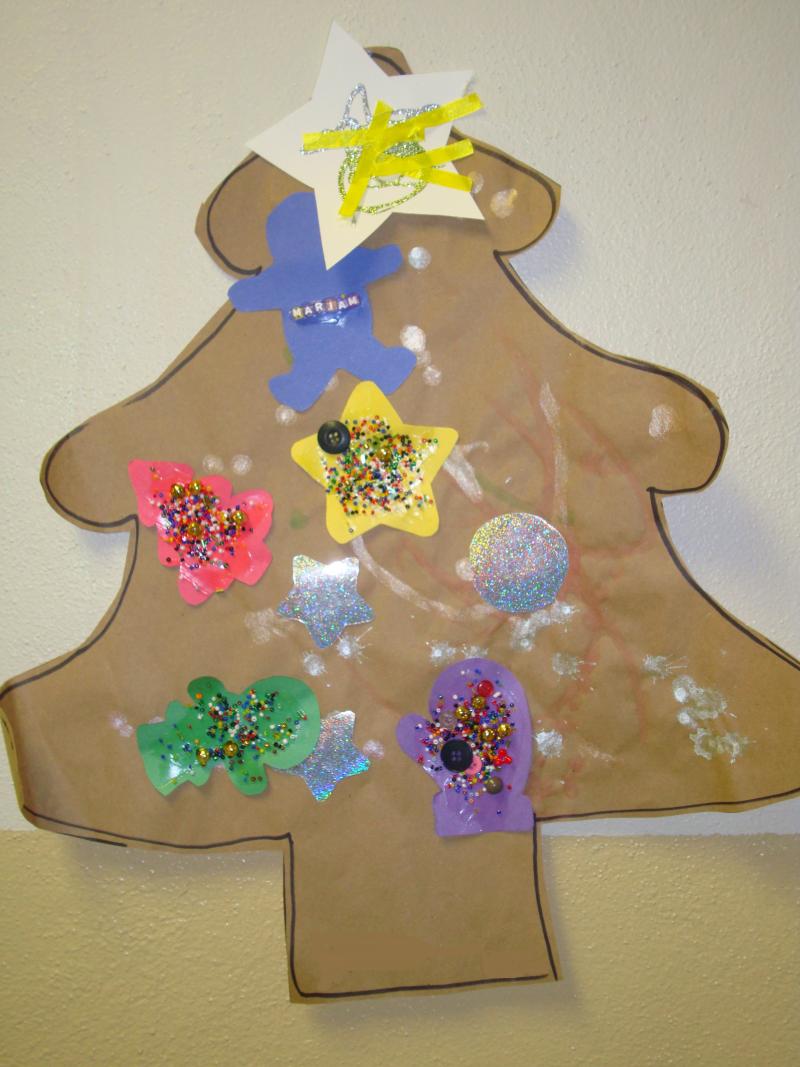
Or try this … cut out large tree shapes out of easel paper along with some assorted shapes, like stars, out of colored construction paper. Have toddlers decorate their tree as they wish by drawing with markers or painting with paint on their trees.

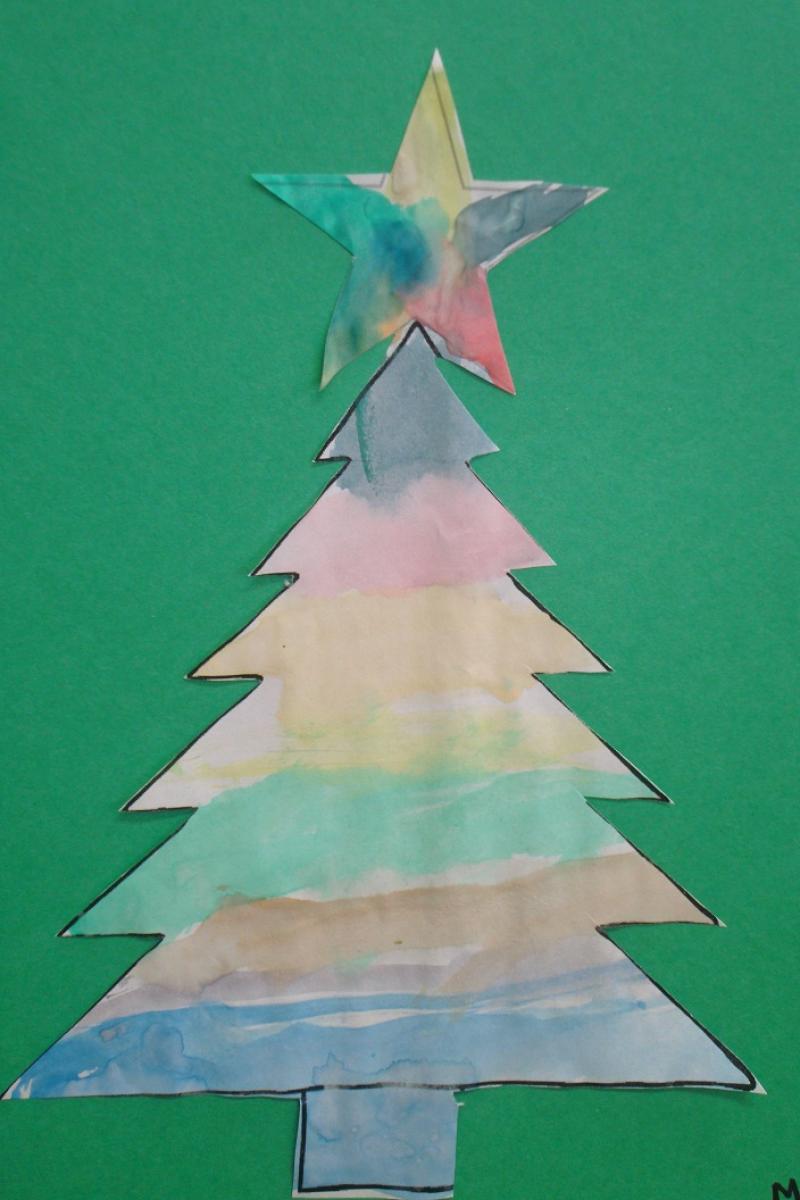
Watercolor trees

Using watercolors is a good fine-motor activity for children. We encourage the “wet-wipe-wiggle” method to watercolor painting to get the deepest colors (wet the brush, wipe the brush on a paper towel, wiggle the brush into the paint). Teachers can silhouette cut out the trees and mount onto construction paper once dry.

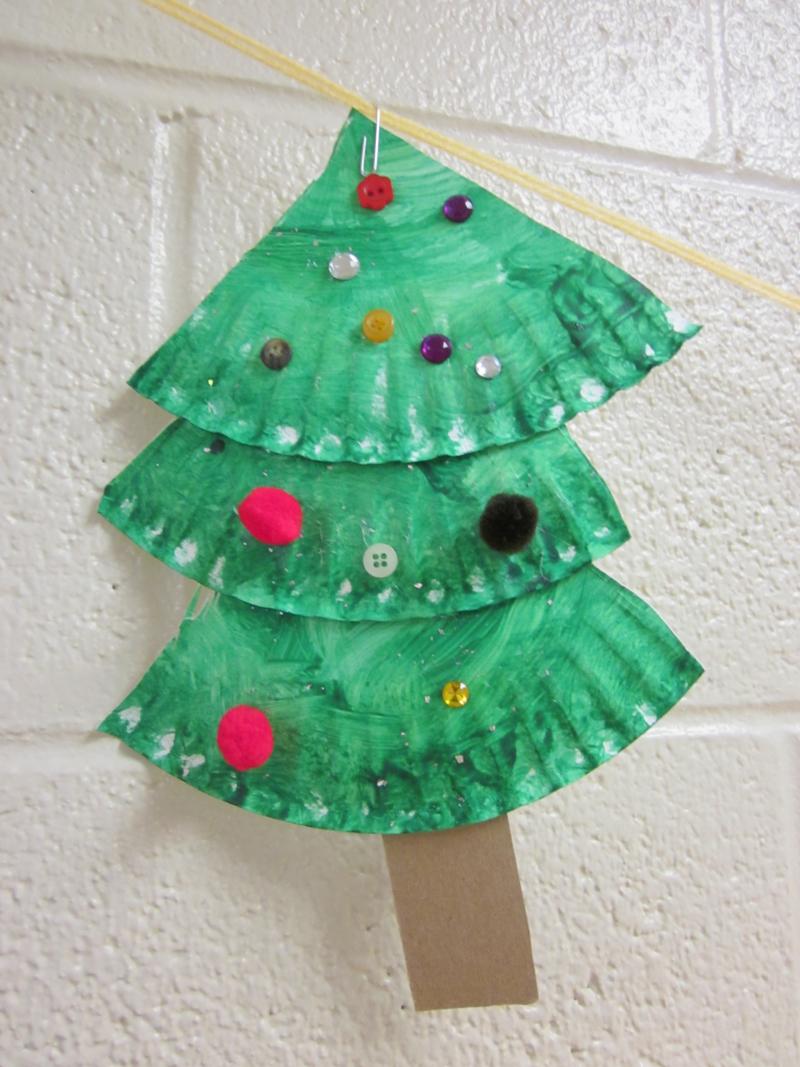
Paper plate trees

After painting a paper plate green and allowing it to dry; cut the plate into quarters and then assemble into a tree shape.

I hope you enjoyed this round-up of Christmas tree art!

treecollage

Our top posts of 2012


bestof2012Just like we did last year, we thought it would be fun to see what our top posts were from 2012! It is fun to take a look on Google Analytics from this perspective and see which posts generated the most interest. A key part of our blog has always been featuring guest posts from others in the early childhood field that we network with – so that we can share a broad range of advice, expertise, tips and ideas. It was great to see that many of our guest posts made it to our top 5 most popular ones! So here we go, our TOP 5 posts, starting with #1 ….


#1: Pre-K teacher tax deductions

Maybe not the funnest topic to talk about (TAXES), but our readers were very interested in tax deduction information as it relates to teachers (and it showed, as it was shared all over Pinterest)! Financial consultant, Steven Daar approached us with this topic, and we asked him to give advice that would specifically help preK teachers understand what expenses they can deduct on their own income taxes. His advice is clear and easy to follow, and we very much appreciated his expertise! Since we are coming into the new year, the post is again timely – so if you didn’t check it out in 2012, head on over now to take a look!


#2: The parent-teacher conference (part 1)

parent-teacher conferenceAnother guest blogger topped our list in 2012! Veteran educator and public speaking coach,Charlie Margolis shared his ideas and insights about how to have a successful parent-teacher conference. Another timely topic, as we enter into the new year! Charlie also had a PART 2 post on this topic, definitely worth checking out (see his fun “helpful hint” at the bottom!).


#3: Handling undesirable behaviors in preschool

Handling undesirable behaviors
Image used here with permission from Bill Corbett

Another guest blogger, with another hot topic … undesirable behaviors. Parenting coach, Bill Corbett answered the following question from one of our readers … “At my school, children seem to be copying the wrong behavior from one another. Let’s just say, it’s not behavior that is desirable. I need to come up with a positive behavioral plan that HAS worked for others. Any suggestions?” Check out the post to see Bill’s response!Handling undesirable behaviors

Because of the high level of interest in this topic … we thought it would be great to get additional strategies from veteran educators and early childhood bloggers that we network with. So, if you would like to see additional ideas on this topic from Vanessa Levin, Rick Ackerly, Barbara Street, Matt Halpern and others, check out Undesirable behaviors PART 2 (which was our #6 top post) and Undesirable behaviors PART 3.


#4: Oh, the things you can reuse!

Earth Day is celebrated in April each year, and last April many of us from the Preschool Blogger Network got together to share books and activity ideas related to Earth Day, recycling and repurposing. This post was put together in preparation for that … and it generated a lot of hits, because EVERY DAY can be Earth Day. Here we shared some of our favorite recycling projects that we’ve done, and that other bloggers allowed us to share here.

This topic is so relevant … we set up a “Green Room” page on our website to feature additional resources and ideas for teachers on recycling and going green in the classroom.


#5: The MAD DOT challenge!Mad DOT challenge

This challenge just seemed “irresistible” to us!! Donna and Sherry over at Irresistible Ideas For Play Based Learning posted about the MAD DOT CHALLENGE they were doing along with their friend, Marc Armitage. The challenge … to take something that is completely white, give young children a bunch of DOT stickers … and let them stick to their hearts content! See how our classes took on the challenge!

Thanks for following and inspiring us each day! We wish you, your students and families a wonderful and prosperous New Year! — Laura & Tressa

How is full-day K changing the preK experience?

KpostThere is no doubt that Full-Day Kindergarten is sweeping our nation. More and more school districts across the country are finding funding and space to offer a longer day of instruction verses a shorter half day.

Over the past few years an abundance of research has been provided to prove that there are many benefits for the full day model. And so, the district in which our early childhood center resides will be transitioning to the full day Kindergarten model for the 2013-2014 school year.

I am eager to hear from Directors, Teachers, and Parents across the country in regards to how to best prepare four year olds for Full Day Kindergarten?

For early childhood program that offer part-day preschool classes … have you had to make changes to your part-day preschool instruction in order to prepare students for a full day when they enter Kindergarten?

Parents with children attending full day Kindergarten programs, feel free to share your child’s experience and how your preschool teacher prepared your child for the transition. We want to hear from you!

Music in our preschools this month

Music in our preschoolsThe National Association for Music Education has named March “Music in Our Schools Month”. It’s a great time for taking a look at how music can be a powerful force in the classroom – especially the early learning classroom. Aside from being used to teach (songs that share numbers, letters or build memory), music and simple musical instruments can teach kids how to be creative, resourceful, play with language, listen to each other, and how to cooperate and bond with a larger group. They can be used to expose children to world cultures or share first songs in other languages. There are a host of benefits that can come from the simple act of having fun making music with your class!

So how does this work? This week I’ll share some simple ideas that are great ways to bring music into a classroom of young children. Here is the first idea …

THE QUIETEST RATTLE – SHARING MUSIC AND LEARNING TO LISTEN

Ask any pre-k or kindergarten teacher – mixing arts and crafts and music generally makes for a big hit in the classroom. One fun activity perfect for this age group is creating really quiet rattles.

The project is simple. Have each child bring in any recycled container, preferably a see-through one and have a few extra on hand so no one is left out. They can decorate the outside with stickers or wrap a handle with pipe cleaners or yarn before you are ready to fill them.

Here’s the tricky part. You want to find lots of things to put in the rattles that are really QUIET. The teacher can have some examples of rattles that are not so quiet for comparison (see our suggestions below) and then challenge the children to fill theirs with something that will make noise but still be very quiet. Q-tips, salt, tiny pasta, cotton puffs, confetti? Each makes a different quiet sound that helps teach kids to practice the art of listening.

closeuprattles.jpg.th

When you’re done, make sure you seal each rattle with a strong tape (such as electrical tape) which ensures the contents will not get out. Then your class can use their new instruments to play along to quieter music. The kids can pay attention to how the rhythms of their rattles fit into the music they are hearing.

You can even have a contest in the classroom and reward all entries or ask the kids for their suggestions about which of the teachers rattles would win a “Quiet Contest”. Stack up a variety of rattles and the class can guess which might make the softest sound.

Here are some favorite choices for rattle-making:

Quiet rattles: sand, salt, sugar, confetti, cotton balls, craft puff balls, paper bits, Q-tips, cut-up straws, tiny pasta (such as pastina or acine de pepe).

Medium Rattles: paper clips, small pebbles, birdseed, small beads, small dried beans, rice, smaller buttons.

Loud Rattles: dried macaroni/pasta, large pebbles, large beads, coins, large dried beans, larger buttons.

Want more ideas for instruments you can make in the classroom? Learn how to make a Latin-American “guiro” or a whimisical washboard next!whimsical washboard

Award-winning children’s performer, DARIA (Daria Marmaluk-Hajioannou) has five cd’s that have won national honors. She has the most awesome job of traveling the world to sing for kids and peace. Her website; located at dariamusic.com, was given a 2009 Parents Choice Award for its musical and cultural content. Read more about Daria. Images used here with permission from Daria.
Handling undesirable behaviors (part 3)

Handling undesirable behaviorsThanks to many suggestions from readers and teacher bloggers … we are now up to our 3rd (and final … for now) post on strategies that teachers have used in their classrooms to handle undesirable behaviors. We started this series of posts in response to a question from a reader. You can view the original question, and Bill Corbett’s (Cooperative Kids) response in “Handling undesirable behaviors (PART 1)” … and other suggestions and tips from around the web in “Handling undesirable behaviors (PART 2)“. Now, we are onto PART 3, with a few other ways teachers have dealt with this issue …

Modeling Desired Behaviors

Kindergarten teacher Candy Lawrence from Auntie Annie’s Childcare blog uses PUPPETS as one strategy to model good behavior and help children problem solve:

In the case of group misbehavior, as with any other misbehavior, the first port of call is individual relationships with each child. The moment you start considering a group as a homogenous mass instead of the sum of its parts, you’re in trouble. Each child who’s ‘catching’ the misbehavior may have a different need, but I’ll put money on at least one or two of them feeling a need to be ‘seen’.

Puppet shows have been my go-to in this sort of situation. I work through the problem ‘remotely’, if you like, by making the puppet/s do whatever the misbehavior is, then I talk lovingly to each puppet about the problem. Nobody MOVES when I get puppets out… and the kids love to interact with them and help solve their ‘problem’.

Candy shares a link to her Behaviour management page, which lists various types of situations and links to suggestions.

Positive Behavior Charts

Kindergarten teacher Matt Halpern from Look at my Happy Rainbow blog shared his idea for a behavior chart:

Something I’ve used with lots of success is a Positive Behavior chart. I have three tiers (any three colors will do, but I steer away from red, yellow, green). Kids start at the bottom tier and when I see them doing something good (listening, sitting still, basically following the rules), I move them UP a tier. It’s kind of like the reverse of many behavior programs – you get moved for being GOOD. At the end of the day, kids at the top get a reward – I try to not use a prize box. Some rewards are: you get to pick your center first, you get to pick your playground equipment first, etc.). This works really well and helps me focus on the positive too. 🙂

Positive GROUP Rewards

At the child care center where I work, we have some teachers who are teaching their class about the concept of TEAMWORK. Rather than giving out individual rewards for good choices, they focus on the class as a whole and how they function together in certain situations. When the class works together to clean up or walk quietly down the hall; they receive a pom pom in their collective teamwork jar. When they have gotten enough pom poms to reach a certain level – the class gets a reward (such as pajama day or a special activity). When individuals or groups of children are not cooperating, the teachers address it and point out how it affects the wholeclass (team). This isn’t a “fix” for situations where individual children have specific needs that need to be met … but it is an important lesson for children to learn how their actions affect others, and this is just one way to help them learn that.

———————————————————————————————

Thanks to Candy and Matt for your helpful suggestions and links! And thanks to Miss Julia and Miss Jo at our school for the pom pom idea!

I’ve really enjoyed learning about each teacher’s own “bag of tricks”. Since not every tip/strategy will work in every situation or with every child (or group of children) – I feel it’s helpful to have a lot of different/varying ideas to pull from … and I hope you have found something that will be useful to you in your own teaching, either now or in the future.

Don’t forget to check out PART 1 and PART 2 if you haven’t done so already.

Do you have a tip or experience to share in relation to this topic? We’d love to hear from you! Please share your experience (or other questions) in our comments below or send us an email.

What is the teacher expense deduction?

money apple grad capBelow is the second post which provides tips on tax deductions for pre-kindergarten teachers from financial consultant, Steven Daar. Please read through to fully understand the “teacher expense deduction”, and what pre-kindergarten teachers can/cannot deduct. (And if you think it’s unfair, there’s a call to action at the bottom!)

The Teacher Expense Deduction:

This deduction is one I believe pre-kindergarten teachers get the short end of the stick. The IRS allows educators to deduct $250 each year for money spent on teacher or classroom supplies and materials. However, this deduction is only provided for K-12 teachers and not pre-school teachers.

What pre-kindergarten teachers are allowed to do is this: if they itemize their deductions on Schedule A of their tax form (rather than taking the standard deduction), they may deduct expenses that are in excess of 2% of their adjusted gross salary. For example: if your adjusted gross salary is $25,000, you can only claim a deduction on your expenses that exceed $500. If you spent $700 on classroom materials, you could then deduct $200.

This is inherently unfair as pre-kindergarten teachers have out of pocket classroom expenses just as K-12 teachers do, but K-12 teachers get a deduction on the first $250 they spend but pre-K teachers only get a tax break if they spend more than 2% of their salary on classroom materials, which is hard to do! Not only that, but the K-12 teachers get the deduction on the Form 1040 rather than on Schedule A. Translation: No matter whether you itemize or take the standard deduction, expenses reported on the Form 1040 are granted a tax deduction. This means the K-12 teachers get the tax break no matter what while pre-K teachers needs to both:

A) Spend over 2% of their salary on classroom expenses and
B) Take itemized deductions over the standard deduction on their taxes

I do have some good news on this though! There is currently a bill in Congress that extends the Teacher Expense deduction through 2017 AND offers it to pre-K teachers in addition to K-12 teachers. It is the Teacher Tax Deduction Enhancement Act of 2011. The bill is currently in a House of Representatives committee. I suggest you write or email your senators & district’s congressperson to help get this bill passed and allow our pre-K teachers to take what is probably the most useful teacher deduction. (Visit this site writerep.house.gov/writerep/welcome.shtml as one method of contacting your representative.)

As mentioned in the post Pre-K teacher tax deductions – in order to accurately be able to take these deductions, you need to keep your receipts for job-related expenses. When it comes time to fill out your taxes, either bring the receipts to your accountant/tax preparer. Or if you prepare your own tax forms, use the receipts to add up the amount of money you spent on job-related expenses.

Did you find this information useful to you?

Do you want to learn more about financial issues affecting early educators (such as what are some of the best retirement plans)? Let us know via comment or email so we can get this information to you!

Steven Daar is a graduate from the University of Illinois in Urbana – Champaign’s Business School with a degree in Finance. Steven Daar has put together many articles for teachers at his website teachersretirementhelp.com.

Pre-K teacher tax deductions (part 1)

apple and booksBelow is the first in a series of posts to provide tips on tax deductions for pre-kindergarten teachers from financial consultant, Steven Daar.

The New Year brings about a lot of exciting & promising things. Taxes are not included in that group. But they are going to have to be paid one way or the other and if you want to keep a little more of the money in your bank account as opposed to going to a video game preservation center in New York (one of 100 examples US Senator Tom Coburn points out in his report of unnecessary projects the federal government spends on), I have a few tax deductions available to pre-kindergarten teachers you can utilize to do just that.

The Deductions:

1) The first one is you can deduct any dues you pay for any professional organizations related to your career (the NAEYC or NAECTE for example as well as a teachers union).

2) If you pay out of pocket to obtain a license or certification, you may deduct those costs as well. In this case, I am referring to a first aid certification or CPR certification. So long as having this license or certification is necessary or better equips you to teach you class you may deduct the cost.

3) When traveling to any training session or conference that is related to your career, you can deduct your mileage as well as hotel expenses as well as 50% of your food expenses. If you pay for training or continuing education courses, those expenses are tax deductible as well.

4) A fun tax deduction (if such a thing exists) is that if you give birthday or holiday gifts to co-workers or other school employees, you may deduct up to $25 for each gift you give.

5) You may also deduct any charitable deductions that you make (that is true for anyone, not just for teachers). This includes donations you make to your school (whether it is a gift of new books to the school library or a monetary donation to help the school fund a project). Note: You may only take this deduction if you teach at a public school or a private school that is set up as a non-profit.

All of the above deductions are taken on Schedule A of your tax form. That means the deductions only count if you itemize your tax deductions rather than take the standard deduction.

Record Keeping:

To accurately be able to take these deductions, keep your receipts for job-related expenses. Have a specific folder, envelope, or file for these receipts. When it comes time to fill out your taxes, either bring the receipts to your accountant/tax preparer. Or if you prepare your own tax forms, use the receipts to add up the amount of money you spent on job-related expenses. Note that you may not include any expenses for which you were reimbursed by your employer.

Check back with us tomorrow as we learn about the “teacher expense deduction“.

Steven Daar is a graduate from the University of Illinois in Urbana – Champaign’s Business School with a degree in Finance. Steven Daar has put together many articles for teachers at his website teachersretirementhelp.com.