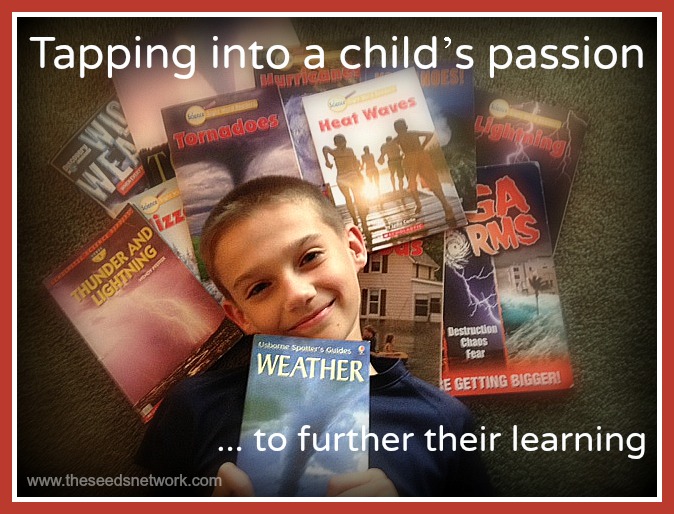
Tapping into a child’s passion to further their learning

There is no doubt that a child learns best when learning takes place in an area of interest.  As educators, we must keep this in mind when lesson planning.  This task can be daunting, especially when given a large group of students with various interests.   However, when given the opportunity to learn and grow through a deep routed interest, wonderful things can happen.  This is the story of my son Riley and how he continues to learn through his interest areas.
RileyPhoto

Preschool: bringing the learning to the child

As a preschooler, my son Riley had no interest in going over to the art center to make projects or sit with a teacher to learn how to write letters.  Instead he preferred the block and science center.  Usually gravitating toward hands on activities with cause and effect, opportunities to hypothesize and predict outcome; Riley needed learning to take place in a center he liked to be in.  Fortunately for Riley, his preschool teachers embraced his interest areas and brought the learning of letter formation, early phonics, pre-math skills and writing to the centers that he loved.  They were wonderfully creative and nurturing to Riley’s needs and interests.

Entering elementary school

As Riley entered Elementary school however, we found that he struggled somewhat.  He was able to retain information, learn concepts in math and reading, however, struggled with reading fluency and phonics and decoding skills in text.  Kindergarten through 2nd grade was challenging and somewhat frustrating as a parent.  Although his teachers felt confident that he was “keeping up”, I as a parent was not satisfied.  By third grade my worries increased when his reading fluency was decreasing and his other areas of study were suffering.  My husband and I requested for Riley to be tested.  I sympathized with Riley’s teachers because everyone was working so hard.  In a class with 25 students, it is no doubt hard to tap into each child’s interest.  I knew in my heart though, that something was not right.

After testing, we discovered that Riley has trouble with his verbal memory.  This, unfortunately, makes learning very hard in a typical classroom environment.  Just like preschool, Riley doesn’t fit into the conventional style of learning.  He learns best through hands on activities, and through retelling verses writing.  Upon discovering these findings, we were able to create better ways in which Riley can learn, be tested, and express himself.  By fourth grade, Riley’s academic skill, in all areas, along with his confidence, has increased drastically.

Tapping into child’s area of interest

We have found that taking a topic of study that Riley LOVES and incorporating academic areas into it, is the way to go.  An example of this is Riley’s love for weather.  He is obsessed with tornados, hurricanes, tsunamis, the daily forecast…he loves it all.  His fourth grade teacher and my husband and I provided Riley with as many tools for learning more about the weather that we could think of.  We exposed him to lots of books to read, including the Farmer’s Almanac, tornado tubes, a digital weather predictor, and radar apps for his iPad.  Providing materials and tools for Riley within his interest area gave him experiences and practice with reading, writing, and math within a mode of study that he is invested and interested in.  As the year progressed, he because quite the little weather expert.
RileyWeather

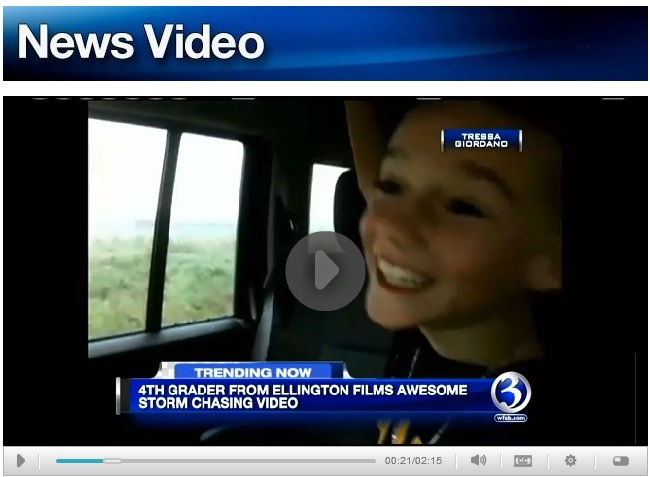
Riley’s Weather Video on Local News

After following a rain storm and videotaping his first ever weather report, I sent a clip to our local news station.  To our surprise they aired his video and Riley became an official weather forecaster.  Our local apple orchard saw the video and asked him to become a regular “reporter” for their orchard, reporting on crop growth, and educating folks on how apples and peaches are grown.  Not bad for someone who struggles with verbal memory!

“Orchard Fun with Riley” video

As a parent, I am so proud of Riley for working so hard to do well in school.  As an educator, Riley is my inspiration to continue to look at students as individuals and to nurture their interests and passions.  It is those types of teachers who make a difference in a child’s life and those students who are able be successful in life.
Focusing on love and kindness during the holidays

candle

Holiday time is a very exciting time for students attending school!   Whether they are infants and toddler, preschools, or school-age children, the holiday time is filled with anticipations and tradition.  Through my years of teaching, I have had to be conscious and sensitive to cultures and beliefs and ensure that my teachings did not cause anyone to feel uncomfortable.

When I taught in a public school, I had to make sure that I did not bring religious beliefs into the room.  When I was a Director of a religious-based program, we shied away from the commercialization of the holiday season. I can recall being very cautious and particular when it came to book and music choices for my lesson plans.  I wanted to be sure that I would not offend anyone.  I know many teachers who sometimes struggle with the holiday season because there are, in fact, so many beliefs and cultures; no teacher wants any family to feel left out.

How can a teacher effectively celebrate all holiday traditions at an age appropriate level? 

At the end of the day though, regardless of culture and religion, I believe that holiday time is a wonderful opportunity to simply teach our children about how to love others.  No matter what the culture or religious belief may be they all originate from a place of love and respect.  Teaching children to be kind, respectful, and giving are lessons that are not only celebrated this time of year, but are reinforced and modeled all the time.

The holiday time of year definitely creates a stage for early educators to review and highlight ways in which we can show love towards others.  So don’t stress this holiday season, bring it back to basics, and simply teach your students how to give the greatest gift of all to each other…..LOVE!

Here are a few ways to teach children how to show love and kindness for others.

  1. Draw a picture for a friend.
  2. Make cards for those in nursing homes or hospitals
  3. Have a food, clothing  or toy drive
  4. Teach children how to give compliments and build each other up
  5. Have families share their holiday traditions, through pictures, food, visits
  6. Listing things you like about each student in the class.
  7. Listing things your class is thankful for
  8. Sing songs about friends and love to other classrooms and parents
  9. Work on full classroom projects that involve everyone’s contribution
  10. Teach your students how to tell  friends and family members “thank you” and “I love you

Share some ways you teach your preschoolers about love and kindess below!

Oh the many ways to make Christmas trees in preschool

Christmas tree


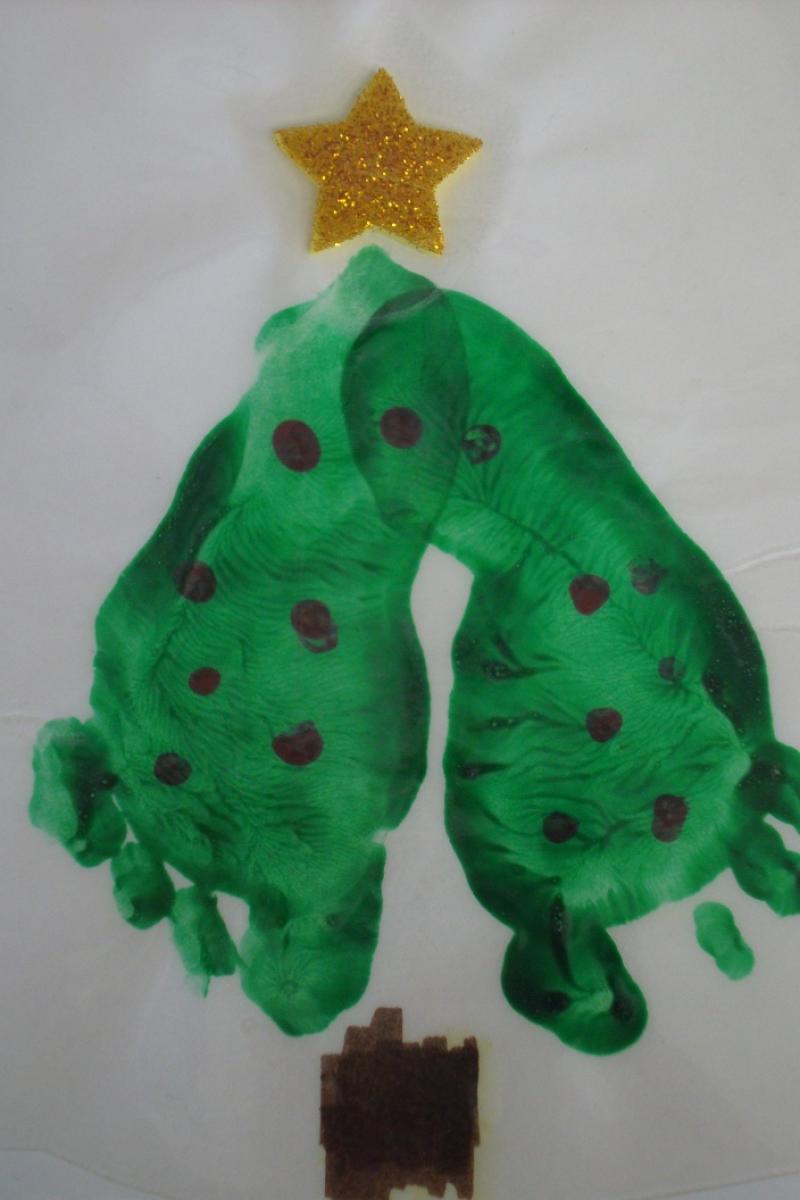
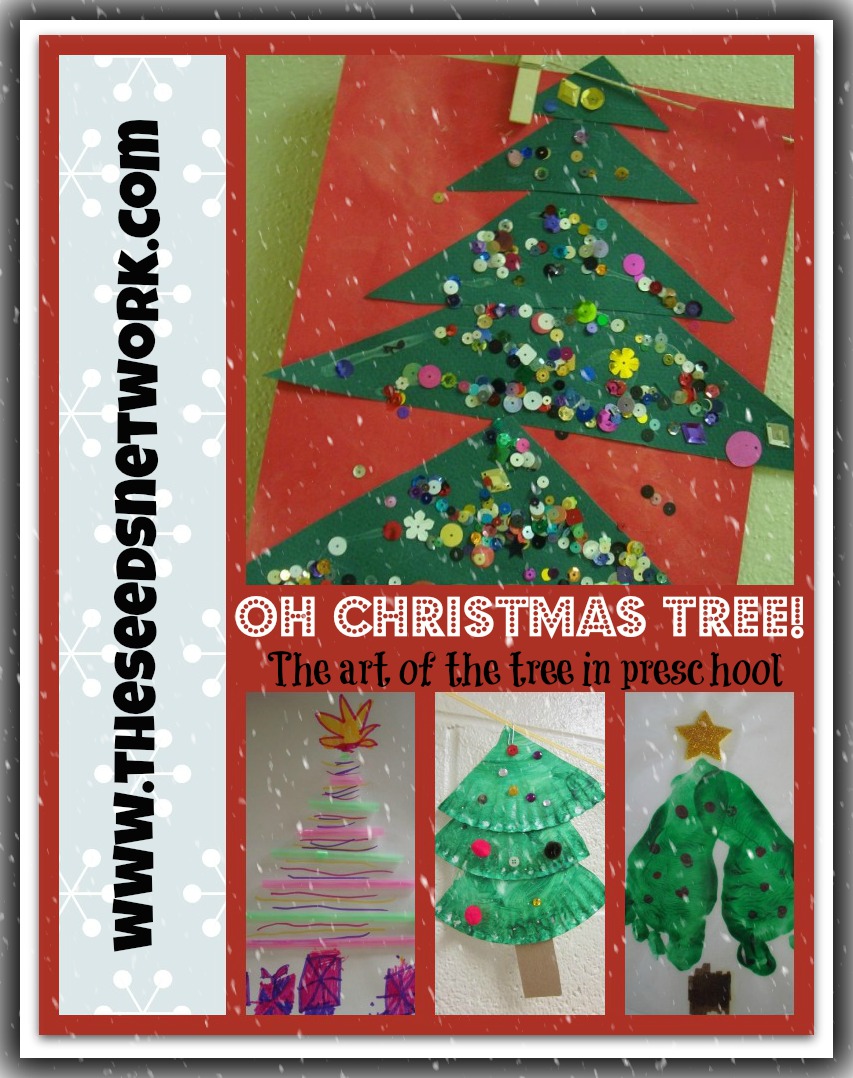
Oh Christmas tree – so MANY WAYS to make a Christmas tree in preschool! From tissue paper to egg cartons, sticks to straws – there are so many different materials that can be used to make Christmas Tree Art projects. And lots of learning that can take place in the process – creative expression, counting, sequencing, fine motor development … so here’s a round-up of some really creative trees that can be made with infants to kindergarteners!


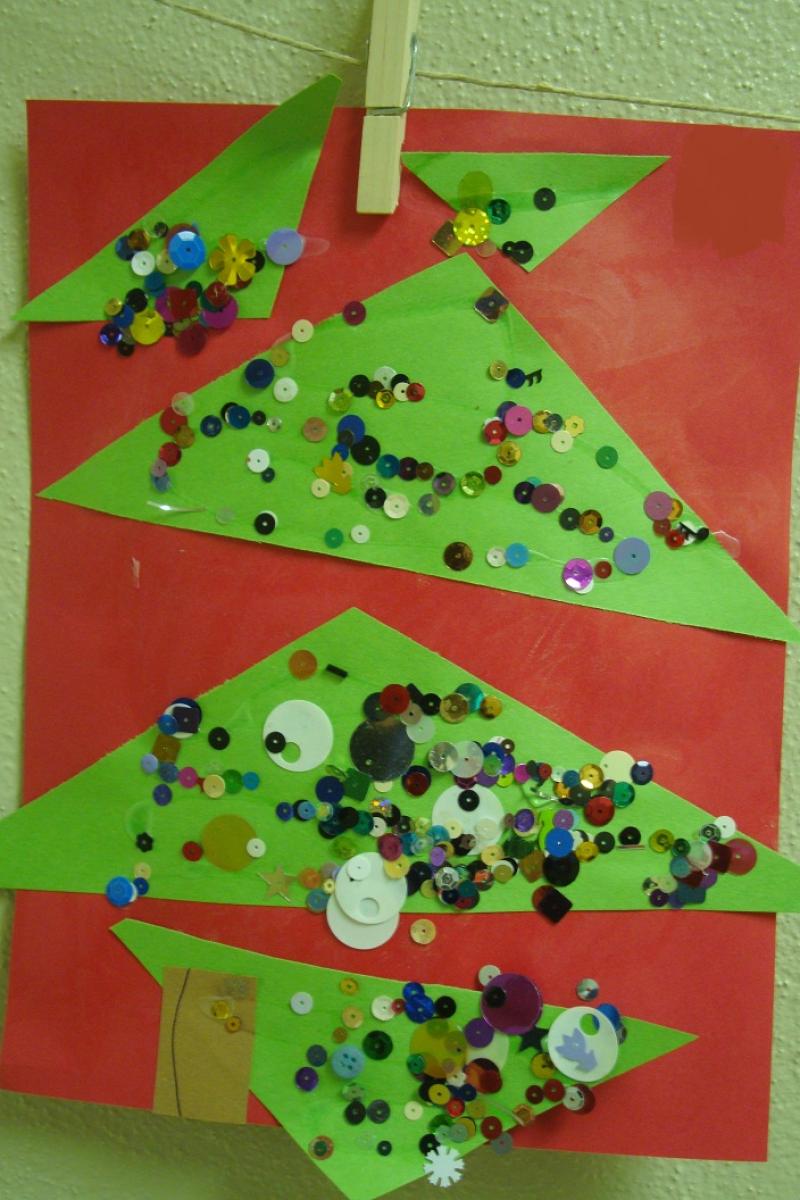
Easy TriangleTrees

Perfect activity for toddlers and young preschoolers to express their creativity! Give them some pre-cut triangle shapes in various sizes and have them put together a tree on a piece of paper, and then embellish with sequins. The “not so perfect” tree shapes are priceless!

Infant Mistletoes

This is such an adorable Christmas keepsake!

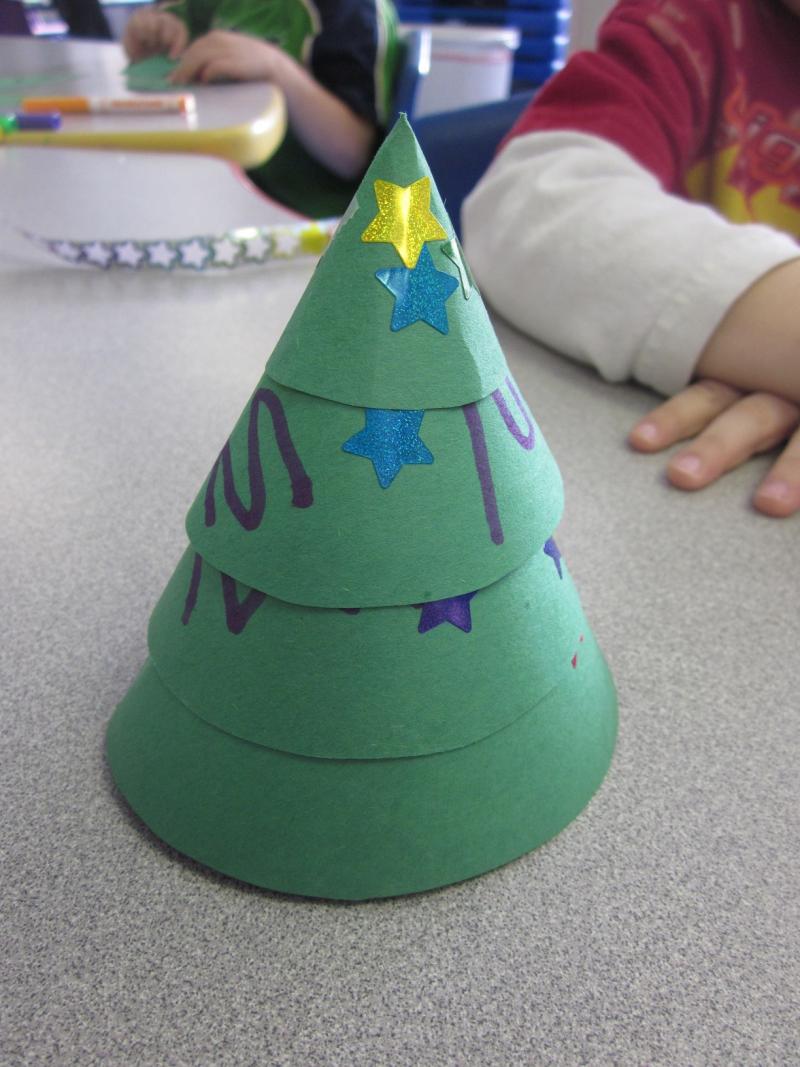
Stackable trees

I have the children make these trees after reading “Mr. Willowby’s Christmas Tree”. They get four different size semi-circles to decorate. After decorating, we turn the half circles in cone shapes and then stack the (good sequencing activity to go from largest to smallest cones to stack).

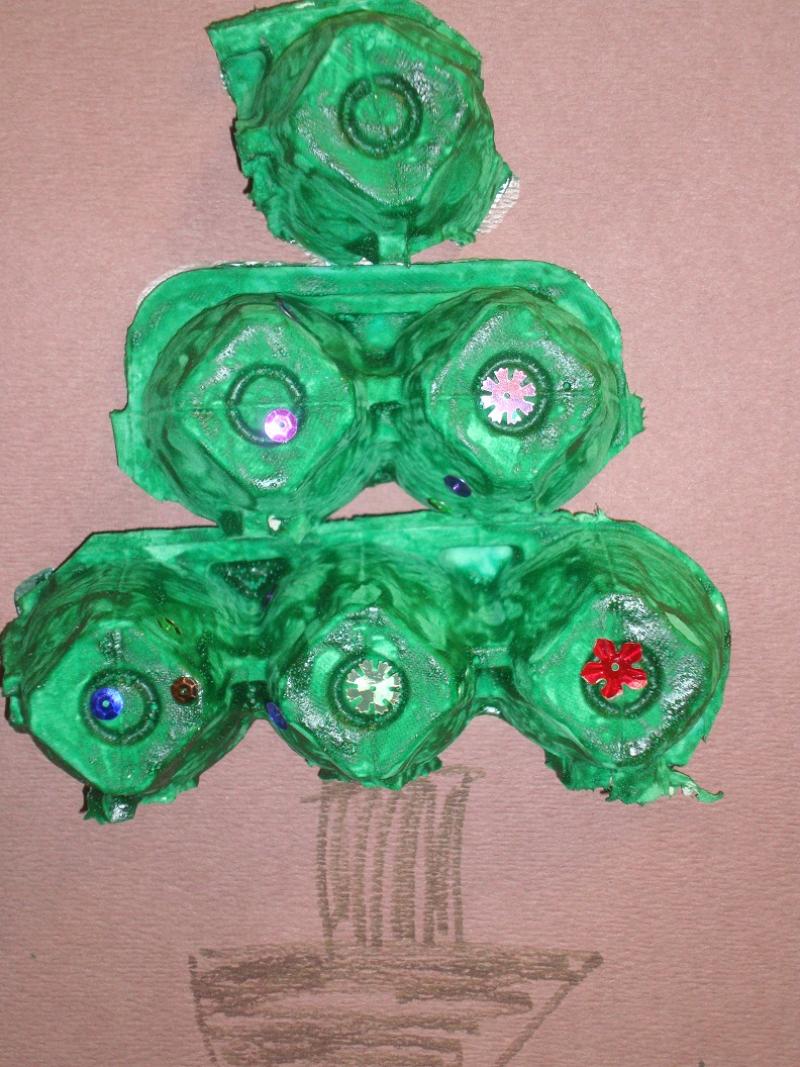
Egg Carton trees

Older preschoolers and kindergarteners can use recycled egg cartons which they cut, paint and arrange to form a tree.

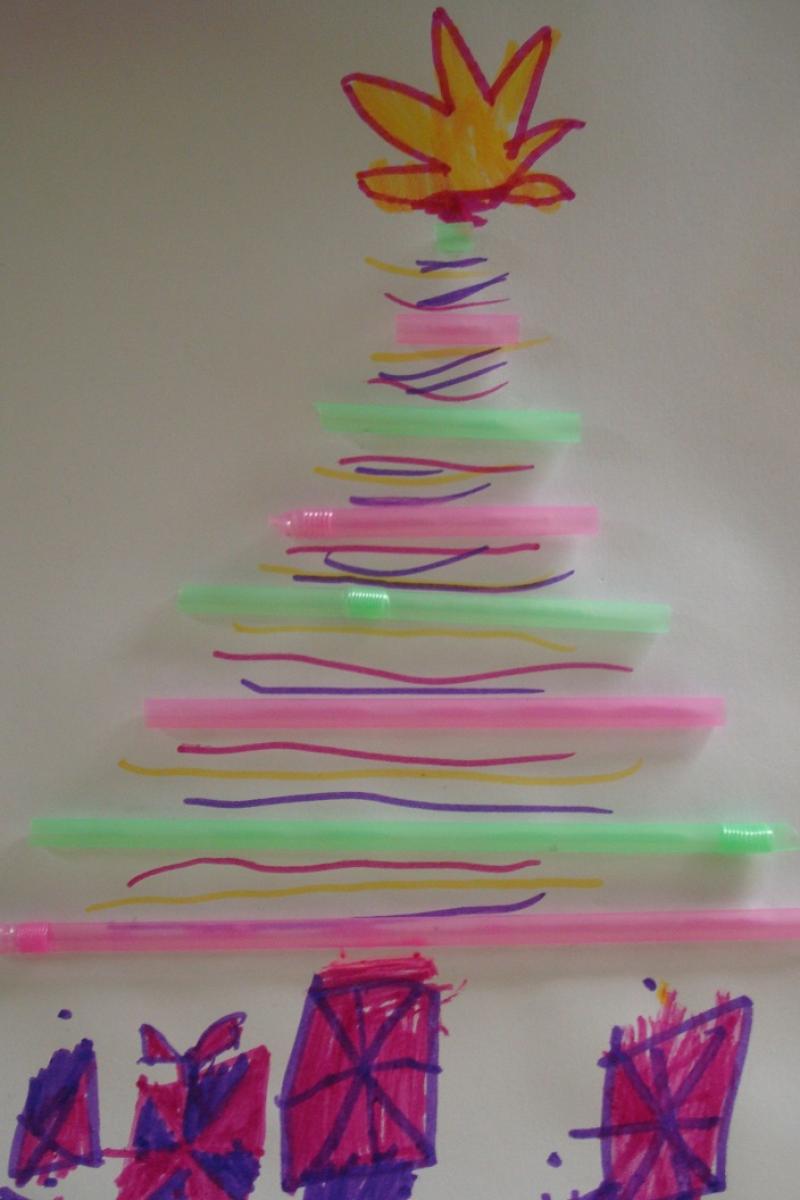
Christmas Tree of Straws

Children will get some great fine motor practice cutting the straws into all different sizes. They can then work to arrange the straws from longest on the bottom to shortest on the top to form their tree.

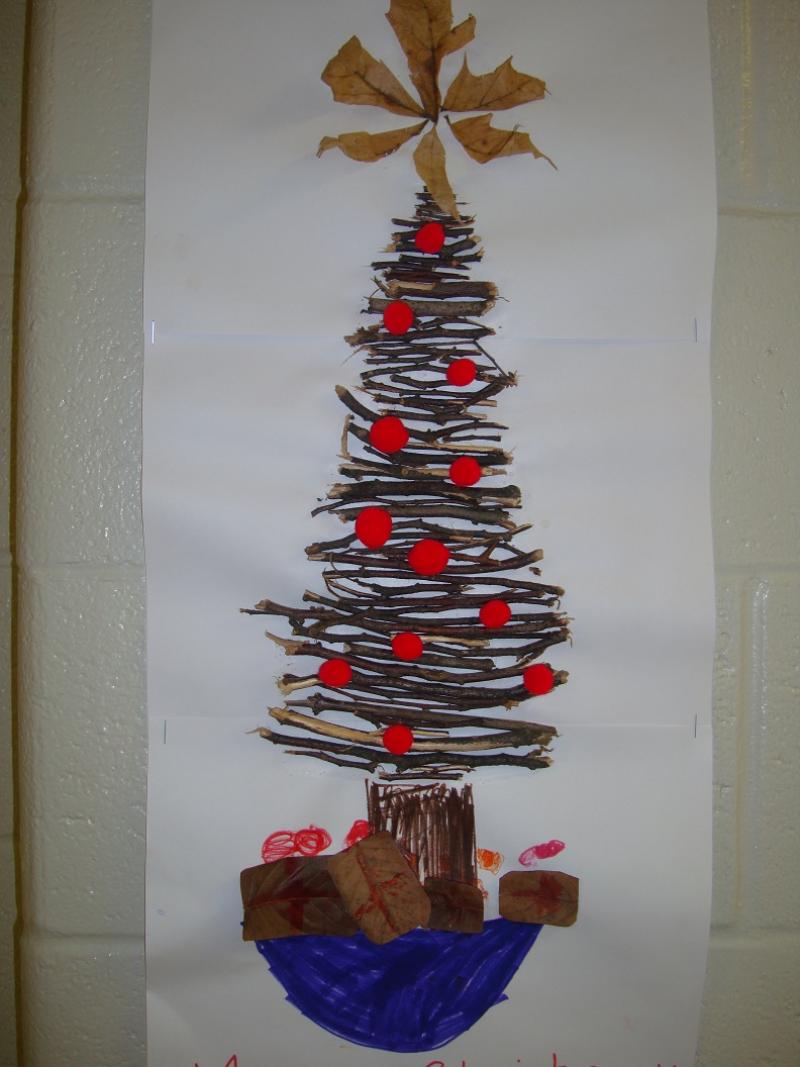
Nature tree

I love this tree made out of some items found outdoors! After going on a stick hunt, parents and teachers may need to cut some of the sticks so there are various size pieces. Children can work together to arrange the sticks in order to form a tree. Embellish with pom poms – and a star made out of leaves tops it off!

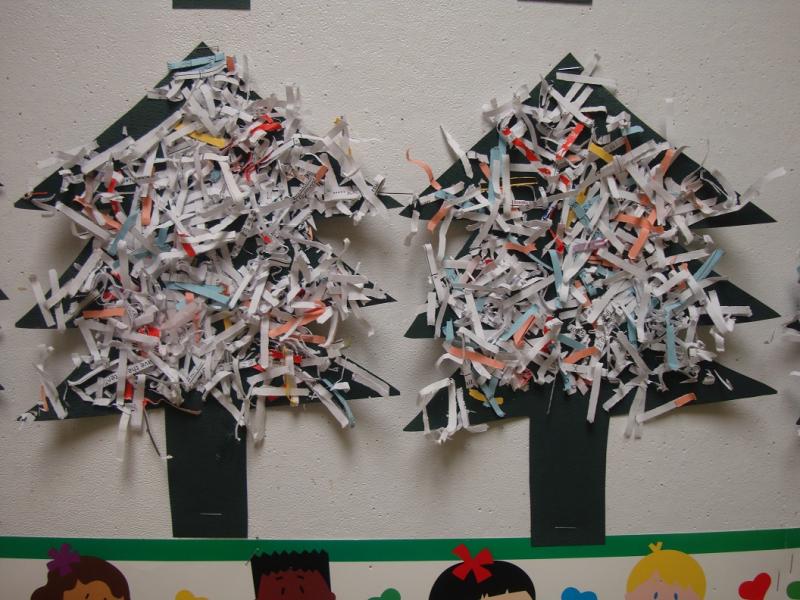
Shredded paper tree

It’s great when you can use recycled materials in an art project. Here shredded paper is used to decorate this tree shape.

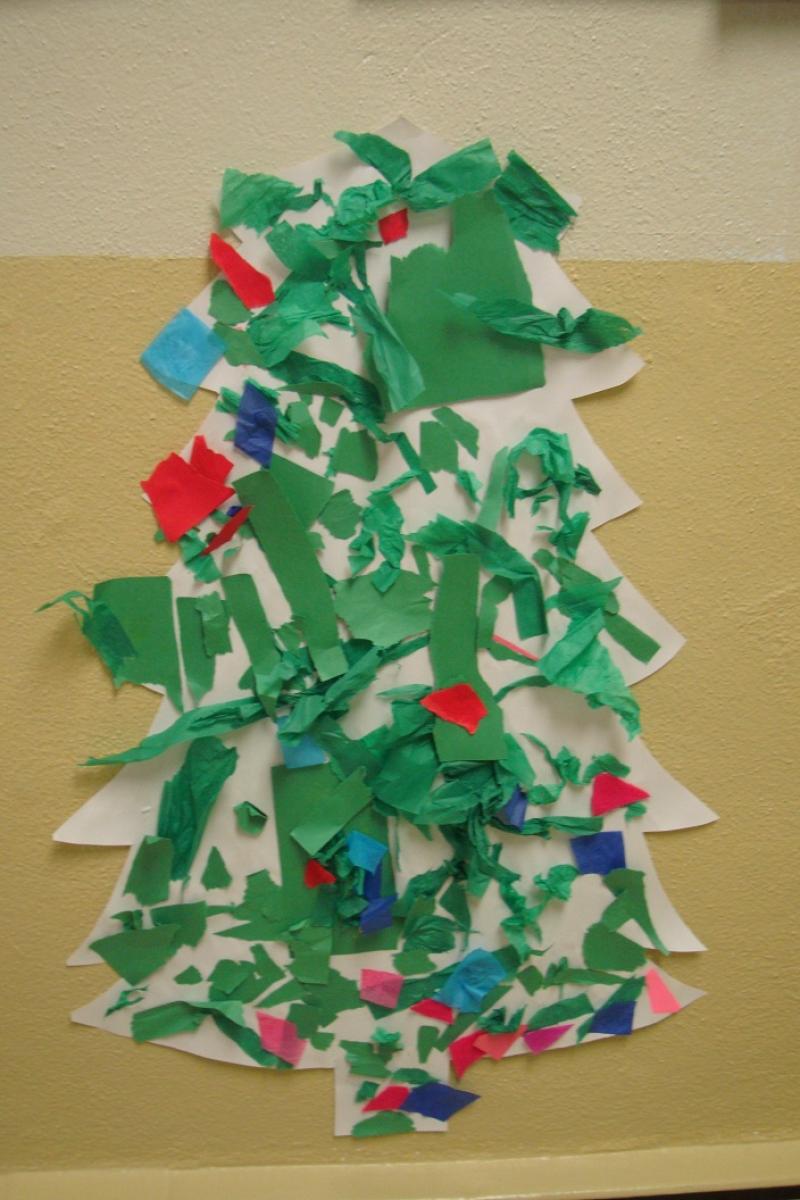
Large paper trees

Children can tear and crinkle the paper to their hearts delight as they work together to fill in the space on the large tree cut-out.

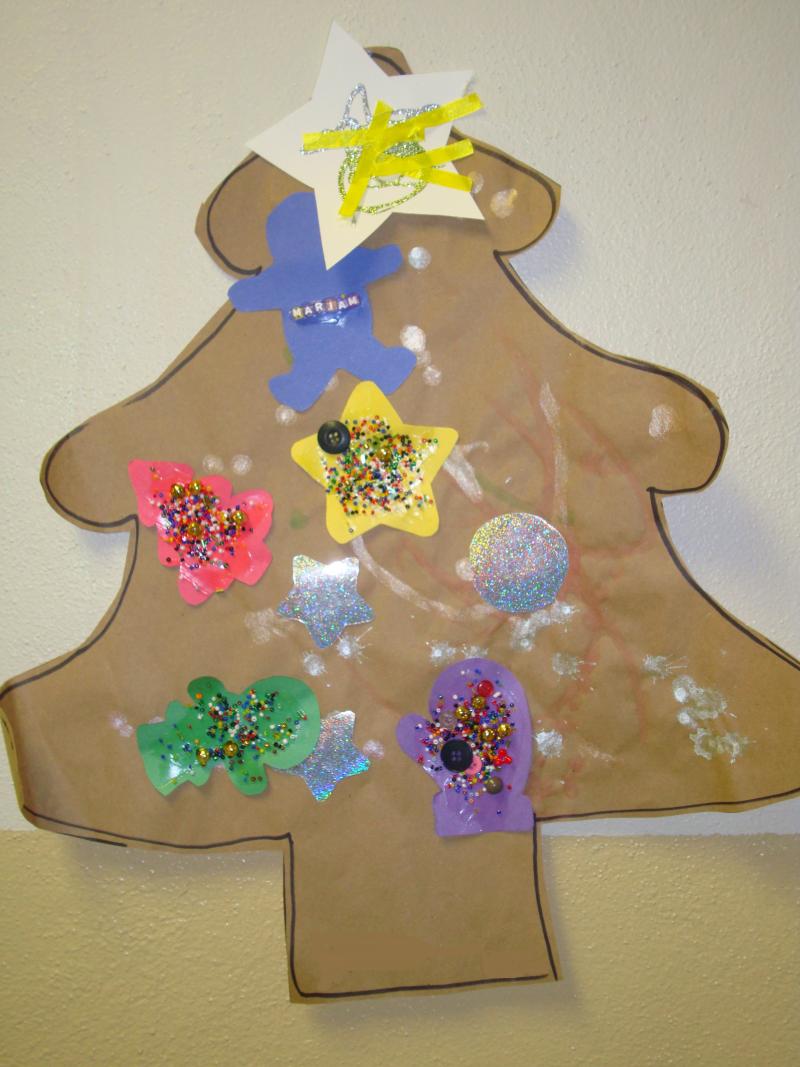
Or try this … cut out large tree shapes out of easel paper along with some assorted shapes, like stars, out of colored construction paper. Have toddlers decorate their tree as they wish by drawing with markers or painting with paint on their trees.

Watercolor trees

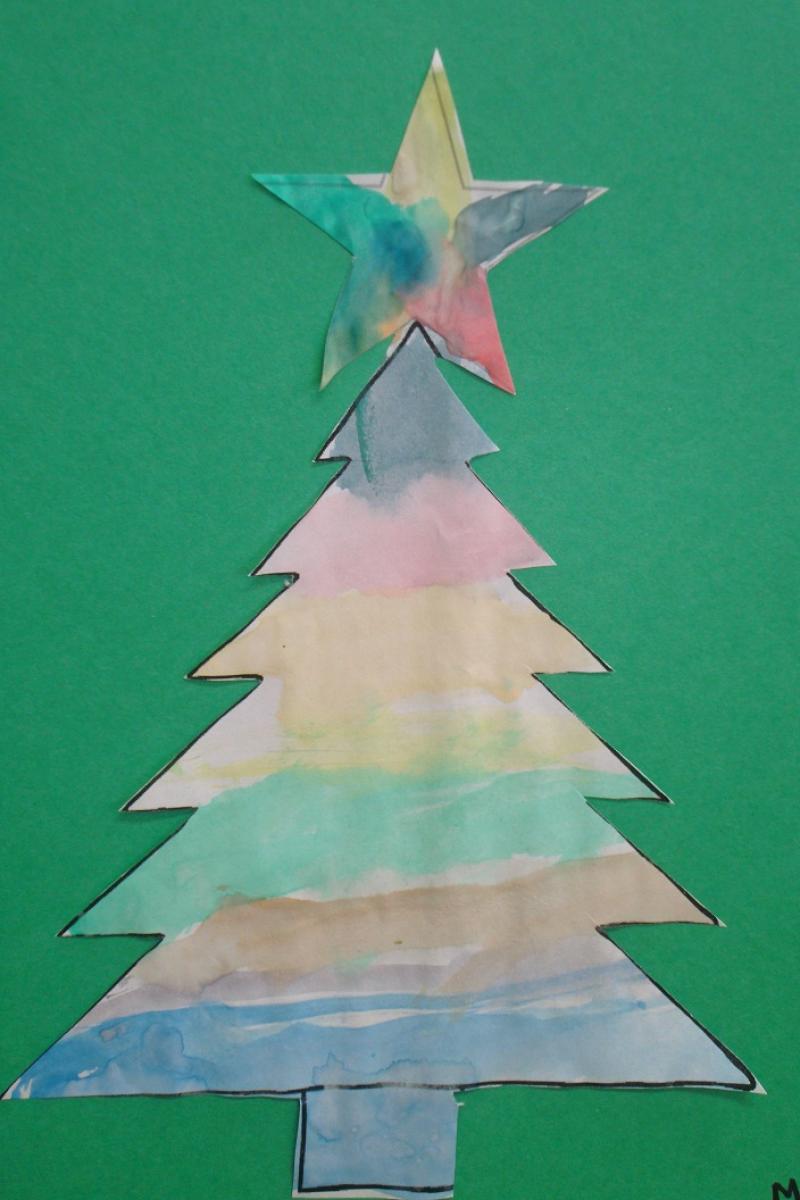
Using watercolors is a good fine-motor activity for children. We encourage the “wet-wipe-wiggle” method to watercolor painting to get the deepest colors (wet the brush, wipe the brush on a paper towel, wiggle the brush into the paint). Teachers can silhouette cut out the trees and mount onto construction paper once dry.

Paper plate trees

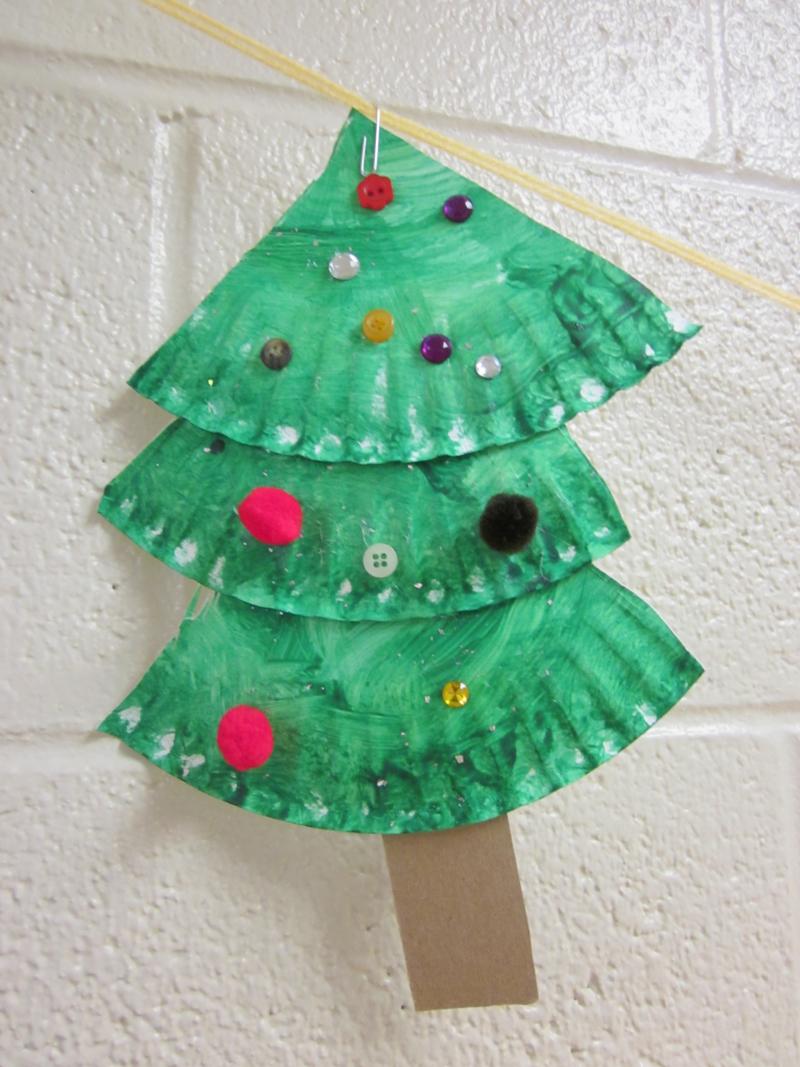
After painting a paper plate green and allowing it to dry; cut the plate into quarters and then assemble into a tree shape.

I hope you enjoyed this round-up of Christmas tree art!

treecollage

Playing with nature on a sticky table

nature on a sticky tableI was very inspired to try making a “sticky table” after seeing the Pumpkin vines on the sticky table activity created by Deborah Stewart on the Teach Preschool site. I thought this would work very well with various items in nature that we have outside during this time of year.

To set this up, I cut a large sheet of clear contact paper and used clear packing tape to adhere the contact paper (sticky side up) to the table so it wouldn’t move around. To have some variety of items, I brought in a collection of leaves, pine branches and small pinecones from home. The children also gathered other leaves and sticks from the playground outside. Depending on the season, you can select other items like flowers, clovers and blossoms.

Then we had the children explore their treasures on the sticky table. They played around and noticed that some things didn’t “stick” so well (like larger sticks). But it’s great for them to explore that. They loved the small pinecones I had found from home — and they had to learn to press down on those to make them stick. Most of the children just liked “sticking” the items to the contact paper. Others tried to fill up all the open space. And some children tried to make shapes of other things out the materials – one girl arranged some small red leaves like flower petals. I heard another say “Look, mine looks like a dragonfly!”. And still others liked walking their fingers across the paper and feeling how they stick!DSC08900.JPG.th

The contact paper allowed for children to explore the items and be able to move them around (it’s sticky – but items are repositionable). After they were done playing, we folded over the contact paper and sealed it. This makes for a good display to be hung in the classroom or put into the science center, where children can touch it and feel the impression of the items underneath.

I think in the Spring I’ll bring the contact paper OUTSIDE and attach it to a picnic table and make a nature collage there!

What other kinds of things can you do with a sticky table?

Letting go on the first day

EmAs Early Childhood professionals, we become that first teacher in many children’s lives. For many children, child care or preschool is their first educational experience away from Mom and Dad. The same goes for the child’s parents. We teachers and administrators need to treat this first experience with great tenderness; we have a huge responsibility for setting the tone for many years of education to come. We want this first experience to be positive and give a child and parent a sense of trust, safety and love. Each family is different and unique and we must recognize this and act accordingly.

On the first day of school you will come into contact with some families who are able to drop and go with no issue … no tears, no worries, a smooth transition by both parent and child. You may have situations where a child is a little weary, yet you are quickly able to intrigue a child with something of interest in your room and soon they are feeling comfortable. You may have a situation where the child is very sad and has a harder time separating from a parent. There are even situations where the parent has a harder time than their child and the parent may linger. With each of these scenarios, it is crucial to build a positive relationship with the parent and child so trust can be built. Having patience during those first weeks is also important; and letting the parents know that you really want school to be a place where the child and the parent looks forward to coming back to everyday.

For years I have given parents advice on how to take that first step of letting go. I stand in the halls with parents as they peek through the door window to make sure their children are ok. I help parents during times when their child cries at drop off … assuring them that they will be ok. Most children settle in very quickly once mom and dad leave. For some parents, I even encourage and coach them to go and drive the nearest coffee shop and just enjoy a cup of coffee in peace knowing their child is having fun in a loving environment.

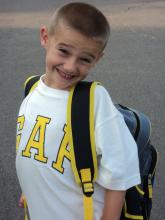
riley_0

Then .. came my day. For me, directing a program is the best job for raising young children. My children have been with me at work since they were infants. I always had them right down the hall from me from age 6 weeks to the time they went off to school. Then came Kindergarten for my first child and there I was … crying like a baby at that bus stop … trying to let go, feeling as though a part of me was being taken away. My poor son, he was so embarrassed. The car ride to work felt foreign with just my daughter in the car, but that experience allowed me to empathize with all the parents that I see each and everyday at my center saying goodbye to their children for that first time.

So as the first day of school comes to your center, remember that this is a big step for children as well as parents … treat it with love and tenderness.

Supporting infants and toddlers with transitions

babyblanketThe following post is from information sent to us by Mary Tabb of the Early Childhood Consultation Partnership, which is a wonderful resource that is available to support the social and emotional development of children in your care and in your early childhood program.

Infants and toddlers gain much of their sense of security from familiar adults, items, and routines. They are especially sensitive to change – even the smallest changes can cause stress. Throughout their childcare day, children this age experience multiple changes: drop-off and pick-up, diapering, transitioning between activities, caregivers changing shifts, etc. While many changes are unavoidable, it is important to consider the impact they may have on very young children and to plan ways that will help them learn to cope.

• Try to plan your day with as few transitions as possible. Limiting the number of transitions reduces stress and allows for more free play and exploration. Individualize transitions as possible, based on the specific needs of the children in your care.

• Prepare and guide children through a transition by telling them what is about to happen and explaining what is happing as it is occurring. This includes diapering, feeding, napping, and with any changes in caregivers.

• Infants and toddlers are learning to soothe themselves. Allow access to blankets, stuffed animals from home, family photos or pacifiers during transition times to help them learn this important skill.

• Because toddlers do not understand the reason for changing activities, they often become resistant. The best approach is to give one direction at a time, expect them to only pick up one or two items at clean-up, and use encouragement, redirection and modeling to teach them the skills you would like them to learn.

• Provide extra physical closeness, hugs and holding to help comfort children during times of change.

If you found this helpful, you may also like an earlier post sent to us from ECCP on creating a quiet space for infants and toddlers.

Top photo creditphotostock / FreeDigitalPhotos.net

Resources:
• Transition Magician 2 by Mary Henthorne, Nola Larson & Ruth Chvojicek, (2000)
• Routines and Transitions A Guide for Early Childhood Professionals by Nicole Malenfant (2006)
• Momma Always Comes Home, by Karma Wilson
• The Kissing Hand, by Audrey Penn

Brought to you by:
ECCP
Early Childhood Consultation Partnership©
A program of Advanced Behavioral Health www.abhct.com
Funded by CT Department of Children & Families

Supporting preschoolers with transitions

_MG_6452The following post is from information sent to us by Mary Tabb of the Early Childhood Consultation Partnership, which is a wonderful resource that is available to support the social and emotional development of children in your care and in your early childhood program. We recently posted an article from ECCP about supporting infants and toddlers with transition times in their day. Now, it’s time to provide some ideas to help preschoolers. Though preschoolers are slightly more adaptable to changes in schedule and routine, most children benefit from knowing what to expect.

A full day of preschool demands that children adjust to many transitions. It is important to remember that reducing the number of transitions as well as informing children of the upcoming change helps them feel safe and in control. When children feel safe, they learn better and are more able to control their behavior.

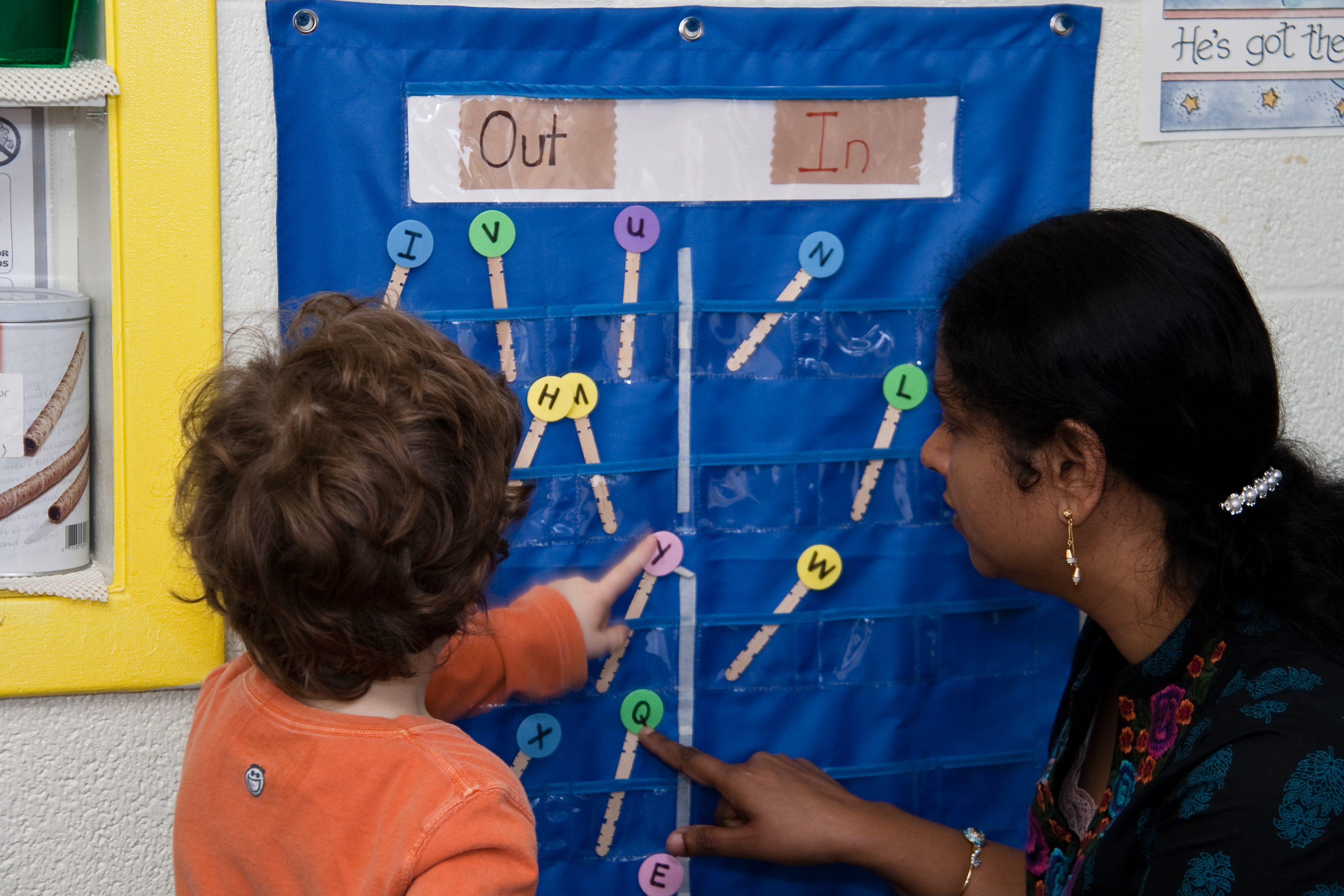
• To create a “Hello” and a “Good-bye” ritual, use a phrase, rhyme or song to greet each child at drop off and again at the end of the day. This may help parents with such transitions too.

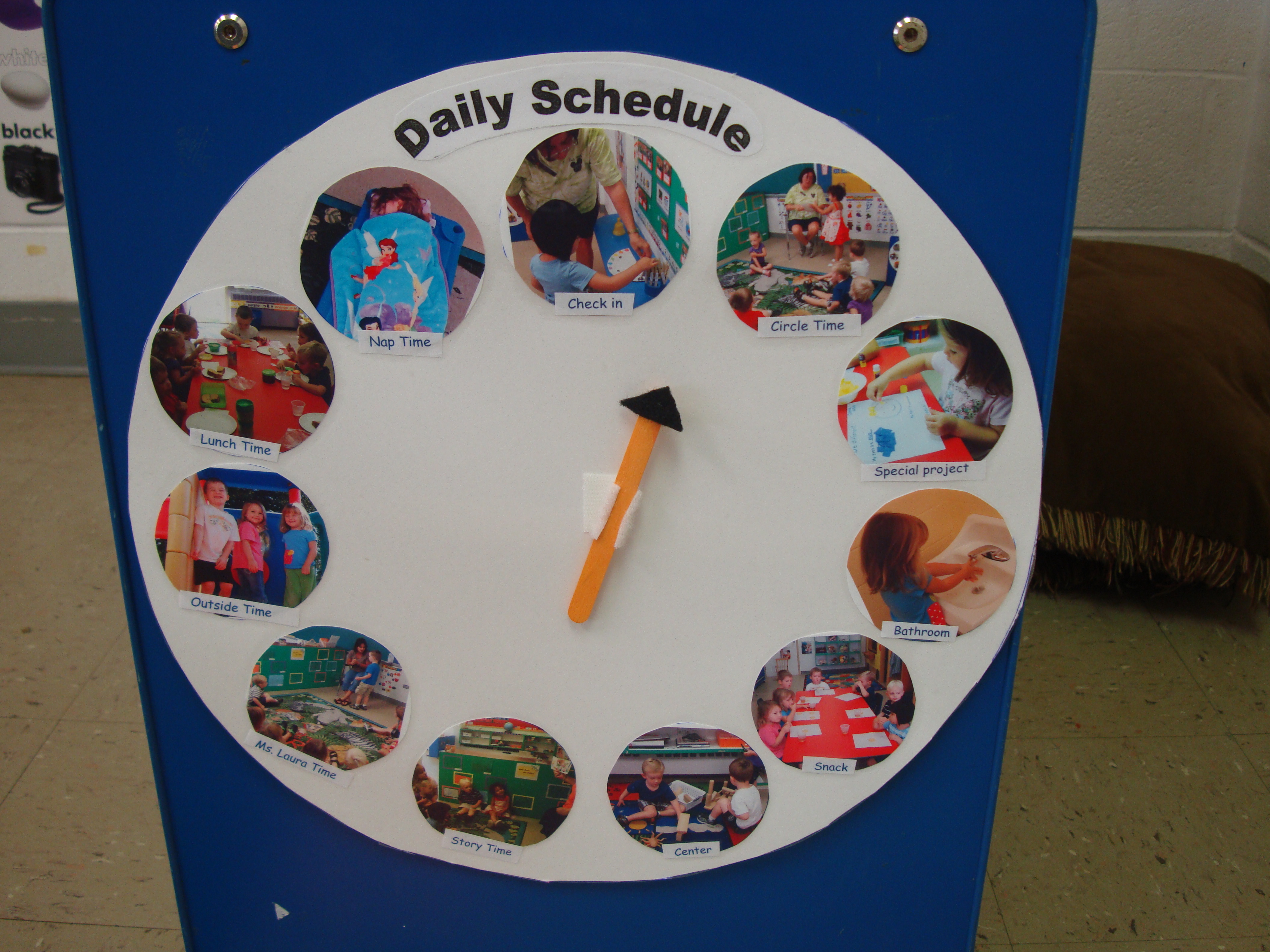
• Create a large picture schedule with each of the day’s activities and post it on the wall at children’s eye level. For children who have difficulty transitioning, remind them to go to the schedule and tell you what is next. (IDEA: Help children learn the daily schedule so they can become comfortable and sense what is coming next. Use books and other activities to teach preschoolers the daily schedule routine).

DSC07850

• Prepare children before every transition by telling them what activity will be next. Then give a 5 minute reminder and then 2 minute reminder before making the actual transition. (IDEA: Use of a visual timer can also be very beneficial to help children SEE how much time they have left for an activity so they can be more prepared for the upcoming transition.

• Use visuals, movement activities and songs to signal transitions. Ex. Lights off; hands in the air; sing a clean-up song; pretend to be mice walking in line; use guessing games to help children wait, etc.

• Plan slowing down activities to help children shift from active to quiet activities. Use a slow song with movement, lowering the volume, dimming the lights, and sharing expectations for the quiet activity. (IDEA: Create some relaxation bean bags that can be used with some special movement activities as a bridge from one activity to another).

If you found this helpful, you may also like an earlier post sent to us from ECCP on creating a quiet space for preschoolers.

What types of activities do you do in your classroom to help young children transition?

Resources:
• Transition Magician 2 by Mary Henthorne, Nola Larson & Ruth Chvojicek, (2000)
• Routines and Transitions A Guide for Early Childhood Professionals by Nicole Malenfant (2006)
• Momma Always Comes Home, by Karma Wilson
• The Kissing Hand, by Audrey Penn

Brought to you by:
ECCP
Early Childhood Consultation Partnership©
A program of Advanced Behavioral Health www.abhct.com
Funded by CT Department of Children & Families

Photo credit:
Dennis Brunelle Photography

Making color collage discovery bottles in preschool

color collage discovery bottlesMost preschool teachers I know LOVE discovery bottles! We like to find all kinds of ways to make them engaging and interesting for children to explore. We search for interesting objects to put in them. We search Pinterest to get new ideas. We hoard (ah, I mean, COLLECT) and save our empty water bottles for when we are ready to make our next batch.

So, last week, I thought it would be fun to get the children to make discovery bottles for their classroom. Engaging children in the process of making colorful collage discovery bottles is a good activity for learning colors and a great opportunity to practice sorting.

First, I collected enough clean (and emptied) water bottles for each child. Then I gathered a variety of small collage items – small enough to fit into the opening of a water bottle.

color collage discovery bottles

When we were ready to sort, I set out pieces of colored construction paper (representing the colors of the collage materials) onto tables.

Each child had a small container filled with a selection of the collage items and they went around the room and matched each item to a colored paper. Using the colored construction paper was helpful for our young preschoolers to see if their color matches as they sorted.

color collage discovery bottles

After all items have been sorted, each child chose a color and filled a bottle with only items of that color. We talked about the different shades of the colors (i.e.. some items are light blue, some are a darker blue … but ALL the items are blue).

Once filled, we put the caps on and placed them in our science area for future exploration. You can choose to hot glue the caps so the bottles can’t be opened again – but you can also choose not to (since there is nothing liquid or messy in them), and allow children to try to empty and refill bottles.

To add additional challenge to this activity … instead of using colored paper for the sorting process, have white paper with the color words written on them. This will reinforce the color sight words as the children match their colored items to the correct color word.

When children make the discovery bottles themselves, they take more ownership and interest in them. They can talk about what they filled their bottle with, how the items felt, and what the bottle sounds like when they shake it!

Preschool director reflecting on Newtown

As a parent of two young children, the events in Newtown at Sandy Hook Elementary School continue to haunt me. As a Director of a Child Care Center, I feel that my job has forever changed. A sense of security has been robbed from all of us and like many school administrators across our state and country; I begin to relook at our policies and procedures.

I find this process to be extremely emotionally challenging. I find myself lying in bed late at night, thinking about different scenarios that could occur at my center and how I can protect my students and staff to the best of my ability. During the past month I have contacted our local Police Department and Fire Marshal for extensive consultations and suggestions. Our Board of Directors has also met a number of times to fine tune policies and procedures. I continue to research high-tech security systems in hopes in making our facility as secure as possible.

Yet, still so many questions run through my mind: If faced with a threatening situation…. How can my infant room teacher get four babies to a safe location? How can my toddler teacher keep eight two year olds quiet if needed? Will my staff be able to recall our procedures in the event of real threat? How will we explain lockdown drills to our preschoolers? How can I help parents feel safe, how can I help staff to feel safe? I am saddened that these are thoughts and scenarios that I have to prepare for now.

Since the terrible day in Newtown, I often think about the Principal of Sandy Hook Elementary. Dawn Hochsprung acted swiftly in her attempt to stop the gunman in order to save her students and staff. And it is in honor of her that I, as well as hundreds of administrators across our country, will do all we can do to make our schools safer. We will not let violence over-take our schools and centers. We will not let fear stop us from delivering quality care and education. Most of all we will not let terror stop us from teaching children how to love themselves and one another.

Our thoughts and prayers continue to go out to the families, children and staff in Newtown. We will never forget.

For resources on dealing with the aftermath of school violence … visit NAEYC’s page on “Coping with Violence?

Reindeer art for toddlers and preschoolers

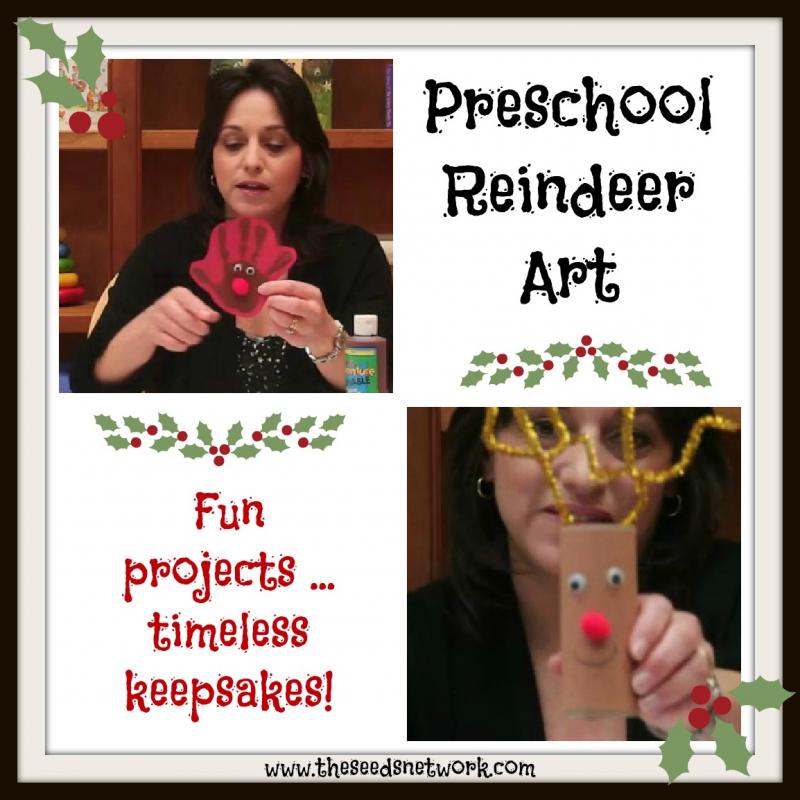
toddlersHere’s an instructional video that we filmed for ehow.com that shows two cute reindeer projects that you can do with your toddlers and preschool-age children. You can read the instructions, and then view the video to see more.

Handprint Reindeer

The first project is a really adorable hand print craft that you can do with infants, toddlers, or preschoolers. Using brown washable paint, simply paint their hand, and have them make them hand print on a piece of colored construction paper or cardstock. Once it’s dry, simply silhouette cut around the hand print. And now, it looks like a face with the antlers. Add on some googly eyes and a nose, with glue dots or some tacky glue. You can use this cute reindeer as an ornament, or put a magnet on the back to hang on the refrigerator.

Toilet paper tube Reindeer

The next reindeer project is made out of a toilet paper tube. Beforehand you will need to cut a rectangular piece of brown paper the same height as your toilet paper tube. And then, you can have the child wrap it around, take some tape and attach to the tube to make the reindeer body. You can use some glue dots with some googly eyes and have the children stick those on, along with a red pom pom for the nose. And then, they can take a marker, they can decorate it any way they want to make the face.

For the antlers, help children take a pipe cleaner and that has been cut it in half, make a cross and then, wrap it around. Then, they bend each end up, so that it looks more like a W (view the video to see how this is done). The antlers then get taped onto the inside of the toilet paper tube, and you have your reindeer!

For a look at the projects — take a peek at the video!